REPARATIONS EXPLAINED
REPARATIONS
What is reparation?
“It is a principle of international law that the breach of an engagement involves an obligation to make reparation in an adequate form.” (1)
Reparation is a principle of law that has existed for centuries, referring to the obligation of a wrongdoing party to redress the damage caused to the injured party. Under international law, “reparation must, as far as possible, wipe out all the consequences of the illegal act and re-establish the situation which would, in all probability, have existed if that act had not been committed.”(2)
The right to reparation is a well-established principle of international law. The International Law Commission affirmed this principle in its 53rd Session when it adopted the draft articles on responsibility of States for internationally wrongful acts.(3) The right is also firmly embodied in international human rights treaties and declarative instruments (4) and has been further refined by the jurisprudence of a large number of international and regional courts, as well as other treaty bodies and complaints mechanisms.(5)
In 2005, the UN General Assembly adopted the Basic Principles and Guidelines on the Right to a Remedy and Reparation for Victims of Violations of International Human Rights and Humanitarian Law.(6) These Principles constitute a significant contribution to the codification of norms relating to the right to reparation.
Who can claim reparation?
International human rights treaties and instruments provide that victims of international crimes have the right to seek and obtain effective remedies for the violation of their rights.(7) The Basic Principles and Guidelines on the Right to a Remedy and Reparation provide that the term victim includes those who have individually or collectively suffered harm, and may include the immediate family or dependants of the direct victim and persons who have suffered harm in intervening to assist victims in distress or to prevent victimization.(8)
Until recently in criminal proceedings, the standing of victims to seek reparation was limited to the domestic sphere.(9) However, the Rome Statute of the International Criminal Court now recognises that victims of crimes under the jurisdiction of the Court may seek reparation and allows the Court to make orders directly against a convicted person to make reparations to them.(10)
Forms of reparation
A common misconception is that reparation is synonymous with compensation. Although compensation is common, other forms of reparation include: restitution, rehabilitation, satisfaction and guarantees of non-repetition.(11)
• Restitution seeks to restore the victim to the situation that that would have existed had the crime not happened. This may include restoration of liberty, legal rights, social status, family life and citizenship; return to one’s place of residence; and restoration of employment and return of property.(12)
For the most heinous crimes, it is often impossible to restore victims to their original situation making other forms of reparation necessary:
• Compensation is understood to include any quantifiable damage resulting from the crime, including “physical or mental harm, including pain, suffering and emotional distress; lost opportunities, including education; material damages and loss of earnings, including loss of earning potential; harm to reputation or dignity; and costs required for legal or expert assistance, medicines and medical services, and psychological and social services.”(13)
• Rehabilitation is said to include medical and psychological care as well as legal and social services.(14)
• Satisfaction and guarantees of non-repetition include such individual and collective elements as revelation of the truth, public acknowledgment of the facts and acceptance of responsibility, prosecution of the perpetrators, search for the disappeared and identification of remains, the restoration of the dignity of victims through commemoration and other means, activities aimed at remembrance and education and at preventing the recurrence of similar crimes.(15)
The types of reparation appropriate to remedy the harm suffered will differ depending on the individual circumstances. For example, in 2007 civil society made an important statement on the particular factors to be considered in providing reparation to women and girls harmed in conflict in the Nairobi Declaration on Women’s and Girls’ Right to a Remedy and Reparation. There, it is recognized that reintegration and restitution by themselves are not sufficient goals of reparation, which must address the political and structural inequalities that allow the violations to occur in the first place.(16)
Perceptions of reparation
Given that victims come from a diversity of backgrounds and experiences, victims’ perceptions of reparations and the ‘reparations process’ are varied and multidimensional. Victims in the midst of conflict will not have time to think about ‘reparations’. Cultural differences may also impact on perceptions of reparations. In some cultures, active participation in criminal proceedings may be essential whereas in others, the admission of guilt by the wrongdoer will be most important. In some contexts, the fact that one can never undo what was done or make adequate reparations may mitigate against reparations, whereas in others, the symbolic effect is seen as extremely beneficial.(17) The context of the violation may give rise to specific perceptions of what kind of reparation should take place. For example, a situation of massive population displacement and ethnic cleansing may necessitate a program for the return of refugees and displaced persons, and/or the other sustainable solutions for these victims. See our Report on Torture Survivors’ Perceptions of Reparation.
NOTES
1. Permanent Court of Arbitration, Chorzow Factory Case (Ger. V. Pol.), (1928) P.C.I.J., Sr. A, No.17 at 29.
2. See Permanent Court of Arbitration, Chorzow Factory Case (Ger. V. Pol.), (1928) P.C.I.J., Sr. A, No.17, at 47 (September 13); International Court of Justice: Military and Paramilitary Activities in and against Nicaragua (Nicaragua v. U.S.), Merits 1986 ICJ Report, 14, 114 (June 27); Corfu Channel Case; (UK v. Albania); Reparations for Injuries Suffered in the Service of the United Nations, Advisory Opinion, I.C.J. Reports 1949, p. 184 ; Interpretation des traites de paix conclus avec la Bulgarie, la Hongrie et la Romanie, deuxieme phase, avis consultatif, C.I.J., Recueil, 1950, p. 228. See also Article 1 of the draft Articles on State Responsibility adopted by the International Law Commission in 2001: “Every internationally wrongful act of a State entails the international responsibility of that State. (UN Doc. A/CN.4/L.602/Rev.1, 26 July 2001” (ILC draft Articles on State Responsibility)).
3. See Report of the International Law Commission - 53rd session (23 April - 1 June and 2nd July - 10 August 2001), UN Doc. (A/56/10). Ibid., para 23.
4. For example, the Universal Declaration of Human Rights (Art. 8); the International Covenant on Civil and Political Rights (art.2 (3), art 9(5) and 14(6)); the International Convention on the Elimination of All Forms of Racial Discrimination (art 6); the Convention of the Rights of the Child (art. 39); the Convention against Torture and other Cruel Inhuman and Degrading Treatment (art. 14) and the Rome Statute for an International Criminal Court (art. 75). It has also figured in regional instruments, e.g. the European Convention on Human Rights (art 5(5), 13 and 41); the Inter-American Convention on Human Rights (arts 25, 68 and 63(1)); the African Charter on Human and Peoples’ Rights (art. 21(2)). See also, the Declaration of Basic Principles of Justice for Victims of Crime and Abuse of Power, Adopted by General Assembly resolution 40/34 of 29 November 1985; Declaration on the Protection of all Persons from Enforced Disappearance (art 19), General Assembly resolution 47/133 of 18 December 19 92; Principles on the Effective Prevention and Investigation of Extra-legal, Arbitrary and Summary Executions (Principle 20), recommended by Economic and Social Council resolution 1989/65 of 24 May 1989; and Declaration on the Elimination of Violence against Women.
5. See, e.g. ruling of the Inter-American Court of Human Rights in the Velásquez Rodríguez Case, Serial C, No 4 (1989), par. 174 . See also Papamichalopoulos vs. Greece (Art. 50) E.C.H.R. Serial A, No 330-B (1995), p. 36..
6. Basic Principles and Guidelines on the Right to a Remedy and Reparation for Victims of Gross Violations of International Human Rights Law and Serious Violations of International Humanitarian Law, adopted and proclaimed by General Assembly resolution 60/147 of 16 December 2005 (Basic Principles).
7. See above n. 4.
8. Basic Principles, par. 8.
9. Reparations proceedings are common in civil law countries where claims for damages may be attached to criminal prosecutions. In common law countries, it is more typical for claims for damages to be sought separately through civil courts.
10. Rome Statute of the International Criminal Court, UN Doc. A/Conf. 183/9th of 17 July 1998, entry into force 1 July 2002, art. 75(2).
11. Basic Principles, par. 18.
12. Id, par. 19.
13. Id, par. 20.
14. Id, par. 21.
15. Id, par. 22 and 23.
16. Nairobi Declaration on Women’s and Girls’ Right to a Remedy and Reparation, 21 March 2007,
17. REDRESS. Torture Survivors Perceptions of Reparation: A Preliminary Survey, 2001.
CENTRAL AFRICAN MILITARY AND POLITICAL UPDATE
CENTRAL AFRICAN REPUBLIC
Seleka rebels involved in a rebellion since last December have deposed President Francois Bozize in the Central African Republic accusing him of failing to honour a peace deal. More than 170,000 people have been displaced both within the country and in Cameroon, Chad and the Democratic Republic of Congo. The Red Cross said 78 bodies had been found.
Thirteen South African soldiers lost their lives. They had been part of a 200-strong force fighting an estimated 3,000 rebels in the battle for the capital Bangui. The ANC has rejected accusations that the troops were in CAR because it has mining interests there. The South African government says they were training government forces and providing security. The South African National Defence Union (SANDF), representing the soldiers, and the main opposition Democratic Alliance (DA) party, called for the withdrawal of troops. South Africa’s Times newspaper reported that rebels had been seen driving around in captured South African military vehicles marked with the insignia of Operation Vimbezela, the South African military mission in CAR. President Jacob Zuma said South Africa’s 200 soldiers in Bangui were outnumbered in a nine-hour battle after bandits attacked them at their base on the weekend of 23-24 March. As well as the 13 dead, another 27 soldiers were injured - the highest number of casualties suffered by South Africa’s army since white minority rule ended in 1994.
The rebel leader Michel Djotodia of the Union of Democratic Forces for Unity (UFDR) was a civil servant in the government of Ange-Felix Patasse, which was overthrown by Francois Bozize in 2003. A decade ago Mr Djitoudia worked in CAR’s foreign ministry and was named consul to Nyala in neighbouring Sudan’s Darfur region. He used his time there to cultivate alliances with Chadian rebels in the area and it was these fighters from the Chad, Sudan and CAR borderlands who became the military backbone of the Seleka rebel coalition in 2005. Djotodia was arrested and jailed a year later in Benin while in exile. He was released after promising to make peace with Mr Bozize, but re-launched the rebellion. He was appointed Defence Minister in January 2013 under the peace deal where Seleka agreed to serve in a unity government, led by Mr Bozize, until elections in 2016. Djotodia quit the government in March with the rebels saying their demands, including the release of political prisoners, had not been met starting the rebellion from which he seized power. Mr Bozize fled to Cameroon before seeking asylum in Benin, Mr Djotodia announced that elections would be held in three years, suggesting that he would run for the presidency to legitimise his rule.
France has 1,250 troops in CAR. The country has large deposits of minerals including gold and diamonds but decades of conflict and mismanagement have left its people among the world’s poorest.
One fallout of the coup is that the US has offered a reward of up to $5m (£3.3m) for information leading to the arrest or capture of Ugandan warlord Joseph Kony. The announcement came as the Ugandan army suspended a search for Kony in the Central African Republic (CAR), blaming hostility from its new government. President Francois Bozize’s government supported the mission to find Kony. The Ugandan forces are in the CAR under an African Union mandate, assisted by soldiers from other Afrikan nations, as well as US special forces. The African Union suspended the CAR’s membership after the Seleka rebel group seized power and overran the capital, Bangui. Joseph Kony and the estimated 200-500 fighters of his Lord’s Resistance Army (LRA) have waged war in Uganda and the region for more than two decades. He is wanted by the International Criminal Court for alleged war crimes. The US reward is also being offered for information on two other top LRA leaders, Okot Odhiambo, and Dominic Ongwen.
DR CONGO
The main rebel group in eastern Democratic Republic of Congo, M23, has rejected the UN’s decision to deploy a special attack force to the area. M23 political leader Bertrand Bisimwa said the UN had chosen the war option, rather than promoting dialogue to end the conflict in eastern DRC. The M23-led rebellion flared up a year ago and has forced 800,000 people from their homes. Last week, the UN Security Council approved plans to send an Intervention Brigade of about 2,000 troops to DR Congo in July to carry out targeted offensive operations to neutralise armed groups in eastern DR Congo.
The UN currently has about 20,000 troops in DR Congo, but they were widely criticised for failing to prevent the M23 from capturing Goma last November. The M23 later pulled out of the city, following pressure from neighbouring Rwanda and Uganda. The DR Congo government welcomed the UN’s decision to deploy the new force saying its main mission should be to secure the border with Rwanda and Uganda. The government and the UN have repeatedly accused the two countries of backing the M23 - an allegation they deny.
Last week, a key figure in the M23, Bosco Ntaganda, was charged at the International Criminal Court with war crimes and crimes against humanity for alleged atrocities committed in 2002 and 2003. He had surrendered to the US embassy in Kigali, following heavy fighting within the M23. Gen Ntaganda’s faction lost control of the group to Mr Bisimwa and M23 military chief Sultani Makenga. Various armed groups have wreaked havoc in eastern DR Congo for two decades.
KENYA
Kenya’s Supreme Court has upheld Uhuru Kenyatta’s election as president, rejecting challenges to the vote. Chief Justice Willy Mutunga announced the unanimous decision saying the poll was free and fair. Official results said Mr Kenyatta beat Mr Odinga by 50.07% to 43.28%, avoiding a run-off by just 8,100 votes. The Independent Electoral and Boundaries Commission (IEBC) has insisted that the vote was credible, despite technical failures with an electronic voter ID system and the vote counting mechanism.
The Supreme Court ordered a re-tally of votes from 22 polling stations out of a total of 33,400. There were some deaths but not on the scale of the 2007-8 election. A recently created Muslim group, the Mombasa Republican Council, who are demanding secession for Kenya’s coastal region were responsible for a series of attacks on polling stations in the March 4 elections. Mr Kenyatta and his running mate, William Ruto, are expected to be sworn in as president and vice-president on 9 April. But they are facing trial on charges of crimes against humanity at the International Criminal Court (ICC) in The Hague for allegedly fuelling unrest after that election. They deny the charges but Mr Kenyatta is the second Afrikan president to be indicted by ICC, after Sudan’s Omar al-Bashir
DEATHS IN CUSTODY
POLICE ARRESTED OVER DEATHS IN CUSTODY IN BRITAIN
On 23/03/13 the Birmingham Mail reported: “Four police officers have been arrested on suspicion of the manslaughter of Birmingham dad Kingsley Burrell, who died in custody two years ago. The West Midlands officers were also being quizzed by investigators from the Independent Police Complaints Commission on suspicion of gross negligence and misconduct in a public office. The four were due to be interviewed by the IPCC last month, but allegedly refused to co-operate and left an arranged meeting. The officers were arrested yesterday in the West Mercia force area and were last night being interviewed by investigators from the police watchdog.”
Just four days later the IPCC released the following statement: “Independent Police Complaints Commission (IPCC) investigators have today (Wednesday, 27 March) arrested two serving and one retired Metropolitan Service Police (MPS) officers in connection with the on-going investigation into evidence given at the inquest into Sean Rigg’s death. Police Sergeant A, 50, was arrested at his place of work on suspicion of perjury and perverting the course of justice; Police Constable B, 29, was arrested at an address in south London on suspicion of perjury and perverting the course of justice; Retired Police Constable C, 48, was arrested by appointment at a central London police station on suspicion of perverting the course of justice. All three are being questioned by IPCC investigators at a central London police station.”
MARK DUGGAN INQUEST
The police watchdog, the Independent Police Complaints Commission, has been described as not fit for purpose by Mark Duggan’s barrister. A pre-inquest hearing heard the IPCC had still not completed its report into the shooting after 20 months saying there were still lines of inquiry outstanding despite initially claiming the report would only take three months. The Coroner, Judge Keith Cutler, ordered the IPCC to deliver a draft copy of its investigation report by 13 May. Mr Duggan’s family’s barrister Michael Mansfield, QC, told the hearing the IPCC started basic tests and the event reconstruction too late and there was an appalling omission on determining whether there was aerial surveillance of the scene. Robin Tam QC, representing the IPCC, said the inquest should begin as scheduled in September more than two years after the August 4, 2011 killing. Judge Cutler also said jurors may have anonymity so names are not read out in court. Mr Mansfield opposed this saying there was no suggestion of the jury being intimidated or threatened and it would give the wrong flavour to the inquest.
FORTHCOMING NUBIART PROFILES
NUBIART: Focus on arts, business, education, health, political developments and the media.
APR PROMOS
~ ‘MY AFRICA’ - Elemotho [ARC Music – Out Now] This is a 16-track compilation from Namibian
Elemotho’s previous albums – ‘The System Is a Joke’, ‘Human’ and ‘Ke Nako’ - launching his five year worldwide distribution deal with ARC Music. Elemotho means as a person in Setswana, his mother tongue. He calls himself a musical activist, and his journey through life not only as a man but as a performing artist bears testimony to that. “I grew up as a child of Apartheid, and so politics is a part of me I guess, I carry it on my sleeve, as I carry the questions of life.”
The vocal and musical style is reminscent of the themes and visions evoked by other great Southern Afrikan songsmiths such as Vusi Mahlasela or Oliver Mutukudzi which is no bad thing. All the tracks here are original compositions and vary from the evocation of the sparse Kalahari desert through reggae-infused vibes to a combination with Native American poet and fellow musican-activist John Trudell. ‘Kgala Namib’ is a tribute to his homeland, ‘Neo’ for his new born child, ‘Hola-Gola’ to heal and grow, ‘Bright Sun’ about the Northern Lights seen during his stay in Norway, ‘La Vida aka Life’, ‘Dose Of Reality’, ‘My Africa’ is an ode to the cradle of humanity and the album ends with a hope for ‘Better Days’ for us all. Earlier this year Elemotho became the recipient of the RFI 24th Discovery award a sign that big things are expected of him in the future.
~ ‘HEART AND SOUL’ – Clinton Fearon [Sterns Records – Out Now] This solo album giving alternate stripped backed versions of The Gladiators tracks is entirely played and produced by Fearon himself on vocals, bass, guitar and percussion. Some of the classics from the band’s heyday written by Fearon appearing here include ‘Chatty Chatty Mouth’, ‘Tribulation’, ‘Rich Man Poor Man’, ‘Streets of Freedom / Babylon Street’, ‘Follow the Rainbow’ and ‘Stop Before You Go’. The sleevenotes explain the inspirations for each of the songs giving a good idea of what the vibes were like in Jamaica especially during the days of the political gang wars in the 1970s and 80s.
NUBIART LIBRARY – APR MEDIA
We will only review books we have read and DVDs we have seen and that are available at reasonable prices online or in shops or libraries. However, given the nature and current state of Afrikan publishing and production there may be books and films on this list that are worth the extra effort to track down.
~ ‘IN THE HOUSE OF THE INTERPRETER: A MEMOIR’ - Ngugi Wa Thiong’o. [Harvill Secker ISBN: 978-1-846-55628-9]
“A person comes to your house. He takes your land. In exchange he gives you a pencil. Is this fair exchange? I would rather he kept his pencil and I kept my land.”
This second book of Ngugi’s memoirs covers his formative teenage school years against a backdrop of the ongoing insurgency and anti-imperialist struggles which the European colonists called the Mau Mau Emergency. The reality was forced removals, torture, indiscriminate round-ups, the banning of the African Orthodox Church and malicious sabotage of careers and livelihoods. It was during these years that Ngugi gained his first experience of incarceration. His brother, Good Wallace, was captured but luckily managed to get released after going through ‘the pipeline’. Unfortunately other great liberation fighters such as Dedan Kimathi were captured and executed for their role in the nationalist struggle.
The book is dedicated to his Class of ‘58 at Alliance High School, the first secondary school for Afrikans in the country, founded by a coalition of Protestant churches. The school was inspired by Tuskegee and Hampton Institutes in the and as such initially focussed on agricultural and vocational subjects. Luckily by the time Ngugi reached there the curriculum was much wider but given its origins there was still an emphasis on Spirituals which Ngugi came to love. More ambivalent is his interaction with religion which swings from failed attempts at evangelism to doubts over issues such as the colour of God and the confusion over the Christian obsession with sex and portraying it as a sin.
The school had a policy of not dividing pupils along ethnic lines from which he benefitted as in the wider Kenyan environment the Gikuyu, Embu and Meru were subjected to extra discrimination and were the first to be issued with the hated passbooks as they were considered the backbone of resistance to British imperial rule.
‘In the House of the Interpreters’ – a reference from one of the school headmaster Edward Carey Francis’ favourite books, Pilgrim’s Progress’ - highlights Ngugi’s burgeoning interest in literature, literary criticism and theatre. He appeared in the school plays and outside of school organised plays as a positive pastime for the youth in his area. ‘His first attempt at a short story was called ‘Mugumo, The Fig Tree’. The memoir gives insight into what would develop later in Ngugi’s life into ‘Dreams In A Time of War: A Childhood Memoir’, ‘Detained: A Writer’s Prison Diary’, ‘Weep Not, Child’, ‘I Will Marry When I Want’, ‘A Grain of Wheat’, ‘Wizard of the Crow’, ‘Petals of Blood’ which led to his imprisonment in 1977 and his debut novel ‘The River Between’. The latter was the inspiration and title for the first song we ever wrote during our musician days back in the mid-1980s.
Today Ngugi wa Thiong’o is Distinguished Professor of English and Comparative Literature at the University of California, Irvine, and is Director of the university’s International Centre for Writing and Translation. Every one of his books is as essential reading now as always with the added impetus that he now only writes novels in Gikuyu as a way of opposing the ongoing cultural imperialism of European languages on the Afrikan continent.

~ THE EARTH CENTER, THE WAY FINDER AND CENTREPRISE PRESENT THE DOGON UK TOUR. With Nehez Anyahra Meniooh, Director of the Earth Center; Naba Iritah Shenmira, Dogon Priest and Healer from Burkina Faso; Hapi Kamenthu, Head Merr (Overseer) of the Earth Center New York; and Nekhitem Kamenthu, Head Scribe of the Earth Center New York.
- ‘Understanding the Nature of Diseases’. On Mon 8 Apr at 7-9.30pm.
- ‘A Holistic Approach to Traditional Healing’. On Wed 10 Apr at 7-9.30pm.
- ‘The Origin of Religion and Traditional Spirituality’. On Mon 15 Apr at 7-9.30pm.
- ‘The Sacred Laws of Ma’at: Faith Belief and Forgiveness’. On Wed 17 Apr at 7-9.30pm.
- ‘Ancestors and Humanity’s Destiny’. On Mon 22 Apr at 7-9.30pm.
- ‘Bayuali and Yennu. Dialogue of Energies’. On Wed 24 Apr at 7-9.30pm.
- ‘Holistic Healing Using Kemetic Philosophy’. On Sun 28 Apr at 5-8pm.
All talks at Osho Gallery, 159 Lambeth Walk, London, SE11 6EE except Sun 28 Apr at Pempansie, 102 Brixton Hill, London, SW2 1AH. Adm: £10. Tel: Shaar – 0844 66 55 727 / 07572 900 073. Web: www.TheEarthCenter.com / www.TheWayFinderQ9.com
~ DOCUMENTARY TEASER ON SEXUAL VIOLENCE IN SOMALI REGION / TERRITORIES. This teaser is part of an upcoming full feature documentary which is looking into the serious issue of rape in the Somali region and the way authorities deal with these heinous crimes against women and children. The recent case of an alleged rape victim who was sentenced to one year imprisonment for reporting rape, alongside the journalist who interviewed her, highlighted the urgent need to tackle this issue and provide support for the survivors of sexual violence and for justice to be served. On Mon 8 Apr at 7pm at UCL School of Slavonic and East European Studies, 16 Taviton Street, London, WC1H 0BW. Web: http://hawashaven.wordpress.com/about/our-vision-and-mission/ PETITION: http://www.change.org/en-GB/petitions/protect-and-safeguard-somali-women-and-children-from-sexual-violence
~ NEW BEACON BOOK CLUB AND THE GEORGE PADMORE INSTITUTE BOOKMAN RESEARCH PROJECT SESSION 2: CRITICISM AT NEW BEACON (NEW BEACON REVIEWS AND TRADITION, THE WRITER & SOCIETY, WILSON HARRIS). FACILITATOR: RACHAEL GILMOUR (QUEEN MARY, UNIVERSITY OF LONDON). This will be an open forum bringing together different generations to talk about important or influential books published by New Beacon. All will be very welcome, regardless of previous knowledge of these books and their histories. Extracts from the texts will be circulated for you to read before each session and the conversations will be guided by someone with specialist knowledge of each book and its historical context. On Wed 10 Apr at 6.30-8pm at George Padmore Institute, 76 Stroud Green Road, London, N4 3EN. Adm: Free. E-mail: info@georgepadmoreinstitute.org
~ AFRICA CENTRE EVENTS
- ‘Creative Industries In Africa Summit’. On 10 Apr. This will be the inaugural African Creative Industries Investment Summit (ACIIS) seeking to build on place4BRICS’s successful event series started in 2011 this event is dedicated to start-ups eager for tips and advice about venture capital funding. It will be a showcase of the economic opportunities available within the network of development financial institutions, private equity, limited partners, venture capitalists, and family offices that operate in and around London.
- ‘Africa on Film series: Kirikou and the Sorceress’ (France, 1998) 14 Apr at 2.30 pm. Adm: Free. French writer and director Michel Ocelot draws on traditional West Afrikan folklore in his debut film. Released in 1998 it depicts the story of one extraordinary boy’s journey to restore peace and harmony to his village. Youssou N’Dour composed the soundtrack for this animated feature film making it entertaining and enjoyable for both children and adults alike.
- ‘Past Performance: Archiving Art, Performance and Design a Black Cultural Archives and Africa Centre Partnership’. On 16 Apr at 7-9pm. Heritage institutions collect the records of our day-to-day lives as a lasting testimony of people, places and organisations. This is the first of a two-part series of discussions and talks that will start to unravel the difference between archives, libraries and museums; it has been shaped to provide practical advice and guidance on the material they hold and to offer insights into the ways that you can access and make use of archives. The follow-up event is on 28 May at 7pm.
- Kaye Whiteman discusses ‘Lagos: A Cultural and Literary History’. On 18 Apr at 6.30-8.30pm. Adm: Free. Lagos is one of the fastest growing cities in the world, expected in some projections to have a population of 25 million by 2025. This will make it possibly the world’s third largest city. Its driving sense of ‘can-do’, its outreach and vitality, make it a fulcrum and a channel for commercial and cultural talent. Kaye Whiteman explores a city that has constantly re-invented itself, from the first settlement on an uninhabited island to the creation of the port in the early years of the twentieth century.
- ‘Africa Book Day’. On 23 Apr at 7-9.30pm. Adm: Free. A public readers group with the theme of favourite Afrikan authors and books. This special event marks UNESCO’s International Day of the Book and also World Book Night which is in its third year. Through some invited guest speakers and an open forum discussion they will explore authors such as Chinua Achebe, Bessie Head, Jean Sénac, Ahdaf Soeuif and many more and the importance of Afrikan literature as a vital part of world literature. [Limited to 30 places available on a first-come-first-served basis, early booking recommended].
- ‘Africa on Film series: Max and Mona (South Africa, 2004). On 28 Apr at 2.30 pm. Adm: Free.
Traditional beliefs say that the souls of the dead will not join their ancestors until the mourners cry at their graves. Max Bua, 19, from a South African farm community, has inherited his grandfather’s talent for mourning. Despite this heaven-sent gift, Max has his sights set on becoming a doctor and must travel to Johannesburg to begin his studies. With money the villagers collected for his tuition fees, and a wedding gift, he sets off to the city. Director Teddy Mattera has constructed a slapstick comedy about a young boy’s coming of age and his wild adventure with a most unlikely partner in crime.
All events at Africa Centre, 38 King Street, London, WC2. Web: www.africacentre.org.uk
~ ROYAL ASIATIC SOCIETY LECTURE: ‘AFRICAN SOLDIERS, GOVERNORS, NAWABS AND CULTURAL BROKERS IN SOUTH ASIA’. Dr Shihan de Silva is a Senior Fellow at the Institute of Commonwealth Studies having completed a PhD in Linguistics, an MSc in Finance and a BSc Hons in Economics from the University of London. She is a member of the International Scientific Committee of the UNESCO Slave Route Project: Liberty, Resistance and Heritage and also served in the bureau as the elected Rapporteur of the Project. Migration and diasporas in the Indian Ocean have been central to Dr de Silva’s research and she has published widely in peer-reviewed international academic journals. She is the author of six monographs including: ’The Portuguese in the East: A Cultural History of a Maritime Trading Empire’ (I B Tauris, London, 2008), ’African Identity in Asia: Cultural Effects of Forced Migration’ (Markus Wiener Publishers: Princeton, New Jersey, 2008) and ’The African Diaspora in Asian Trade Routes and Cultural Memories’ (Edwin Mellen Press, UK, 2010).
In summary of her lecture she writes: “Unlike African movement across the Atlantic, the easterly migration of Africans to Asia has been far less recognised. African traders and missionaries moved voluntarily to Asia. Free movement of Africans did not stop whilst the slave trade moved Africans involuntarily. African soldiers were a valuable asset in South Asia. From being palace guards and elite slaves, Africans rose to positions of authority and even governed parts of India. Through their strategic capabilities and democratic system of electing leaders based on ability rather than purely on heredity, Africans entrenched power and ruled, until India’s independence, the States of Sachin (for over hundred and fifty years) and Janjira (for three hundred and thirty years). African elites lost political power but they still live in India. Assimilation and marginalisation have made Africans invisible. Their cultural traits have been transformed or lost, but their cultural memories are strong in music and dance, codes and signifiers of their African heritage. More importantly music and dance enable them to carve out a niche and negotiate a place for themselves in contemporary society.”
On Thurs 11 Apr at 6pm at the Royal Asiatic Society (London), Institute of Commonwealth Studies, University of London, Senate House, Malet Street, London, WC1E 7HU. Adm: Free. Tel: 020 7388 4539. E-mail: info@royalasiaticsociety.org Web: http://royalasiaticsociety.blogspot.co.uk/2013/03/next-ras-lecture-thursday-april-11th.html
~ THE LIFE & LEGACY OF C.L.R. JAMES LONDON LEGACY CONFERENCE & ANNUAL LECTURE
- ‘C.L.R. James Annual Lecture: The Importance of the Black Vote’. On Fri 12 Apr at C.L.R. James Library, Dalston Square, 60 Roseberry Pl, Hackney, London, E8. Organised by BEMA in partnership with Hackney Library Services, Operation Black Vote & Hackney Unites. A lecture looking at the impact, importance, patterns and relevance of the Afrikan / Afrikan-Caribbean vote in Hackney. The degree to which this community has achieved proportionate representation in terms of elected Councilors and the extent to which the borough’s cultural diversity has been reflected in the formulation and implementation of its policies will be examined. The question to be discussed is: Why vote? The panel will include Simon Woolley from Operation Black Vote, Diane Abbott MP and others. E-mail: bemaarts@gmail.com
- London Legacy Conference. On Sat 13 Apr at 11am-6pm at WEA, 96 -100 Clifton Street, London, EC2A 4TP. A day of discussions, workshop and performance around C.L.R. James’s life and his relevance today. Confirmed speakers include: Darcus Howe (Broadcaster, writer and civil-rights activist); Mike Dibb (filmmaker); Selwyn Cudjoe (Wellesley College and co-editor of ‘C.L.R. James: His Intellectual Legacies’); Ngoma Bishop (BEMA); and Andrea Enisuoh (Hackney Unites) who led the campaign to keep the name of C.L.R. James on the local Dalston Library when the local Council threatened to drop it. E-mail andrea@hackneyunites.org.uk Bookings: http://clrjameslegacyconference.eventbrite.com/
~ PASCF WORKSHOPS:
- The 1966 anti-Nkrumah coup: Lessons for the UK’s contemporary Afrikan liberation movement
Cecil Gutzmore & AAPRP (Invited). On Thurs 11 April at 7–9pm.
- ‘The 1945 5th Pan-Afrikan Congress (Revisited) with Hakim Adi (BASA). On Thurs 25 April at
7–9pm.
- ‘Kwame Nkrumah Memorial Lecture 2013’ with Marika Sherwood (BASA). On Sat 27 Apr at 5–9pm. The struggle for Afrikan Unity in the midst of counter-insurgency.
All meetings at The West Indian Association of Service Personnel (WASP), 163 Clapham Manor Street, London, SW4 6DB. Web: www.pascf.org.uk
~ AFRICAN ODYSSEY PRESENT ‘MAMA AFRICA’. The biography of the South African singer, Miriam Makeba, who was the first Afrikan musician to win international stardom. This documentary traces her life and music through more than fifty years of performing. Friends and colleagues, some who knew her from the beginning, in the dance halls of South Africa, together with her grandchildren, allow us to know the remarkable journey of Mama Africa. Her music influenced artists across the globe, although her style stayed anchored in her South African roots. She performed with Harry Belafonte, Nina Simone and Dizzy Gillespie. Makeba was also a vocal campaigner against apartheid, and always stood for truth and justice. After her involvement with the 1959 documentary ‘Come Back Africa’ (one of the first films to expose the harsh realities of apartheid), she was forced into exile from her homeland. On Sat 13 Apr at 6pm at BFI Southbank, Belvedere Road, South Bank, London, SE1 8XT. Adm: £6. Box Office on 020 7928 3232.
~ FIND YOUR VOICE presents an examination of the works of Dr. Llaila Afrika, including a screening of his DVD on diabetes. On Sun 14 Apr at 5-8.30pm at Park View Academy, West Green Road, London, N15 3RB. Adm: £5. Tel: 07960 239 493 or 07882 403 871. E-mail: findyourvoice@hotmail.co.uk
~ ‘FERENGI! FERENGI!’ An exhibition of award-winning prints and drawings from illustrator James Alton, who spent the summer of 2012 as Artist in Residence in the Bale Mountain National Park of southern Ethiopia. Until 14 Apr at Michaelhouse Centre, St Michael’s Church, Trinity Street, Cambridge, CB2 1SU.
~ BP BRITISH ART DISPLAYS PRESENT ‘FOCUS: FRANCIS FRITH PHOTOGRAPHS’. Francis Frith (1822-1898) made several trips to Egypt and the Near East between 1856 and 1859, using the new medium of photography to record landscapes and monuments not then as familiar to a British audience as they are today. Frith was one of the first to experiment with glass negatives. Frith prepared and fixed the photographs in a tent or ancient tomb, despite the danger of using explosive materials such as liquid ether and gun cotton in the desert heat. The glass negatives enabled Frith to print his pictures many times and publish them for a wide audience. An astute entrepreneur as well as an adventurer, he established his own business, Francis Frith & Co, the first specialist photographic publisher which photographed every town and village in Britain. These photographs have been lent by the Wilson Centre for Photography. Until 15 Apr at Tate Britain, Millbank, London, SW1P 4RG. Tel: 020 7887 8888. Adm: Free. Web: www.tate.org.uk/visit/tate-britain
~ COLOMBIAN SOLIDARITY CAMPAIGN AND LONDON MINING NETWORK PRESENT ‘STORIES OF RESISTANCE’. Julio Gomez, President of FECODEMIGUA, opposing mine expansion, the displacement of communities and in solidarity with striking mine workers in Colombia. On Mon 15 Apr at 6.30-9pm at Amnesty International UK, The Human Rights Action Centre, 17-25 New Inn Yard, London, EC2A 3EA. Web: http://www.colombiasolidarity.org.uk or http://www.londonminingnetwork.org
~ INSTITUTE OF COMMONWEALTH STUDIES, IN CONJUNCTION WITH THE BLACK & ASIAN STUDIES ASSOCIATION BLACK AND ASIAN BRITAIN SEMINAR. Patrick Vernon (Every Generation Media) and Ian Randle (publisher, Jamaica), ‘The Caribbean in Sepia: A History in Photographs 1840-1900’ will discuss Michael Ayre’s book which presents a visual narrative of the Caribbean world and analyses how the old Caribbean order of slavery and plantation sugar was swept aside by a series of fundamental changes which reached into the deepest corners of economic life and society. On Tues 16 Apr at 6-7.30pm in Room 349 in Senate House, University of London, Russell Square, London, WC1. Adm: Free. E-mail: Marika.Sherwood@sas.ac.uk
~ BTWSC AND AFRICAN HISTORIES REVISITED. 2013 marks both 100 years since John Archer became London’s first Afrikan mayor in the London borough of Battersea, and pioneered “black politics” (a precursor to Black Sections), and 50 years since Paul Stephenson successfully led the Bristol Bus Boycott, in order to expose and break racist employment policies. This in part led to the 1965 Race Relations Act. There is also a Martin Luther King connection. On Tues 16 April at 6.30-8.30pm. Adm: Free. E-mail: btwsc@hotmail.com Web: www.narm2013.eventbrite.com
~ AYA DISTRIBUTION IN ASSOCIATION WITH THE NEW BLACK FILM NETWORK UK RELEASE OF ‘OTELO BURNING’. DIRECTED BY SARA BLECHER. An emotional coming-of-age story based on true events about three Township friends – Otelo, New Year and Mandla - as they look for an escape through a time of turmoil within the township of Lamontville. They are on the cusp of making it in this world when they turn on each other. After this the story becomes one of greed, betrayal and jealousy, a metaphor for a nation grappling with its own freedom. Set against the backdrop of Nelson Mandela’s release from prison, it looks at the enormous potential for change at the time of apartheid’s downfall – all seen through the eyes of a child.
‘Otelo Burning’ has played at over 50 film festivals in 30 cities around the world in the last year including screenings at such prestigious film festivals at the BFI London International Film Festival and the Busan International Festival in Korea. The film has recently won the Africa Magic Viewers Choice award for best film, and was also further honored at the 2012 African Movie Academy Awards, where it won two of 13 total nominations, including the prize for Best Cinematography and Best Child Actor (Tshepang Mohlomi). Otelo Burning also won the Golden Owl Audience Award for Best Film at Cinerama BC Brazil and Best South African Film at the Cape Winelands Film Festival.
- Screening and Q&A. On 16 Apr at 6.30pm at Phoenix Cinema, 52 High Rd, London, N2 9PJ.
- Panel Discussion & Screening: ‘Taking African films to new markets’. On 17 Apr at 6–9.30pm at 15 Golden Square, London, W1F 9JG.
- Screening and Q&A with the Director Sara Blecher. On 19 Apr at 7.30–9.30pm at Birkbeck, University of London, 41 Gordon Square (entrance at 43 Gordon Square), London, WC1H 0PD.
- Screening followed by DJ night. On 20 Apr at 7pm–12am at The Horse Hospital, Colonnade, Bloomsbury, London, WC1N 1HX.
Contact Justine Atkinson, Project Director for Aya Distribution. Tel: 07971 740 678. E-mail: j.atkinson@ayadistirbution.org Web: http://www.oteloburning.com/ Trailer: http://www.youtube.com/watch?v=gek4b3x0TTQ
~ QUEEN NZINGA FILM SERIES AND IMAGES OF BLACK WOMEN – ’BLACK HANDS: THE SISTER WHO BURNED DOWN MONTREAL’. This film investigates slavery in Canada through the story of Marie-Josèphe Angélique, an Afrikan woman accused of burning down the entire city of Montreal in 1734. After an epic trial, this woman, who refused her slave status, is tortured and sentenced to death. But was she really guilty of this crime or was she the victim of a bigger conspiracy? Why this voluntary amnesia about this unknown page of Canadian and world history? Plus Q&A with Nadia Denton, author of ’The Black British Filmmakers Guide to Success‘, and Karine Alexander producer of ’Dear Mr Cameron‘. On Sat 20 Apr at 7-9.30pm. Adm: Free. Web: www.imagesofblackwomen.com
~ GASWORKS PRESENTS ‘THE BLACK CAVE’. The first UK solo exhibition by Beatriz Santiago Muñoz. Consisting of newly commissioned moving image works, the exhibition focuses on the relationship between landscape, history and infrastructure in the artist’s home country of Puerto Rico.
Santiago’s films and videos focus on how social relations are embodied in particular places and gestures. Drawing from anthropology and experimental theatre, the artist develops her work together with the people she portrays, using performance and re-enactment as strategies for self-representation.
The video ‘La Cueva Negra’ (2013) investigates the transformation of a former indigenous burial site, whereas the 16mm film ‘Farmacopea’ (2013) looks at how distinctive features of the island’s natural landscape relate to the development of agriculture and tourism. Exhibition open Wed-Sun at 12-6pm until 21 Apr at Gasworks, Vauxhall Street, London, SE11. Web: www.gasworks.org.uk
~ BLACK HISTORY STUDIES AND THE PUBLIC AND COMMERCIAL SERVICES UNION (PCS) SCREENING OF JAMAICA FOR SALE’. Dir: Esther Figueroa and Diana McCaulay. Lively and hard hitting, with powerful voices, arresting visuals and iconic music, ‘Jamaica For Sale’ documents the environmental, economic, social and cultural impacts of unsustainable tourism development. As Jamaica is irreversibly transformed by massive hotel and luxury condominium development, ‘Jamaica for Sale’ both documents this transformation and tries to turn the tide. On Tues 23 Apr at 7-9pm at the PCS Headquarters, 160 Falcon Road, Clapham Junction, London, SW11 2LN. Adm: £5 / U-16 – Free. Tel / Fax: 020 8881 0660 / 07951 234 233. E-mail: info@blackhistorystudies.com Web: http://www.blackhistorystudies.com
~ BLACKHISTORYWALKS, NU-BEYOND & BLACKSTARLINE PRESENT DJANGO UNCHAINED OR TARANTINO UNRESTRAINED? A film break-down by Bro Hakim and Dr Lez Henry who apply a forensic historical and cultural analysis of this controversial film adding in little known facts about the producers, actors and director. On Sun 28 Apr at 3-6pm at Cottons Caribbean Restaurant, 70 Exmouth Market, Islington, London, EC1 Adm: £8. [NB: This session is not suitable for under-16’s or those of an oversensitive disposition]. Web: http://www.blackhistorywalks.co.uk/rokstories/django-movie-breakdown-fri-29-march
~ NOH BUDGET FILMS PRESENT ACTIVE INQUIRY. Do you like being creative? Would you like to be part of a group who solve community problems through performing? ACTive Inquiry are inviting you to join our weekly participatory performance workshops exploring Current Affairs. The AI group carries out sketches, scenes, skits and other social commentary performances to raise awareness about problematic social issues. The stated goal of these performances is to make the public ‘think and ask questions’ and expose the lies around these injustices. Every Thurs at 6.30-9.30pm at Stockwell Park Community Trust, Crowhurst House, 21 Aytoun Place, Stockwell, London, SW9 0TE. Adm: £5. (Suggested donation to help cover room hire costs and refreshments but we would hate cost to be a barrier to participation so please pay what you can afford). Web: http://activeinquiry2013.eventbrite.com
~ THE CENTRE BLACK AND AFRICAN ARTS AND CIVLIZATION (CBAAC) NIGERIA AND PAN AFRICAN STRATEGIC AND POLICY RESEARCH GROUP (PANAFSTRAG) IN COLLABORATION WITH THE UNIVERSITY OF THE WEST INDIES PRESENTS CBAAC COLLOQUIUM 2013. Conference Announcement and Call For Papers. Theme: ‘Toward A New Pan-Africanism: Deploying Anthropology, Archaeology, History And Philosophy In The Service Of Africa And The Diaspora’. On 30 Oct-3 Nov at The University Of The West Indies, Mona Campus, Kingston, Jamaica
The new push of the African Union, toward the goal of “United States of Africa” is a particularly exciting and timely move. The proposed conference aims to take advantage of this momentum to jumpstart a New Pan-Africanism upon a template deriving from such vantage points situated in the disciplines of anthropology, archaeology, history and philosophy.
1: Anthropological, Archaeological, and historical investigations of the areas of origins and contemporary domicile of the African Diaspora
Where did enslavement take place? How was it organized? What were its demographic, psychological, economic, cultural and religio-metaphysical consequences? Two enslavement systems, one Arabo-Berber and the other European, overlap in the Senegal valley. The Arabo-Berber slavery system operated from the 8th-9th centuries to only a few years ago. The European Slave Trade, through Saint-Louis harbor and the river Senegal, was superimposed on the previous one. In all cases, this convergence led to the “militarization” of the societies, with rival war-lords, and “warring” marabouts.
2: Anthropological, Archaeological, and Historical investigations of African and African Diaspora Resistance and Resilience
Signs of resistance and resilience can be found in the landscape, as architectural devices for 3 protection, in the daily life under bondage by theft or sabotage, in songs, and withdrawal.
3: Anthropological, Archaeological, and Historical investigations of Material Culture and Technology of African Diaspora
4: Anthropological, Archaeological, and Historical investigations on the construction of Social Space and Identity of Global and Diaspora Africa
5: Philosophy, Religions, and Ritual Practices of Global Africa for Empowerment
How did the up-rooted Africans manage to create a sense of cultural identity in the new world?
6: Culture, Education and Leadership and Global African Development
All abstracts should include title, the author(s) name, institutional affiliation, address, telephone number and email address. All abstracts must not be more than 300 words. Abstracts for consideration which must be in electronic format should be received not later than Tues 9 Apr by: tunde.bewaji@gmail.com and ibraheem_muheeb@yahoo.com Contact: Jubril Adesegun Dosumu, Centre for Black and African Arts and Civilization (CBAAC), 36-38, Broad Street, Lagos Island, Lagos, Nigeria. Tel: 01-7744489, +2348083950755, +2348055404320
Contact: Kubara Zamani, Afrikan Quest International, PO Box 35165, London, SE5 8WU. Tel: 07811 494 969. E-mail: afrikanquest@hotmail.com Web: www.southwark.tv/quest/aqhome.asp
External Links
Afrikan Quest International
REPARATIONS
What is reparation?
“It is a principle of international law that the breach of an engagement involves an obligation to make reparation in an adequate form.” (1)
Reparation is a principle of law that has existed for centuries, referring to the obligation of a wrongdoing party to redress the damage caused to the injured party. Under international law, “reparation must, as far as possible, wipe out all the consequences of the illegal act and re-establish the situation which would, in all probability, have existed if that act had not been committed.”(2)
The right to reparation is a well-established principle of international law. The International Law Commission affirmed this principle in its 53rd Session when it adopted the draft articles on responsibility of States for internationally wrongful acts.(3) The right is also firmly embodied in international human rights treaties and declarative instruments (4) and has been further refined by the jurisprudence of a large number of international and regional courts, as well as other treaty bodies and complaints mechanisms.(5)
In 2005, the UN General Assembly adopted the Basic Principles and Guidelines on the Right to a Remedy and Reparation for Victims of Violations of International Human Rights and Humanitarian Law.(6) These Principles constitute a significant contribution to the codification of norms relating to the right to reparation.
Who can claim reparation?
International human rights treaties and instruments provide that victims of international crimes have the right to seek and obtain effective remedies for the violation of their rights.(7) The Basic Principles and Guidelines on the Right to a Remedy and Reparation provide that the term victim includes those who have individually or collectively suffered harm, and may include the immediate family or dependants of the direct victim and persons who have suffered harm in intervening to assist victims in distress or to prevent victimization.(8)
Until recently in criminal proceedings, the standing of victims to seek reparation was limited to the domestic sphere.(9) However, the Rome Statute of the International Criminal Court now recognises that victims of crimes under the jurisdiction of the Court may seek reparation and allows the Court to make orders directly against a convicted person to make reparations to them.(10)
Forms of reparation
A common misconception is that reparation is synonymous with compensation. Although compensation is common, other forms of reparation include: restitution, rehabilitation, satisfaction and guarantees of non-repetition.(11)
• Restitution seeks to restore the victim to the situation that that would have existed had the crime not happened. This may include restoration of liberty, legal rights, social status, family life and citizenship; return to one’s place of residence; and restoration of employment and return of property.(12)
For the most heinous crimes, it is often impossible to restore victims to their original situation making other forms of reparation necessary:
• Compensation is understood to include any quantifiable damage resulting from the crime, including “physical or mental harm, including pain, suffering and emotional distress; lost opportunities, including education; material damages and loss of earnings, including loss of earning potential; harm to reputation or dignity; and costs required for legal or expert assistance, medicines and medical services, and psychological and social services.”(13)
• Rehabilitation is said to include medical and psychological care as well as legal and social services.(14)
• Satisfaction and guarantees of non-repetition include such individual and collective elements as revelation of the truth, public acknowledgment of the facts and acceptance of responsibility, prosecution of the perpetrators, search for the disappeared and identification of remains, the restoration of the dignity of victims through commemoration and other means, activities aimed at remembrance and education and at preventing the recurrence of similar crimes.(15)
The types of reparation appropriate to remedy the harm suffered will differ depending on the individual circumstances. For example, in 2007 civil society made an important statement on the particular factors to be considered in providing reparation to women and girls harmed in conflict in the Nairobi Declaration on Women’s and Girls’ Right to a Remedy and Reparation. There, it is recognized that reintegration and restitution by themselves are not sufficient goals of reparation, which must address the political and structural inequalities that allow the violations to occur in the first place.(16)
Perceptions of reparation
Given that victims come from a diversity of backgrounds and experiences, victims’ perceptions of reparations and the ‘reparations process’ are varied and multidimensional. Victims in the midst of conflict will not have time to think about ‘reparations’. Cultural differences may also impact on perceptions of reparations. In some cultures, active participation in criminal proceedings may be essential whereas in others, the admission of guilt by the wrongdoer will be most important. In some contexts, the fact that one can never undo what was done or make adequate reparations may mitigate against reparations, whereas in others, the symbolic effect is seen as extremely beneficial.(17) The context of the violation may give rise to specific perceptions of what kind of reparation should take place. For example, a situation of massive population displacement and ethnic cleansing may necessitate a program for the return of refugees and displaced persons, and/or the other sustainable solutions for these victims. See our Report on Torture Survivors’ Perceptions of Reparation.
NOTES
1. Permanent Court of Arbitration, Chorzow Factory Case (Ger. V. Pol.), (1928) P.C.I.J., Sr. A, No.17 at 29.
2. See Permanent Court of Arbitration, Chorzow Factory Case (Ger. V. Pol.), (1928) P.C.I.J., Sr. A, No.17, at 47 (September 13); International Court of Justice: Military and Paramilitary Activities in and against Nicaragua (Nicaragua v. U.S.), Merits 1986 ICJ Report, 14, 114 (June 27); Corfu Channel Case; (UK v. Albania); Reparations for Injuries Suffered in the Service of the United Nations, Advisory Opinion, I.C.J. Reports 1949, p. 184 ; Interpretation des traites de paix conclus avec la Bulgarie, la Hongrie et la Romanie, deuxieme phase, avis consultatif, C.I.J., Recueil, 1950, p. 228. See also Article 1 of the draft Articles on State Responsibility adopted by the International Law Commission in 2001: “Every internationally wrongful act of a State entails the international responsibility of that State. (UN Doc. A/CN.4/L.602/Rev.1, 26 July 2001” (ILC draft Articles on State Responsibility)).
3. See Report of the International Law Commission - 53rd session (23 April - 1 June and 2nd July - 10 August 2001), UN Doc. (A/56/10). Ibid., para 23.
4. For example, the Universal Declaration of Human Rights (Art. 8); the International Covenant on Civil and Political Rights (art.2 (3), art 9(5) and 14(6)); the International Convention on the Elimination of All Forms of Racial Discrimination (art 6); the Convention of the Rights of the Child (art. 39); the Convention against Torture and other Cruel Inhuman and Degrading Treatment (art. 14) and the Rome Statute for an International Criminal Court (art. 75). It has also figured in regional instruments, e.g. the European Convention on Human Rights (art 5(5), 13 and 41); the Inter-American Convention on Human Rights (arts 25, 68 and 63(1)); the African Charter on Human and Peoples’ Rights (art. 21(2)). See also, the Declaration of Basic Principles of Justice for Victims of Crime and Abuse of Power, Adopted by General Assembly resolution 40/34 of 29 November 1985; Declaration on the Protection of all Persons from Enforced Disappearance (art 19), General Assembly resolution 47/133 of 18 December 19 92; Principles on the Effective Prevention and Investigation of Extra-legal, Arbitrary and Summary Executions (Principle 20), recommended by Economic and Social Council resolution 1989/65 of 24 May 1989; and Declaration on the Elimination of Violence against Women.
5. See, e.g. ruling of the Inter-American Court of Human Rights in the Velásquez Rodríguez Case, Serial C, No 4 (1989), par. 174 . See also Papamichalopoulos vs. Greece (Art. 50) E.C.H.R. Serial A, No 330-B (1995), p. 36..
6. Basic Principles and Guidelines on the Right to a Remedy and Reparation for Victims of Gross Violations of International Human Rights Law and Serious Violations of International Humanitarian Law, adopted and proclaimed by General Assembly resolution 60/147 of 16 December 2005 (Basic Principles).
7. See above n. 4.
8. Basic Principles, par. 8.
9. Reparations proceedings are common in civil law countries where claims for damages may be attached to criminal prosecutions. In common law countries, it is more typical for claims for damages to be sought separately through civil courts.
10. Rome Statute of the International Criminal Court, UN Doc. A/Conf. 183/9th of 17 July 1998, entry into force 1 July 2002, art. 75(2).
11. Basic Principles, par. 18.
12. Id, par. 19.
13. Id, par. 20.
14. Id, par. 21.
15. Id, par. 22 and 23.
16. Nairobi Declaration on Women’s and Girls’ Right to a Remedy and Reparation, 21 March 2007,
17. REDRESS. Torture Survivors Perceptions of Reparation: A Preliminary Survey, 2001.
CENTRAL AFRICAN MILITARY AND POLITICAL UPDATE
CENTRAL AFRICAN REPUBLIC
Seleka rebels involved in a rebellion since last December have deposed President Francois Bozize in the Central African Republic accusing him of failing to honour a peace deal. More than 170,000 people have been displaced both within the country and in Cameroon, Chad and the Democratic Republic of Congo. The Red Cross said 78 bodies had been found.
Thirteen South African soldiers lost their lives. They had been part of a 200-strong force fighting an estimated 3,000 rebels in the battle for the capital Bangui. The ANC has rejected accusations that the troops were in CAR because it has mining interests there. The South African government says they were training government forces and providing security. The South African National Defence Union (SANDF), representing the soldiers, and the main opposition Democratic Alliance (DA) party, called for the withdrawal of troops. South Africa’s Times newspaper reported that rebels had been seen driving around in captured South African military vehicles marked with the insignia of Operation Vimbezela, the South African military mission in CAR. President Jacob Zuma said South Africa’s 200 soldiers in Bangui were outnumbered in a nine-hour battle after bandits attacked them at their base on the weekend of 23-24 March. As well as the 13 dead, another 27 soldiers were injured - the highest number of casualties suffered by South Africa’s army since white minority rule ended in 1994.
The rebel leader Michel Djotodia of the Union of Democratic Forces for Unity (UFDR) was a civil servant in the government of Ange-Felix Patasse, which was overthrown by Francois Bozize in 2003. A decade ago Mr Djitoudia worked in CAR’s foreign ministry and was named consul to Nyala in neighbouring Sudan’s Darfur region. He used his time there to cultivate alliances with Chadian rebels in the area and it was these fighters from the Chad, Sudan and CAR borderlands who became the military backbone of the Seleka rebel coalition in 2005. Djotodia was arrested and jailed a year later in Benin while in exile. He was released after promising to make peace with Mr Bozize, but re-launched the rebellion. He was appointed Defence Minister in January 2013 under the peace deal where Seleka agreed to serve in a unity government, led by Mr Bozize, until elections in 2016. Djotodia quit the government in March with the rebels saying their demands, including the release of political prisoners, had not been met starting the rebellion from which he seized power. Mr Bozize fled to Cameroon before seeking asylum in Benin, Mr Djotodia announced that elections would be held in three years, suggesting that he would run for the presidency to legitimise his rule.
France has 1,250 troops in CAR. The country has large deposits of minerals including gold and diamonds but decades of conflict and mismanagement have left its people among the world’s poorest.
One fallout of the coup is that the US has offered a reward of up to $5m (£3.3m) for information leading to the arrest or capture of Ugandan warlord Joseph Kony. The announcement came as the Ugandan army suspended a search for Kony in the Central African Republic (CAR), blaming hostility from its new government. President Francois Bozize’s government supported the mission to find Kony. The Ugandan forces are in the CAR under an African Union mandate, assisted by soldiers from other Afrikan nations, as well as US special forces. The African Union suspended the CAR’s membership after the Seleka rebel group seized power and overran the capital, Bangui. Joseph Kony and the estimated 200-500 fighters of his Lord’s Resistance Army (LRA) have waged war in Uganda and the region for more than two decades. He is wanted by the International Criminal Court for alleged war crimes. The US reward is also being offered for information on two other top LRA leaders, Okot Odhiambo, and Dominic Ongwen.
DR CONGO
The main rebel group in eastern Democratic Republic of Congo, M23, has rejected the UN’s decision to deploy a special attack force to the area. M23 political leader Bertrand Bisimwa said the UN had chosen the war option, rather than promoting dialogue to end the conflict in eastern DRC. The M23-led rebellion flared up a year ago and has forced 800,000 people from their homes. Last week, the UN Security Council approved plans to send an Intervention Brigade of about 2,000 troops to DR Congo in July to carry out targeted offensive operations to neutralise armed groups in eastern DR Congo.
The UN currently has about 20,000 troops in DR Congo, but they were widely criticised for failing to prevent the M23 from capturing Goma last November. The M23 later pulled out of the city, following pressure from neighbouring Rwanda and Uganda. The DR Congo government welcomed the UN’s decision to deploy the new force saying its main mission should be to secure the border with Rwanda and Uganda. The government and the UN have repeatedly accused the two countries of backing the M23 - an allegation they deny.
Last week, a key figure in the M23, Bosco Ntaganda, was charged at the International Criminal Court with war crimes and crimes against humanity for alleged atrocities committed in 2002 and 2003. He had surrendered to the US embassy in Kigali, following heavy fighting within the M23. Gen Ntaganda’s faction lost control of the group to Mr Bisimwa and M23 military chief Sultani Makenga. Various armed groups have wreaked havoc in eastern DR Congo for two decades.
KENYA
Kenya’s Supreme Court has upheld Uhuru Kenyatta’s election as president, rejecting challenges to the vote. Chief Justice Willy Mutunga announced the unanimous decision saying the poll was free and fair. Official results said Mr Kenyatta beat Mr Odinga by 50.07% to 43.28%, avoiding a run-off by just 8,100 votes. The Independent Electoral and Boundaries Commission (IEBC) has insisted that the vote was credible, despite technical failures with an electronic voter ID system and the vote counting mechanism.
The Supreme Court ordered a re-tally of votes from 22 polling stations out of a total of 33,400. There were some deaths but not on the scale of the 2007-8 election. A recently created Muslim group, the Mombasa Republican Council, who are demanding secession for Kenya’s coastal region were responsible for a series of attacks on polling stations in the March 4 elections. Mr Kenyatta and his running mate, William Ruto, are expected to be sworn in as president and vice-president on 9 April. But they are facing trial on charges of crimes against humanity at the International Criminal Court (ICC) in The Hague for allegedly fuelling unrest after that election. They deny the charges but Mr Kenyatta is the second Afrikan president to be indicted by ICC, after Sudan’s Omar al-Bashir
DEATHS IN CUSTODY
POLICE ARRESTED OVER DEATHS IN CUSTODY IN BRITAIN
On 23/03/13 the Birmingham Mail reported: “Four police officers have been arrested on suspicion of the manslaughter of Birmingham dad Kingsley Burrell, who died in custody two years ago. The West Midlands officers were also being quizzed by investigators from the Independent Police Complaints Commission on suspicion of gross negligence and misconduct in a public office. The four were due to be interviewed by the IPCC last month, but allegedly refused to co-operate and left an arranged meeting. The officers were arrested yesterday in the West Mercia force area and were last night being interviewed by investigators from the police watchdog.”
Just four days later the IPCC released the following statement: “Independent Police Complaints Commission (IPCC) investigators have today (Wednesday, 27 March) arrested two serving and one retired Metropolitan Service Police (MPS) officers in connection with the on-going investigation into evidence given at the inquest into Sean Rigg’s death. Police Sergeant A, 50, was arrested at his place of work on suspicion of perjury and perverting the course of justice; Police Constable B, 29, was arrested at an address in south London on suspicion of perjury and perverting the course of justice; Retired Police Constable C, 48, was arrested by appointment at a central London police station on suspicion of perverting the course of justice. All three are being questioned by IPCC investigators at a central London police station.”
MARK DUGGAN INQUEST
The police watchdog, the Independent Police Complaints Commission, has been described as not fit for purpose by Mark Duggan’s barrister. A pre-inquest hearing heard the IPCC had still not completed its report into the shooting after 20 months saying there were still lines of inquiry outstanding despite initially claiming the report would only take three months. The Coroner, Judge Keith Cutler, ordered the IPCC to deliver a draft copy of its investigation report by 13 May. Mr Duggan’s family’s barrister Michael Mansfield, QC, told the hearing the IPCC started basic tests and the event reconstruction too late and there was an appalling omission on determining whether there was aerial surveillance of the scene. Robin Tam QC, representing the IPCC, said the inquest should begin as scheduled in September more than two years after the August 4, 2011 killing. Judge Cutler also said jurors may have anonymity so names are not read out in court. Mr Mansfield opposed this saying there was no suggestion of the jury being intimidated or threatened and it would give the wrong flavour to the inquest.
FORTHCOMING NUBIART PROFILES
NUBIART: Focus on arts, business, education, health, political developments and the media.
APR PROMOS
~ ‘MY AFRICA’ - Elemotho [ARC Music – Out Now] This is a 16-track compilation from Namibian
Elemotho’s previous albums – ‘The System Is a Joke’, ‘Human’ and ‘Ke Nako’ - launching his five year worldwide distribution deal with ARC Music. Elemotho means as a person in Setswana, his mother tongue. He calls himself a musical activist, and his journey through life not only as a man but as a performing artist bears testimony to that. “I grew up as a child of Apartheid, and so politics is a part of me I guess, I carry it on my sleeve, as I carry the questions of life.”
The vocal and musical style is reminscent of the themes and visions evoked by other great Southern Afrikan songsmiths such as Vusi Mahlasela or Oliver Mutukudzi which is no bad thing. All the tracks here are original compositions and vary from the evocation of the sparse Kalahari desert through reggae-infused vibes to a combination with Native American poet and fellow musican-activist John Trudell. ‘Kgala Namib’ is a tribute to his homeland, ‘Neo’ for his new born child, ‘Hola-Gola’ to heal and grow, ‘Bright Sun’ about the Northern Lights seen during his stay in Norway, ‘La Vida aka Life’, ‘Dose Of Reality’, ‘My Africa’ is an ode to the cradle of humanity and the album ends with a hope for ‘Better Days’ for us all. Earlier this year Elemotho became the recipient of the RFI 24th Discovery award a sign that big things are expected of him in the future.
~ ‘HEART AND SOUL’ – Clinton Fearon [Sterns Records – Out Now] This solo album giving alternate stripped backed versions of The Gladiators tracks is entirely played and produced by Fearon himself on vocals, bass, guitar and percussion. Some of the classics from the band’s heyday written by Fearon appearing here include ‘Chatty Chatty Mouth’, ‘Tribulation’, ‘Rich Man Poor Man’, ‘Streets of Freedom / Babylon Street’, ‘Follow the Rainbow’ and ‘Stop Before You Go’. The sleevenotes explain the inspirations for each of the songs giving a good idea of what the vibes were like in Jamaica especially during the days of the political gang wars in the 1970s and 80s.
NUBIART LIBRARY – APR MEDIA
We will only review books we have read and DVDs we have seen and that are available at reasonable prices online or in shops or libraries. However, given the nature and current state of Afrikan publishing and production there may be books and films on this list that are worth the extra effort to track down.
~ ‘IN THE HOUSE OF THE INTERPRETER: A MEMOIR’ - Ngugi Wa Thiong’o. [Harvill Secker ISBN: 978-1-846-55628-9]
“A person comes to your house. He takes your land. In exchange he gives you a pencil. Is this fair exchange? I would rather he kept his pencil and I kept my land.”
This second book of Ngugi’s memoirs covers his formative teenage school years against a backdrop of the ongoing insurgency and anti-imperialist struggles which the European colonists called the Mau Mau Emergency. The reality was forced removals, torture, indiscriminate round-ups, the banning of the African Orthodox Church and malicious sabotage of careers and livelihoods. It was during these years that Ngugi gained his first experience of incarceration. His brother, Good Wallace, was captured but luckily managed to get released after going through ‘the pipeline’. Unfortunately other great liberation fighters such as Dedan Kimathi were captured and executed for their role in the nationalist struggle.
The book is dedicated to his Class of ‘58 at Alliance High School, the first secondary school for Afrikans in the country, founded by a coalition of Protestant churches. The school was inspired by Tuskegee and Hampton Institutes in the and as such initially focussed on agricultural and vocational subjects. Luckily by the time Ngugi reached there the curriculum was much wider but given its origins there was still an emphasis on Spirituals which Ngugi came to love. More ambivalent is his interaction with religion which swings from failed attempts at evangelism to doubts over issues such as the colour of God and the confusion over the Christian obsession with sex and portraying it as a sin.
The school had a policy of not dividing pupils along ethnic lines from which he benefitted as in the wider Kenyan environment the Gikuyu, Embu and Meru were subjected to extra discrimination and were the first to be issued with the hated passbooks as they were considered the backbone of resistance to British imperial rule.
‘In the House of the Interpreters’ – a reference from one of the school headmaster Edward Carey Francis’ favourite books, Pilgrim’s Progress’ - highlights Ngugi’s burgeoning interest in literature, literary criticism and theatre. He appeared in the school plays and outside of school organised plays as a positive pastime for the youth in his area. ‘His first attempt at a short story was called ‘Mugumo, The Fig Tree’. The memoir gives insight into what would develop later in Ngugi’s life into ‘Dreams In A Time of War: A Childhood Memoir’, ‘Detained: A Writer’s Prison Diary’, ‘Weep Not, Child’, ‘I Will Marry When I Want’, ‘A Grain of Wheat’, ‘Wizard of the Crow’, ‘Petals of Blood’ which led to his imprisonment in 1977 and his debut novel ‘The River Between’. The latter was the inspiration and title for the first song we ever wrote during our musician days back in the mid-1980s.
Today Ngugi wa Thiong’o is Distinguished Professor of English and Comparative Literature at the University of California, Irvine, and is Director of the university’s International Centre for Writing and Translation. Every one of his books is as essential reading now as always with the added impetus that he now only writes novels in Gikuyu as a way of opposing the ongoing cultural imperialism of European languages on the Afrikan continent.
Nubiart Diary
~ THE EARTH CENTER, THE WAY FINDER AND CENTREPRISE PRESENT THE DOGON UK TOUR. With Nehez Anyahra Meniooh, Director of the Earth Center; Naba Iritah Shenmira, Dogon Priest and Healer from Burkina Faso; Hapi Kamenthu, Head Merr (Overseer) of the Earth Center New York; and Nekhitem Kamenthu, Head Scribe of the Earth Center New York.- ‘Understanding the Nature of Diseases’. On Mon 8 Apr at 7-9.30pm.
- ‘A Holistic Approach to Traditional Healing’. On Wed 10 Apr at 7-9.30pm.
- ‘The Origin of Religion and Traditional Spirituality’. On Mon 15 Apr at 7-9.30pm.
- ‘The Sacred Laws of Ma’at: Faith Belief and Forgiveness’. On Wed 17 Apr at 7-9.30pm.
- ‘Ancestors and Humanity’s Destiny’. On Mon 22 Apr at 7-9.30pm.
- ‘Bayuali and Yennu. Dialogue of Energies’. On Wed 24 Apr at 7-9.30pm.
- ‘Holistic Healing Using Kemetic Philosophy’. On Sun 28 Apr at 5-8pm.
All talks at Osho Gallery, 159 Lambeth Walk, London, SE11 6EE except Sun 28 Apr at Pempansie, 102 Brixton Hill, London, SW2 1AH. Adm: £10. Tel: Shaar – 0844 66 55 727 / 07572 900 073. Web: www.TheEarthCenter.com / www.TheWayFinderQ9.com
~ DOCUMENTARY TEASER ON SEXUAL VIOLENCE IN SOMALI REGION / TERRITORIES. This teaser is part of an upcoming full feature documentary which is looking into the serious issue of rape in the Somali region and the way authorities deal with these heinous crimes against women and children. The recent case of an alleged rape victim who was sentenced to one year imprisonment for reporting rape, alongside the journalist who interviewed her, highlighted the urgent need to tackle this issue and provide support for the survivors of sexual violence and for justice to be served. On Mon 8 Apr at 7pm at UCL School of Slavonic and East European Studies, 16 Taviton Street, London, WC1H 0BW. Web: http://hawashaven.wordpress.com/about/our-vision-and-mission/ PETITION: http://www.change.org/en-GB/petitions/protect-and-safeguard-somali-women-and-children-from-sexual-violence
~ NEW BEACON BOOK CLUB AND THE GEORGE PADMORE INSTITUTE BOOKMAN RESEARCH PROJECT SESSION 2: CRITICISM AT NEW BEACON (NEW BEACON REVIEWS AND TRADITION, THE WRITER & SOCIETY, WILSON HARRIS). FACILITATOR: RACHAEL GILMOUR (QUEEN MARY, UNIVERSITY OF LONDON). This will be an open forum bringing together different generations to talk about important or influential books published by New Beacon. All will be very welcome, regardless of previous knowledge of these books and their histories. Extracts from the texts will be circulated for you to read before each session and the conversations will be guided by someone with specialist knowledge of each book and its historical context. On Wed 10 Apr at 6.30-8pm at George Padmore Institute, 76 Stroud Green Road, London, N4 3EN. Adm: Free. E-mail: info@georgepadmoreinstitute.org
~ AFRICA CENTRE EVENTS
- ‘Creative Industries In Africa Summit’. On 10 Apr. This will be the inaugural African Creative Industries Investment Summit (ACIIS) seeking to build on place4BRICS’s successful event series started in 2011 this event is dedicated to start-ups eager for tips and advice about venture capital funding. It will be a showcase of the economic opportunities available within the network of development financial institutions, private equity, limited partners, venture capitalists, and family offices that operate in and around London.
- ‘Africa on Film series: Kirikou and the Sorceress’ (France, 1998) 14 Apr at 2.30 pm. Adm: Free. French writer and director Michel Ocelot draws on traditional West Afrikan folklore in his debut film. Released in 1998 it depicts the story of one extraordinary boy’s journey to restore peace and harmony to his village. Youssou N’Dour composed the soundtrack for this animated feature film making it entertaining and enjoyable for both children and adults alike.
- ‘Past Performance: Archiving Art, Performance and Design a Black Cultural Archives and Africa Centre Partnership’. On 16 Apr at 7-9pm. Heritage institutions collect the records of our day-to-day lives as a lasting testimony of people, places and organisations. This is the first of a two-part series of discussions and talks that will start to unravel the difference between archives, libraries and museums; it has been shaped to provide practical advice and guidance on the material they hold and to offer insights into the ways that you can access and make use of archives. The follow-up event is on 28 May at 7pm.
- Kaye Whiteman discusses ‘Lagos: A Cultural and Literary History’. On 18 Apr at 6.30-8.30pm. Adm: Free. Lagos is one of the fastest growing cities in the world, expected in some projections to have a population of 25 million by 2025. This will make it possibly the world’s third largest city. Its driving sense of ‘can-do’, its outreach and vitality, make it a fulcrum and a channel for commercial and cultural talent. Kaye Whiteman explores a city that has constantly re-invented itself, from the first settlement on an uninhabited island to the creation of the port in the early years of the twentieth century.
- ‘Africa Book Day’. On 23 Apr at 7-9.30pm. Adm: Free. A public readers group with the theme of favourite Afrikan authors and books. This special event marks UNESCO’s International Day of the Book and also World Book Night which is in its third year. Through some invited guest speakers and an open forum discussion they will explore authors such as Chinua Achebe, Bessie Head, Jean Sénac, Ahdaf Soeuif and many more and the importance of Afrikan literature as a vital part of world literature. [Limited to 30 places available on a first-come-first-served basis, early booking recommended].
- ‘Africa on Film series: Max and Mona (South Africa, 2004). On 28 Apr at 2.30 pm. Adm: Free.
Traditional beliefs say that the souls of the dead will not join their ancestors until the mourners cry at their graves. Max Bua, 19, from a South African farm community, has inherited his grandfather’s talent for mourning. Despite this heaven-sent gift, Max has his sights set on becoming a doctor and must travel to Johannesburg to begin his studies. With money the villagers collected for his tuition fees, and a wedding gift, he sets off to the city. Director Teddy Mattera has constructed a slapstick comedy about a young boy’s coming of age and his wild adventure with a most unlikely partner in crime.
All events at Africa Centre, 38 King Street, London, WC2. Web: www.africacentre.org.uk
~ ROYAL ASIATIC SOCIETY LECTURE: ‘AFRICAN SOLDIERS, GOVERNORS, NAWABS AND CULTURAL BROKERS IN SOUTH ASIA’. Dr Shihan de Silva is a Senior Fellow at the Institute of Commonwealth Studies having completed a PhD in Linguistics, an MSc in Finance and a BSc Hons in Economics from the University of London. She is a member of the International Scientific Committee of the UNESCO Slave Route Project: Liberty, Resistance and Heritage and also served in the bureau as the elected Rapporteur of the Project. Migration and diasporas in the Indian Ocean have been central to Dr de Silva’s research and she has published widely in peer-reviewed international academic journals. She is the author of six monographs including: ’The Portuguese in the East: A Cultural History of a Maritime Trading Empire’ (I B Tauris, London, 2008), ’African Identity in Asia: Cultural Effects of Forced Migration’ (Markus Wiener Publishers: Princeton, New Jersey, 2008) and ’The African Diaspora in Asian Trade Routes and Cultural Memories’ (Edwin Mellen Press, UK, 2010).
In summary of her lecture she writes: “Unlike African movement across the Atlantic, the easterly migration of Africans to Asia has been far less recognised. African traders and missionaries moved voluntarily to Asia. Free movement of Africans did not stop whilst the slave trade moved Africans involuntarily. African soldiers were a valuable asset in South Asia. From being palace guards and elite slaves, Africans rose to positions of authority and even governed parts of India. Through their strategic capabilities and democratic system of electing leaders based on ability rather than purely on heredity, Africans entrenched power and ruled, until India’s independence, the States of Sachin (for over hundred and fifty years) and Janjira (for three hundred and thirty years). African elites lost political power but they still live in India. Assimilation and marginalisation have made Africans invisible. Their cultural traits have been transformed or lost, but their cultural memories are strong in music and dance, codes and signifiers of their African heritage. More importantly music and dance enable them to carve out a niche and negotiate a place for themselves in contemporary society.”
On Thurs 11 Apr at 6pm at the Royal Asiatic Society (London), Institute of Commonwealth Studies, University of London, Senate House, Malet Street, London, WC1E 7HU. Adm: Free. Tel: 020 7388 4539. E-mail: info@royalasiaticsociety.org Web: http://royalasiaticsociety.blogspot.co.uk/2013/03/next-ras-lecture-thursday-april-11th.html
~ THE LIFE & LEGACY OF C.L.R. JAMES LONDON LEGACY CONFERENCE & ANNUAL LECTURE
- ‘C.L.R. James Annual Lecture: The Importance of the Black Vote’. On Fri 12 Apr at C.L.R. James Library, Dalston Square, 60 Roseberry Pl, Hackney, London, E8. Organised by BEMA in partnership with Hackney Library Services, Operation Black Vote & Hackney Unites. A lecture looking at the impact, importance, patterns and relevance of the Afrikan / Afrikan-Caribbean vote in Hackney. The degree to which this community has achieved proportionate representation in terms of elected Councilors and the extent to which the borough’s cultural diversity has been reflected in the formulation and implementation of its policies will be examined. The question to be discussed is: Why vote? The panel will include Simon Woolley from Operation Black Vote, Diane Abbott MP and others. E-mail: bemaarts@gmail.com
- London Legacy Conference. On Sat 13 Apr at 11am-6pm at WEA, 96 -100 Clifton Street, London, EC2A 4TP. A day of discussions, workshop and performance around C.L.R. James’s life and his relevance today. Confirmed speakers include: Darcus Howe (Broadcaster, writer and civil-rights activist); Mike Dibb (filmmaker); Selwyn Cudjoe (Wellesley College and co-editor of ‘C.L.R. James: His Intellectual Legacies’); Ngoma Bishop (BEMA); and Andrea Enisuoh (Hackney Unites) who led the campaign to keep the name of C.L.R. James on the local Dalston Library when the local Council threatened to drop it. E-mail andrea@hackneyunites.org.uk Bookings: http://clrjameslegacyconference.eventbrite.com/
~ PASCF WORKSHOPS:
- The 1966 anti-Nkrumah coup: Lessons for the UK’s contemporary Afrikan liberation movement
Cecil Gutzmore & AAPRP (Invited). On Thurs 11 April at 7–9pm.
- ‘The 1945 5th Pan-Afrikan Congress (Revisited) with Hakim Adi (BASA). On Thurs 25 April at
7–9pm.
- ‘Kwame Nkrumah Memorial Lecture 2013’ with Marika Sherwood (BASA). On Sat 27 Apr at 5–9pm. The struggle for Afrikan Unity in the midst of counter-insurgency.
All meetings at The West Indian Association of Service Personnel (WASP), 163 Clapham Manor Street, London, SW4 6DB. Web: www.pascf.org.uk
~ AFRICAN ODYSSEY PRESENT ‘MAMA AFRICA’. The biography of the South African singer, Miriam Makeba, who was the first Afrikan musician to win international stardom. This documentary traces her life and music through more than fifty years of performing. Friends and colleagues, some who knew her from the beginning, in the dance halls of South Africa, together with her grandchildren, allow us to know the remarkable journey of Mama Africa. Her music influenced artists across the globe, although her style stayed anchored in her South African roots. She performed with Harry Belafonte, Nina Simone and Dizzy Gillespie. Makeba was also a vocal campaigner against apartheid, and always stood for truth and justice. After her involvement with the 1959 documentary ‘Come Back Africa’ (one of the first films to expose the harsh realities of apartheid), she was forced into exile from her homeland. On Sat 13 Apr at 6pm at BFI Southbank, Belvedere Road, South Bank, London, SE1 8XT. Adm: £6. Box Office on 020 7928 3232.
~ FIND YOUR VOICE presents an examination of the works of Dr. Llaila Afrika, including a screening of his DVD on diabetes. On Sun 14 Apr at 5-8.30pm at Park View Academy, West Green Road, London, N15 3RB. Adm: £5. Tel: 07960 239 493 or 07882 403 871. E-mail: findyourvoice@hotmail.co.uk
~ ‘FERENGI! FERENGI!’ An exhibition of award-winning prints and drawings from illustrator James Alton, who spent the summer of 2012 as Artist in Residence in the Bale Mountain National Park of southern Ethiopia. Until 14 Apr at Michaelhouse Centre, St Michael’s Church, Trinity Street, Cambridge, CB2 1SU.
~ BP BRITISH ART DISPLAYS PRESENT ‘FOCUS: FRANCIS FRITH PHOTOGRAPHS’. Francis Frith (1822-1898) made several trips to Egypt and the Near East between 1856 and 1859, using the new medium of photography to record landscapes and monuments not then as familiar to a British audience as they are today. Frith was one of the first to experiment with glass negatives. Frith prepared and fixed the photographs in a tent or ancient tomb, despite the danger of using explosive materials such as liquid ether and gun cotton in the desert heat. The glass negatives enabled Frith to print his pictures many times and publish them for a wide audience. An astute entrepreneur as well as an adventurer, he established his own business, Francis Frith & Co, the first specialist photographic publisher which photographed every town and village in Britain. These photographs have been lent by the Wilson Centre for Photography. Until 15 Apr at Tate Britain, Millbank, London, SW1P 4RG. Tel: 020 7887 8888. Adm: Free. Web: www.tate.org.uk/visit/tate-britain
~ COLOMBIAN SOLIDARITY CAMPAIGN AND LONDON MINING NETWORK PRESENT ‘STORIES OF RESISTANCE’. Julio Gomez, President of FECODEMIGUA, opposing mine expansion, the displacement of communities and in solidarity with striking mine workers in Colombia. On Mon 15 Apr at 6.30-9pm at Amnesty International UK, The Human Rights Action Centre, 17-25 New Inn Yard, London, EC2A 3EA. Web: http://www.colombiasolidarity.org.uk or http://www.londonminingnetwork.org
~ INSTITUTE OF COMMONWEALTH STUDIES, IN CONJUNCTION WITH THE BLACK & ASIAN STUDIES ASSOCIATION BLACK AND ASIAN BRITAIN SEMINAR. Patrick Vernon (Every Generation Media) and Ian Randle (publisher, Jamaica), ‘The Caribbean in Sepia: A History in Photographs 1840-1900’ will discuss Michael Ayre’s book which presents a visual narrative of the Caribbean world and analyses how the old Caribbean order of slavery and plantation sugar was swept aside by a series of fundamental changes which reached into the deepest corners of economic life and society. On Tues 16 Apr at 6-7.30pm in Room 349 in Senate House, University of London, Russell Square, London, WC1. Adm: Free. E-mail: Marika.Sherwood@sas.ac.uk
~ BTWSC AND AFRICAN HISTORIES REVISITED. 2013 marks both 100 years since John Archer became London’s first Afrikan mayor in the London borough of Battersea, and pioneered “black politics” (a precursor to Black Sections), and 50 years since Paul Stephenson successfully led the Bristol Bus Boycott, in order to expose and break racist employment policies. This in part led to the 1965 Race Relations Act. There is also a Martin Luther King connection. On Tues 16 April at 6.30-8.30pm. Adm: Free. E-mail: btwsc@hotmail.com Web: www.narm2013.eventbrite.com
~ AYA DISTRIBUTION IN ASSOCIATION WITH THE NEW BLACK FILM NETWORK UK RELEASE OF ‘OTELO BURNING’. DIRECTED BY SARA BLECHER. An emotional coming-of-age story based on true events about three Township friends – Otelo, New Year and Mandla - as they look for an escape through a time of turmoil within the township of Lamontville. They are on the cusp of making it in this world when they turn on each other. After this the story becomes one of greed, betrayal and jealousy, a metaphor for a nation grappling with its own freedom. Set against the backdrop of Nelson Mandela’s release from prison, it looks at the enormous potential for change at the time of apartheid’s downfall – all seen through the eyes of a child.
‘Otelo Burning’ has played at over 50 film festivals in 30 cities around the world in the last year including screenings at such prestigious film festivals at the BFI London International Film Festival and the Busan International Festival in Korea. The film has recently won the Africa Magic Viewers Choice award for best film, and was also further honored at the 2012 African Movie Academy Awards, where it won two of 13 total nominations, including the prize for Best Cinematography and Best Child Actor (Tshepang Mohlomi). Otelo Burning also won the Golden Owl Audience Award for Best Film at Cinerama BC Brazil and Best South African Film at the Cape Winelands Film Festival.
- Screening and Q&A. On 16 Apr at 6.30pm at Phoenix Cinema, 52 High Rd, London, N2 9PJ.
- Panel Discussion & Screening: ‘Taking African films to new markets’. On 17 Apr at 6–9.30pm at 15 Golden Square, London, W1F 9JG.
- Screening and Q&A with the Director Sara Blecher. On 19 Apr at 7.30–9.30pm at Birkbeck, University of London, 41 Gordon Square (entrance at 43 Gordon Square), London, WC1H 0PD.
- Screening followed by DJ night. On 20 Apr at 7pm–12am at The Horse Hospital, Colonnade, Bloomsbury, London, WC1N 1HX.
Contact Justine Atkinson, Project Director for Aya Distribution. Tel: 07971 740 678. E-mail: j.atkinson@ayadistirbution.org Web: http://www.oteloburning.com/ Trailer: http://www.youtube.com/watch?v=gek4b3x0TTQ
~ QUEEN NZINGA FILM SERIES AND IMAGES OF BLACK WOMEN – ’BLACK HANDS: THE SISTER WHO BURNED DOWN MONTREAL’. This film investigates slavery in Canada through the story of Marie-Josèphe Angélique, an Afrikan woman accused of burning down the entire city of Montreal in 1734. After an epic trial, this woman, who refused her slave status, is tortured and sentenced to death. But was she really guilty of this crime or was she the victim of a bigger conspiracy? Why this voluntary amnesia about this unknown page of Canadian and world history? Plus Q&A with Nadia Denton, author of ’The Black British Filmmakers Guide to Success‘, and Karine Alexander producer of ’Dear Mr Cameron‘. On Sat 20 Apr at 7-9.30pm. Adm: Free. Web: www.imagesofblackwomen.com
~ GASWORKS PRESENTS ‘THE BLACK CAVE’. The first UK solo exhibition by Beatriz Santiago Muñoz. Consisting of newly commissioned moving image works, the exhibition focuses on the relationship between landscape, history and infrastructure in the artist’s home country of Puerto Rico.
Santiago’s films and videos focus on how social relations are embodied in particular places and gestures. Drawing from anthropology and experimental theatre, the artist develops her work together with the people she portrays, using performance and re-enactment as strategies for self-representation.
The video ‘La Cueva Negra’ (2013) investigates the transformation of a former indigenous burial site, whereas the 16mm film ‘Farmacopea’ (2013) looks at how distinctive features of the island’s natural landscape relate to the development of agriculture and tourism. Exhibition open Wed-Sun at 12-6pm until 21 Apr at Gasworks, Vauxhall Street, London, SE11. Web: www.gasworks.org.uk
~ BLACK HISTORY STUDIES AND THE PUBLIC AND COMMERCIAL SERVICES UNION (PCS) SCREENING OF JAMAICA FOR SALE’. Dir: Esther Figueroa and Diana McCaulay. Lively and hard hitting, with powerful voices, arresting visuals and iconic music, ‘Jamaica For Sale’ documents the environmental, economic, social and cultural impacts of unsustainable tourism development. As Jamaica is irreversibly transformed by massive hotel and luxury condominium development, ‘Jamaica for Sale’ both documents this transformation and tries to turn the tide. On Tues 23 Apr at 7-9pm at the PCS Headquarters, 160 Falcon Road, Clapham Junction, London, SW11 2LN. Adm: £5 / U-16 – Free. Tel / Fax: 020 8881 0660 / 07951 234 233. E-mail: info@blackhistorystudies.com Web: http://www.blackhistorystudies.com
~ BLACKHISTORYWALKS, NU-BEYOND & BLACKSTARLINE PRESENT DJANGO UNCHAINED OR TARANTINO UNRESTRAINED? A film break-down by Bro Hakim and Dr Lez Henry who apply a forensic historical and cultural analysis of this controversial film adding in little known facts about the producers, actors and director. On Sun 28 Apr at 3-6pm at Cottons Caribbean Restaurant, 70 Exmouth Market, Islington, London, EC1 Adm: £8. [NB: This session is not suitable for under-16’s or those of an oversensitive disposition]. Web: http://www.blackhistorywalks.co.uk/rokstories/django-movie-breakdown-fri-29-march
~ NOH BUDGET FILMS PRESENT ACTIVE INQUIRY. Do you like being creative? Would you like to be part of a group who solve community problems through performing? ACTive Inquiry are inviting you to join our weekly participatory performance workshops exploring Current Affairs. The AI group carries out sketches, scenes, skits and other social commentary performances to raise awareness about problematic social issues. The stated goal of these performances is to make the public ‘think and ask questions’ and expose the lies around these injustices. Every Thurs at 6.30-9.30pm at Stockwell Park Community Trust, Crowhurst House, 21 Aytoun Place, Stockwell, London, SW9 0TE. Adm: £5. (Suggested donation to help cover room hire costs and refreshments but we would hate cost to be a barrier to participation so please pay what you can afford). Web: http://activeinquiry2013.eventbrite.com
~ THE CENTRE BLACK AND AFRICAN ARTS AND CIVLIZATION (CBAAC) NIGERIA AND PAN AFRICAN STRATEGIC AND POLICY RESEARCH GROUP (PANAFSTRAG) IN COLLABORATION WITH THE UNIVERSITY OF THE WEST INDIES PRESENTS CBAAC COLLOQUIUM 2013. Conference Announcement and Call For Papers. Theme: ‘Toward A New Pan-Africanism: Deploying Anthropology, Archaeology, History And Philosophy In The Service Of Africa And The Diaspora’. On 30 Oct-3 Nov at The University Of The West Indies, Mona Campus, Kingston, Jamaica
The new push of the African Union, toward the goal of “United States of Africa” is a particularly exciting and timely move. The proposed conference aims to take advantage of this momentum to jumpstart a New Pan-Africanism upon a template deriving from such vantage points situated in the disciplines of anthropology, archaeology, history and philosophy.
1: Anthropological, Archaeological, and historical investigations of the areas of origins and contemporary domicile of the African Diaspora
Where did enslavement take place? How was it organized? What were its demographic, psychological, economic, cultural and religio-metaphysical consequences? Two enslavement systems, one Arabo-Berber and the other European, overlap in the Senegal valley. The Arabo-Berber slavery system operated from the 8th-9th centuries to only a few years ago. The European Slave Trade, through Saint-Louis harbor and the river Senegal, was superimposed on the previous one. In all cases, this convergence led to the “militarization” of the societies, with rival war-lords, and “warring” marabouts.
2: Anthropological, Archaeological, and Historical investigations of African and African Diaspora Resistance and Resilience
Signs of resistance and resilience can be found in the landscape, as architectural devices for 3 protection, in the daily life under bondage by theft or sabotage, in songs, and withdrawal.
3: Anthropological, Archaeological, and Historical investigations of Material Culture and Technology of African Diaspora
4: Anthropological, Archaeological, and Historical investigations on the construction of Social Space and Identity of Global and Diaspora Africa
5: Philosophy, Religions, and Ritual Practices of Global Africa for Empowerment
How did the up-rooted Africans manage to create a sense of cultural identity in the new world?
6: Culture, Education and Leadership and Global African Development
All abstracts should include title, the author(s) name, institutional affiliation, address, telephone number and email address. All abstracts must not be more than 300 words. Abstracts for consideration which must be in electronic format should be received not later than Tues 9 Apr by: tunde.bewaji@gmail.com and ibraheem_muheeb@yahoo.com Contact: Jubril Adesegun Dosumu, Centre for Black and African Arts and Civilization (CBAAC), 36-38, Broad Street, Lagos Island, Lagos, Nigeria. Tel: 01-7744489, +2348083950755, +2348055404320
Contact: Kubara Zamani, Afrikan Quest International, PO Box 35165, London, SE5 8WU. Tel: 07811 494 969. E-mail: afrikanquest@hotmail.com Web: www.southwark.tv/quest/aqhome.asp
Afrikan Quest International
External Links
Afrikan Quest International
Ligali is not responsible for the content of third party sites
Speak Out!
Click here to speak out and share your perspective on this article.Reparation must, as far as possible, wipe out all the consequences of the illegal act and re-establish the situation which would, in all probability, have existed if that act had not been committed
International Law Definition of Reparations
See Related:
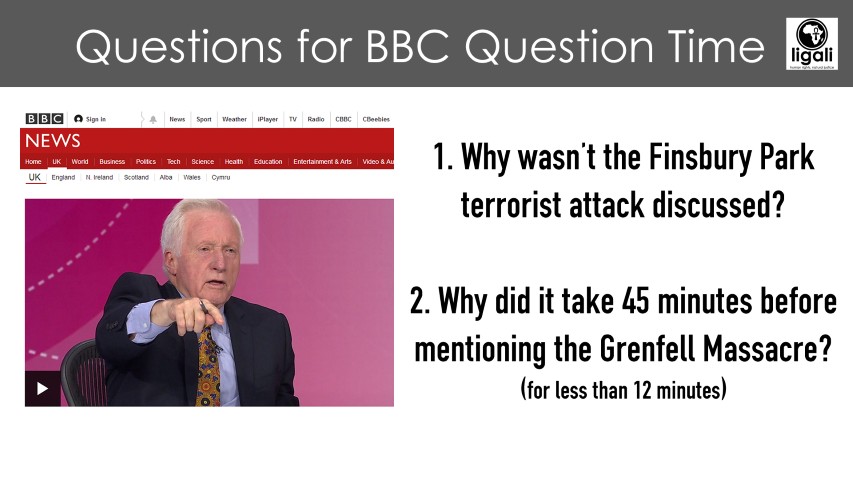
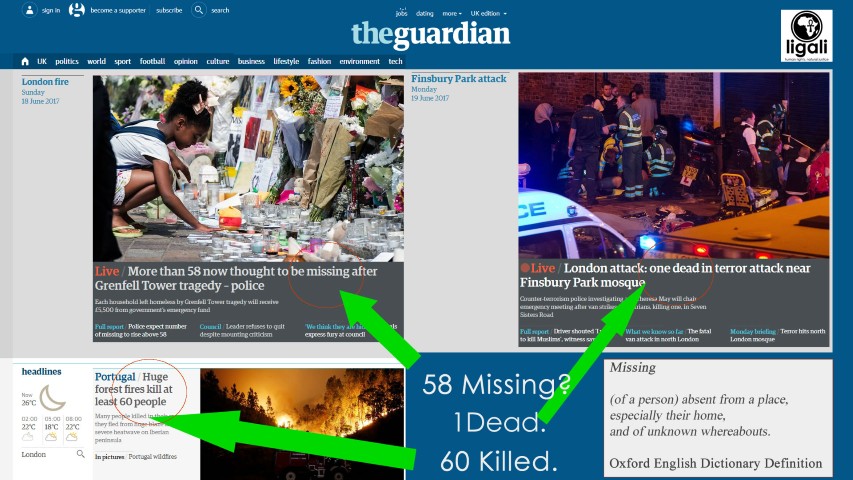
Get involved and help change our world