OBITUARIES
~ Chinua Achebe (16 Nov 1930-21 Mar 2013)
“The white man is very clever. He came quietly and peaceably with his religion. We were amused at his foolishness and allowed him to stay. Now he has won our brothers, and our clan can no longer act like one. He has put a knife on the things that held us together and we have fallen apart,” – ‘Things Fall Apart’
Nigeria’s literary icon Chinua Achebe passed away in a hospital in Boston, Massachusetts in the US. He was the David and Marianna Fisher University Professor and Professor of Africana Studies at Brown University. He wrote the classic ‘Things Fall Apart’, published in 1958, which is the most widely read Afrikan novel having sold over 12 million copies and been translated into over 50 languages worldwide.
Prof Achebe was born in Ogidi, Anambra State and was christened Albert Chinualumogu by his Christian convert parents. Later, in an autobiographical essay entitled ‘Named for Victoria, Queen of England’, he told how, like Queen Victoria, he lost his Albert.
He started studying medicine at the University College, now University of Ibadan in 1948, but changed to English, History and Theology after his first year. Achebe started contributing stories and essays to student magazines with a nationalist orientation. By the time he graduated in 1952, he had decided to be a writer telling the story of Afrikans and the colonial encounter from an Afrikan point of view. The five novels and the short stories he published between 1958 and 1987 provide a chronicle of Nigeria’s troubled history since the beginning of British colonial rule. They also create a host of vivid characters who seek in varying ways to take control of their history.
Prof Achebe taught for a while after graduation before joining the Nigeria Broadcasting Service in 1954 in Lagos. He joined the Biafran Government as an ambassador and his most recent book, ‘There Was a Country’, was an autobiography on his experiences and views of the civil war. Although the war ended in defeat for the Biafran cause, Achebe was determined the Igbo presence and perspectives should continue within the Nigerian nation. His collection of poems ‘Beware Soul Brother’ (1971) and the volume of short stories ‘Girls at War and Other Stories’ (1972) drew on the experiences of the war. He became a senior research fellow at the University of Nigeria, Nsukka, and in 1971 he and a group of Nigerian academics founded Okike, an important journal for African creative writing and critical debate. He also wrote several books for children.
His 1975 lecture, ‘An Image of Africa: Racism in Conrad’s Heart of Darkness’, caused controversy for its criticism of Joseph Conrad as a bloody racist and was later published. Achebe returned to Nigeria in 1976 to be Professor of Literature at the University of Nigeria, where he continued to teach, became chairman of the Association of Nigerian Writers and edited ‘Uwa ndi Igbo, the Journal of Igbo Life and Culture’. He was also elected Deputy National President of the People’s Redemption Party and published a political pamphlet, ‘The Trouble With Nigeria’, in 1983.
In 1990, a car accident left Achebe paralysed. Bard College in New York offered him and Christie teaching jobs and provided the facilities he needed. Now using a wheelchair, he continued to travel and lecture in the US and occasionally abroad. His talks at Harvard in 1998 were published under the title ‘Home and Exile’. He won the Man Booker International Prize in 2007. In 2012 he published ‘There Was a Country: A Personal History of Biafra’, which reiterated his belief in the ideals that had inspired the nationalism of his younger days. His account of the events that led to the civil war, its conduct and aftermath have stirred strong reactions from supporters as well as opponents of the Biafran cause.
As founding editor of the influential Heinemann African writers series, Achebe oversaw the publication of more than 100 novels, autobiographies and essays that made quality writing, political and cultural analysis by Afrikans available worldwide at affordable prices. He twice turned down the offer of a Nigerian title Commander of the Order of the Federal Republic, once in 2004 from Nigeria’s then President Olusegun Obasanjo and again in 2011 from President Goodluck Jonathan.
Chinua Achebe is survived by Christie and their four children Chinelo, Nwando, Ikechukwu and Chidi.
~ Bebo Valdes (Ramón Emilio Valdés Amaro, 9 Oct 1918-22 Mar 2013)
Cuban pianist Bebo Valdes has passed away in Sweden, where he had lived since the 1960s. Valdes came to fame as the musical director of the Tropicana club in Havana where he also performed with US artists such as Nat King Cole and Sarah Vaughan as well as creating his own rhythm, the batanga. His orchestra Sabor de Cuba, and that of Armando Valdés, alternated at the Tropicana backing singers such as Beny More and Pío Leyva. From 1948 to 1957, he worked as pianist and arranger for singer Rita Montaner. Following the 1959 Cuban revolution, Valdes left Cuba for Mexico. In 1963, he toured Europe with the Lecuona Cuban Boys orchestra and decided to stay in the Swedish capital, Stockholm. While he continued to play in hotel piano bars and restaurants, it was not until 1994 that he would record another album, ‘Bebo Rides Again’ with Cuban saxophonist and clarinettist Paquito D’Rivera which revived his musical fortune.
Calle 54, a 2000 documentary about Latin jazz by Spanish director Fernando Trueba, further helped to bring Valdes’s music to a wider audience. The film featured Bebo performing together with Chucho Valdes, the pianist and sometimes band leader of Irakere who is one of five children from his first marriage, In 2003 Bebo and Diego El Cigala, a famous Spanish flamenco singer, recorded the album ’Lagrimas Negras’, a fusion of Cuban rhythms and flamenco vocals. Valdés won five Grammy Awards: two for ’El Arte del Sabor’ in 2002, one for ’Lagrimas Negras’, and two for ‘Bebo de Cuba’ in 2006. In 2004 he was again filmed by Trueba, in ’El Milagro de Candeal‘, in Brazil, and later composed the score for Trueba’s 2010 animation film ’Chico and Rita‘, whose plot included bits from his own life. ‘Chico and Rita’ ends with the dedication “a bebo”. We strongly recommend that all readers of Nubiart Diary have a copy of this DVD in their collections.
THE HORN OF AFRIKA, SAHARA AND SAHEL WAR ROUND-UP
~ WESTERN SAHARA
Morocco is the only one of the 54 Afrikan countries that is not a member of the African Union. This is because it does not accept the right to self-determination of the people of Western Sahara which it has occupied since Spain left as the colonial power in 1975. It is felt that the ‘Arab Spring’ began here in Nov 2010 - one month before Tunisia - when the Moroccan police and army destroyed the Gdeim Izik refugee camp.
STATEMENT: SANDBLAST CONDEMNS MOROCCAN SENTENCES AGAINST SAHARAWI POLITICAL PRISONERS
Posted on February 20, 2013 by Sandblast Team
Dear friends,
Sandblast strongly condemns Morocco’s unfair and unjust sentence of 24 Saharawi civilians who were tried before a military court on Sunday February 17, 2013.
The military court of Rabat convicted eight of the defendants to life imprisonment. Fourteen were given sentences ranging from 20 to 30 years, and two were given prison sentences of two years.
These prisoners of conscience were arrested following the violent dismantling of the peaceful protest camp at Gdeim Izik on the outskirts of El-Auin by Moroccan forces on November 8, 2010. They were detained for two years without trial in terrible condition at the Sale prison near Rabat and went on hunger strikes several times to protest their conditions.
A litany of human rights violations including arbitrary sentences, continuous detention, trial postponements and the detainees’ allegations of torture and ill-treatment have been the cause of considerable international concern. Thereby, Sandblast denounces that:
1) The kingdom of Morocco does not have any jurisprudence over the aforementioned event in Gdeim Izik insofar as it has not been internationally recognised as having administrative power in the Territory which, according to the advisory letter from the UN Office of Legal Affairs (2002), lies instead with the former Spanish colonial authorities;
2) The trial of civilians before a military court did not meet international recognised standards for holding a fair trial;
3) The continuous imprisonment of civilians involved in the aforementioned event do not respect international law since no independent investigation into the events of Gdeim Izik were conducted in the two years after they occurred;
4) The detainees’ allegations of torture and ill-treatment contravene legal standards of Morocco, a signee of the Convention Against Torture in 1986, and invalidates any evidence obtained from prisoners under these circumstances;
5) The military trial is unconstitutional under Moroccan national law as the article 127 of the Moroccan constitution (2011) forbids Ad Hoc Courts, whose sentences cannot be appealed;
6) The evidence used against the prisoners remained in possession of the Moroccan authorities instead of being held by an independent judicial body;
7) The military court´s denial of medical assistance to the political prisoners who had experienced human rights abuses and violations and the lack of any due process to investigate these allegations;
8) The unlawful sentence against one of the condemned Saharawi prisoners who was reportedly arrested the day before the dismantling of the camp happened and did not participate in the Gdeim Izik events;
Due to the aforementioned points, Sandblast condemns the outcome of this unlawful trial and demands the immediate release of these political prisoners and the restoration of their dignity.
~ MALI’
Islamist militant Mokhtar Belmokhtar has been killed by Chadian soldiers in Mali’s Adrar de Ifhogas mountains, The killing came a day after Chadian President Idriss Deby said the country’s forces killed another al-Qaeda militant Abdelhamid Abou Zeid who was second-in-command of al-Qaeda in the Islamic Maghreb (AQIM), which is fighting foreign forces in Mali.
Belmokhtar was one of those jihadists who received military training funded by western anti-Soviet forces in Afghanistan. Inspired to avenge the 1989 killing of the Palestinian Islamist ideologue Abdullah Yusuf Azzam, he travelled to Afghanistan as a 19-year-old to receive training from al-Qaeda. On returning to Algeria he lost an eye fighting in the Islamist insurgency in the 1990s after the Algerian government annulled elections that the Islamic Salvation Front (FIS) was poised to win. Belmokhtar became a key figure in the militant Armed Islamist Group (GIA) and later the breakaway Salafist Group for Preaching and Combat (GSPC).
He then joined AQIM before breaking off to lead his own group, known variously as the Signed-in-Blood Battalion, the Masked Men Brigade and the Khaled Abu al-Abbas Brigade. The attack on the In Amenas gas plant in Algeria was his group’s first large-scale armed attack. After the Malian Islamist group, the Movement for Unity and Jihad in West Africa (Mujao), took control of the northern city of Gao last year, Belmokhtar joined the administration of the city.
Abou Zeid, also an Algerian, was behind several kidnappings of Westerners. He was also suspected of executing a British hostage, Edwin Dyer, in 2009 and French national Michel Germaneau a year later. He gained a reputation as one of AQIM’s most feared and radical commanders responsible for murdering hostages and for imposing ruthless Islamist rule on the historic Malian city of Timbuktu. He was close to AQIM leader Abdelmalek Droukdel, and was given a prominent role in the group’s activities in the Sahara. Abou Zeid used an alias, Mosab Abdelouadoud, and also had a nickname, the little emir, that referred to his short stature. The Algerian media raised doubts over his legal name, identifying him as either Abid Hamadou or Mohamed Ghedir.
The killings of the two prominent Islamist hardliners raises concerns about the fate of several foreign hostages believed to have been in their custody. AQIM told the news outlet ANI that it killed Philippe Verdon on 10 March, in retaliation for France’s intervention in Mali. Mr Verdon and another Frenchman, Serge Lazarevic, were seized in the northern town of Hombori. Besides Mr Verdon, a total of 14 French nationals are being held by Islamist groups in Afrika. Six of them are thought to be detained in Mali. They include four hostages kidnapped by AQIM at a uranium mine - vital to France’s nuclear industry - in northern Niger in 2010.
There have been several suicide and car bomb attacks in northern Mali, a new development in the fighting. Last week a suicide attack killed a Malian soldier in the historic city of Timbuktu. The attacker set off an explosive belt inside a car which had been stopped at a checkpoint near the airport. A booby-trapped car exploded during the night near the Timbuktu airport. The jihadist who set off his belt was killed instantly and one of the soldiers injured in the explosion died in hospital. There were two suicide bombings in the city of Gao last month.
French President Francois Hollande has said his country which launched its intervention in Mali on 11 January will begin withdrawing troops from Mali next month with West Afrikan countries expected to take over in the run-up to elections due in July. Meanwhile, the US government has placed Mali’s Islamist group Ansar Dine on its terror ‘blacklist’ because of continued links to AQIM. The decision freezes any of its US assets and bans business with it.
At a more in-depth level of political analysis many people are now beginning to publicly acknowledge that rather than a clash of civilisations the western / Christian / secular versus Arabic / Islamic there is a lot more interplay and confluence of ideologies. Why else is Saudi Arabia which is funding, arming and providing the ideological backing for the whole Wahabbism / Islamic fundamentalism movement never criticised or threatened with attack by western governments?
~ LIBYA
Three of Col Muammar Gaddafi’s children and his widow have left Algeria. Aisha and Hannibal Gaddafi are wanted by Interpol following a request from the Libyan authorities, unlike a third child, Mohamed, and Col Gaddafi’s widow, Safia. Another of his sons, Saadi, fled to Niger after the war and he has been there ever since. While Saif al-Islam was captured in Libya, where he remains in detention, even though the International Criminal Court wants to put him on trial in The Hague for alleged crimes against humanity. Last week, one of Col Gaddafi’s cousins, Ahmed Gaddaf al-Dam, was arrested in Egypt.
~ NIGERIA
Nigerian President Goodluck Jonathan says his government cannot grant an amnesty to the militant Islamist group Boko Haram because it is not known who its members are or what they want. Muslim leader, the Sultan of Sokoto, recently suggested that Boko Haram members should be offered an amnesty similar to that given to militants in the oil-producing Niger Delta in 2009. Boko Haram is believed to also have a presence in Nigeria, Cameroon, Niger and Chad.
Just this weekend at least 25 people died when gunmen attacked a prison, a police station, a bank and a bar simultaneous attacks in the eastern Nigerian town of Ganye, near Nigeria’s border with Cameroon. The gunmen - armed with bombs, machine-guns and rocket-propelled grenades - set free an unspecified number of inmates from the prison. Seven people were shot dead in the bar and six near the bank, while others were gunned down either outside their homes or on the streets. It was not clear how much money was looted from the bank. No group has said it carried out the attack but police said they suspected Islamist militants Boko Haram.
In a separate incident, two suspected suicide bombers died in the northern city of Kano on Saturday when their explosives went off prematurely, police said. Three policemen were injured in the blast. Kano was the scene of a suicide car bomb attack at a bus stop last Tuesday that killed more than 20 people.
~ EGYPT
The security headquarters in Port Said were set alight during clashes between police and protesters. Earlier, thousands of people joined a funeral procession for three civilians killed in clashes the day before, which also left three policemen dead. At least 400 people have been injured in the fighting. Protests have been taking place there since January, when 21 local football fans were sentenced to death over football riots which left 74 people dead in February 2012. Violence also broke out in the capital Cairo as protesters blocked a key thoroughfare and set alight at least one police car. Fighting began in Port Said when word spread that 39 defendants still facing trial over the riots were being moved to outside the city. The security head in the city of Port Said has been dismissed.
Egypt’s electoral commission has cancelled parliamentary elections which had been scheduled to begin next month. The move comes after the Cairo Administrative Court ruled that the electoral law backed by President Mohammed Morsi needed to be reviewed by the Supreme Constitutional Court. The administrative court said it had acted because the Shura Council - the upper house of parliament - had not returned the amended electoral law to the Supreme Court for final review. Instead, the Shura Council had sent the law to President Morsi for ratification. The elections had been boycotted by the main opposition amid continuing street protests. In the last week opposition protesters have clashed with members of the governing Muslim Brotherhood in several towns, leaving scores of people injured. In Cairo, the protesters ransacked one Brotherhood office, while in Mahalla in the Nile Delta the Islamist movement’s headquarters was set on fire.
The instability has made the migration routes more perilous for thousands of people who make the treacherous journey from Eritrea to Egypt each year. Many are tortured, starved and face extortion from unscrupulous people traffickers, who kidnap them and demand ransom money from their families. The UN has described the growth of the kidnap and people trafficking trades in Sinai as one of the worst unreported humanitarian crises in the world. It estimates that 3,000 Eritreans alone fled their impoverished country last year. Many headed for the swollen refugee camps of neighbouring eastern Sudan, now home to more than 90,000 people. The UN says that 70% of the new arrivals then vanish as they try to make their way to Israel or Egypt in search of a better life. Some are sold on to different gangs two or three times as they are trafficked north. Hostage victims are often taken to the largely lawless, desert area of north Sinai, where their kidnappers can operate with near impunity. If their families can’t pay, they have no further use for them and torture them to death.
FORTHCOMING NUBIART PROFILES
NUBIART: Focus on arts, business, education, health, political developments and the media.
MAR PROMOS
~ ‘THE BEST OF THE BLACK PRESIDENT 2’ – Fela Kuti [Knitting Factory Records / Kalakuta Sunrise – Out Now] This double-CD is part of a reissue series of all of Fela’s albums, continuing a process started by the German label Wrasse. In total there are going to be 26 CDs and a DVD of Fela live at the Glastonbury Festival in 1984. The twelve tracks here include stalwarts such as ‘Everything Scatter’, ‘Expensive Shit’, ‘Sorrow Tears and Blood’, ‘Colonial Mentality’, the anti-bleaching ‘Yellow Fever’, and our all-time favourite Fela tune, ‘He Miss Road’.
Currently Alex Gibney is making a Fela documentary due out this year and a feature film of Fela’s life and times is in the works with Focus Features, directed by Turner Prize and BAFTA winner, Steve McQueen. This is all being done with the support of Fela’s family, Kalakuta Sunrise, so there should be enough there to stimulate your mind and move your body although given his global inspiration and appeal there is always a danger that like Bob Marley retrospectives can only ever capture at most 10% of the man as so much is about that immediate time, the first time you heard their music or the time when hearing their music or seeing their presence just clicked a light in your brain and everything made sense and you knew you were not alone in what you were feeling about the absurdities, corruption, hypocrisy, degeneration and future possibilities to reclaim some sanity in a dysfunctional world.
NUBIART LIBRARY – MAR MEDIA
We will only review books we have read and DVDs we have seen and that are available at reasonable prices online or in shops or libraries. However, given the nature and current state of Afrikan publishing and production there may be books and films on this list that are worth the extra effort to track down.
~ ‘AMAZONS OF BLACK SPARTA: THE WOMEN WARRIORS OF DAHOMEY (Second Edition)’ – Stanley B Alpern [Hurst & Company. ISBN: 978-1-84904-108-9]
“In a song recorded by Forbes, amazons credited Gezo with their rebirth as men instead of women, while at the same time inconsistently calling themselves his wives and daughters. They were also his sandals – an apparent allusion to a Dahomean rule that only the king could be shod – and by implication, they were also the road he trod to victory. Another song emphasized that Gezo clothed and fed them. Forbes heard an amazon orator describe the women as the king’s fingers.
“Amazon songs heaped praise on the monarch and pledged unshakable loyalty, absolute obedience and the defeat of his enemies” [p114]
Stanley Alpern’s ‘Amazons of Black Sparta: The Women Warriors of Dahomey’ was considered the most comprehensive study of the legendary female warriors and civil security force in the English language when it was first printed in 1998. Some of the chapter headings include: Origins of Dahomey; Origins of the Amazons; The Elephant Huntresses; Celibacy; What They Wore; Their Weapons; Military Training; Building Esprit de Corps; Abeokuta 1851; Abeokuta 1864; France vs. Dahomey, 1890; and France vs. Dahomey, 1892. This edition was reprinted after a one page mention and summary in ‘The Girl Who Kicked the Hornet’s Nest’, the third part of the late Stieg Larsson’s Millennium trilogy.
The book starts with a rundown of mythical Amazons throughout history and concludes that only those of the Fon people of Dahomey actually existed. Sources saw the amazons around the king’s palaces, on manoeuvres and in battle. Lah-maa-cee-dug-bee / Seh-dong-hong-beh is the model for the injured Amazon portrait by Forbes. As the Amazons were only disbanded at the very end of the 19th century several elderly Amazons lived until the mid-to-late 20th century.
Their origins were from among the king’s wives, harem, debtors’ relatives and women outcasts. They started out guarding palaces, hunting elephants and enforcing laws in civil cases, such as on debtors. Regular Amazon use in combat is reported from 1830. Estimates of their number vary between 600-10,000 Amazons but it is reliably reported that in one battle 2,000 Amazons were killed and were rapidly replaced. Amazons preferred to be killed in battle rather than be captured and marry their enemies. The French said Dahomeans were the first Afrikan armies they encountered that put up stiff resistance. Every male constitutional and military role had its female equivalent in the Amazons (male first): Migan / Gundeme; Mau / Yewe; Gau / Khetungan; and Kposu / Akpadume. The Zokhenu was the Khetungan’s second in command, while the Fosupo was the Akpadume’s deputy. At their height there were 20 Amazon military companies including an Amazon elite band called the Fanti. Umbrellas up to ten feet in diameter were used by army captains and Alpern directly links this to customs common since 1200BC in Egypt.
Amazons had to be celibate unless given permission but not all were virgins as some had daughters who themselves joined up. Amazons usually retired from the military at 35 and looked after palace activities. Every women in the palace had an occupation. Pottery, the dyeing of material and calabash production were considered Amazon monopolies. They also engaged in mat weaving, palm oil production and export, sewing and embroidery. One large patchwork seen by visitors included samples of every material used and imported into Dahomey and was up to 1,000 yards long and eight yards wide. It was called Nunupweto after one of Gezo’s titles and means ‘He is able to do anything he likes’ or ‘Omnipotent’. It was to keep growing until the king defeated Abeokuta, which never happened. Amazons also strung the king’s cowries on twisted grass or palm leaves at 40-50 per necklace. The king’s strings had less cowries with palace women deducting 2.5-20% but were exchanged for the same value as other necklaces. Amazons did not do farming.
The Dahomey spiritual system called Fa was believed to be derived from the Yoruba Ifa. Yet they were their biggest military adversary in the region until the arrival of the European colonists. The Fon fought the Egba in 1851 and 1864. Sodeke had founded Abeokuta for the Egba in 1830 and they took in people from 153 villages who were displaced as a result of internecine fighting among the Yoruba. The Egbado, another Yoruba group, asked the Fon king Gezo for help to fight the Egba. This suited Gezo as it is reported he wanted the return of either his umbrella or stool from the Egba. Up to 4,000 Amazons were among 10,000 Fon who attacked Abeokuta in 1851. But it was not a success as Oba Koko of Ishagga, who was later beheaded, had lied to Gezo regarding the state and strength of Abeokuta’s defences. This battle was the first time Europeans had seen Amazons in combat as the British helped the Abeokutans. The Fon thus blamed missionaries for their defeat. There were 3,000 Amazons among 12,000 Fon in the 1864 campaign. This time the Fon king Glele lost his tent, throne and sandals.
Porto Novo, traced its origins like Dahomey, to Tado in Togo and considered the Fon as cousins. The kinghdom fought Dahomey during the reign of Tegbesu (1740-74) and Porto Novo became a protege of the Oyo empire which had already invaded Dahomey seven times between 1726–1748. The Fon paid tributary to Oyo but had stopped paying in 1836. Porto Novo asked for French protection and a treaty was concluded in 1863. The Porto Novo king who signed it passed away after two years and his successor opposed it but by then the French had established themselves. The British attacked Porto Novo believing it was diverting the palm oil trade from Lagos and because it was still engaged in slaving.
Dahomey had recognised French protectorate over Porto Novo and the occupation of Cotonou in 1889.
The First Franco-Dahomean War was in 1890 with main battles at Cotonou and Atchoupa. The Second War in 1892 came after Fon raids and an attack on the French gunboat Topaze. Major battles were fought at Dogba and Poguessa (Pokissa / Kpokissa). With defeat King Behanzin evacuated Abomey for Atcheribe. His brother, the ex-Gau Goutchili, was chosen as king of the Protectorate in 1894. He called himself Agoli-Agbo. Behanzin and five of his wives were exiled to Martinique where Dahomey had sent many slaves. Amazons left in Abomey continued to attack and kill French. There had been 12 kings of Dahomey between 1620-1900 when the French abolished the Protectorate and established direct rule. A picture of Amazons taken in Abomey in 1942 by Eva L R Meyerowitz is reprinted in the book. In 1978 a women called Nawi in Kinta village claimed to be an amazon. She passed away in 1979 so if what she said was true she would have been at least 103. Non-Fon peoples are the majority in Dahomey today hence the name change to Benin in 1975.

~ BLACK HISTORY STUDIES AND THE PUBLIC AND COMMERCIAL SERVICES UNION (PCS) SCREENING OF ‘BAD FRIDAY: RASTAFARI AFTER CORAL GARDENS’. This screening is in commemoration of the 50th anniversary of the Coral Gardens’ massacre of 1963 in Jamaica against Rastafari. ‘Bad Friday’ focuses on a community of Rastafarians in western Jamaica who annually commemorate the 1963 Coral Gardens ‘incident’ just after independence when the Jamaican government rounded up, jailed and tortured hundreds of Rastafari. On Wed 27 Mar at 7-9pm at the PCS Headquarters, 160 Falcon Road, Clapham Junction, London, SW11 2LN. Adm: £5 / U-16 – Free. Tel / Fax: 020 8881 0660 / 07951 234 233. E-mail: info@blackhistorystudies.com Web: http://www.blackhistorystudies.com
~ THE AFRIKA AND DIASPORA INSTITUTE PRESENT ‘AFRICAN UNION: 50 YEARS LATER 1963-2013.’ Solidarity with Afrika the Motherland, British Social History and its relationship with Afrika and her
Diaspora.
- ‘Triumph Of The Grassroots’. On Thurs 28 Mar at 3.30-6.30pm. A documentary screening about self-help and active citizenship in Britain over 40 years 1972-2012. Audience interactive and panel discussion.
- ‘Visions And Struggles Walk Together’. On Thurs 4 Apr at 3.30-6.30pm. Panel discussion on the life and work of the Honourable Marcus Mosiah Garvey, iconic Pan-Africanist on whose ideas the African Union was founded.
Both events at Acton Library, High Street, London, W3 6NA. Adm: Free. Tel: 030 3040 2690. 07960 143 627. E-mail: afrikatoday@ubol.com / adi@ubol.com
~ IMAGES OF BLACK WOMEN (IBW) FILM FESTIVAL SCREENING OF ‘THE EDUCATION OF AUMA OBAMA’ PLUS Q & A. Nigerian-Welsh director Branwen Okpako lovingly reveals one of the key women living in the shadows of Obama’s success - his fascinating, sophisticated Kenyan half-sister, Auma Obama. On Thurs 28 Mar at 6pm at Ritzy, Brixton, London, SW9. Web: www.imagesofblackwomen.com
~ BLACKHISTORYWALKS PRESENTS
- BlackHistoryWalks, Nu-Beyond & BlackStarLine present ‘Django Unchained Or Tarantino Unrestrained?’ A film break-down by Bro Hakim and Dr Lez Henry. On Fri 29 Mar at 3-6pm at
Conference Room, Voluntary Action Islington, 200a Pentonville Road, London, N1 9JP. Adm: £8. (NB: Not suitable for under 16’s or adults of an over-sensitive disposition).
- ‘African Superheroes Day’. On Sat 30 Mar at 3-6.30pm at Conference Room, Voluntary Action Islington, 200a Pentonville Road, London, N1 9JP. Adm: £7 / Under-16s - £5. They will show the history of Afrikans in cartoons and reveal how Afrikan / Caribbean culture is essential to many block buster animations. Also exposing stereotyping in some of the most popular cartoons from Disney. This animation festival for 6-60 year olds, will feature a variety of Afrikan-themed cartoons which tell tales of; Magical Nigerian women warriors, Anansi the West African Folk Hero, The story of Ogun, and other heroic black men and women. Plus examples of new Superhero cartoons/movies coming soon !
- BlackHistoryWalks and the Adefioye Initiative present ‘How to Brainwash the Youth and make them act like Fools!’ On Mon 1 April at 4-7.30 at CAN Mezzanine,32-36 Loman Street, London, SE1 OEH. Adm: £5. Seminar aimed at children and parents to illustrate how they are conditioned via Hollywood movies, music videos, computer games and advertising to act dumb and love it. This presentation uses pop and mainstream culture combined with an Afrikan history perspective. Twilight, Battle Los Angeles, Scary Movie, Predator, Lil Wayne, Futurama, Disney, 300, Trinidad James, GTA, Eastenders, Nikki Minaj, Ciara, Nelly, Lord of the Rings, Pirates of Caribbean, Transformers, Call of Duty, all make an appearance
- ‘The Black History of Comedy’. On Sat 6 April at 7-9.30pm. This interactive session pieces together a visual tapestry of the best historical comedy from great known and unknown comics from the 1960’s to now. It will also place their comical observations on a historical timeline of international struggle for Afrikan equality and show how comedy can be educational.
~ BLACK HISTORY WALKS
- Secrets of Soho on Fri 29 Mar at 11.30am.
- Trafalgar Square on Sat 30 Mar at 11.30am.
- Elephant and Castle on Mon 1 Apr at 11.30am.
- Notting Hill on Sun 7 Apr at 11.30am.
E-mail: info@blackhistorywalks.co.uk with number of walkers. Web: www.blackhistorywalks.co.uk
~ NOMMO SESSION: ‘WHO SHOULD RAISE OUR CHILDREN? THE FOSTERING & ADOPTION DEBATE’ How should the Afrikan community respond to the Governments plans to abolish same race adoption rights? On Fri 29 Mar at 7-10.30pm at Mama Afrika Kulcha Shap, 282 High Road Leyton, London, E10 5PW. Adm: £3 / Under 21’s – Free. Tel: 020 8539 2154 / 07908 814 152. E-mail: arm6227@yahoo.co.uk
~ PASCF WORKSHOPS:
- ‘A Revolutionary Celebration of the Afrikan Woman through Word Power & Song!’ On Fri 29 Mar at 7pm at 365 Brixton Road, London, SW9 7DA. An interactive workshop – bring a piece of poetry, song, a tribute to your Mother, an adage or something of significance that you would like to share.
- Honouring Hugo Chavez: Lessons for Pan-Afrikanism with Venezuela Support Campaign (Invited). On Fri 5 April at 7-9pm.
- The 1966 anti-Nkrumah coup: Lessons for the UK’s contemporary Afrikan liberation movement
Cecil Gutzmore & AAPRP (Invited). On Thurs 11 April at 7–9pm.
- ‘The 1945 5th Pan-Afrikan Congress (Revisited) with Hakim Adi (BASA). On Thurs 25 April at
7–9pm.
- ‘Kwame Nkrumah Memorial Lecture 2013’ with Marika Sherwood (BASA). On Sat 27 Apr at 5–9pm. The struggle for Afrikan Unity in the midst of counter-insurgency.
All meetings (except 29 Mar) at The West Indian Association of Service Personnel (WASP), 163 Clapham Manor Street, London, SW4 6DB. Web: www.pascf.org.uk
~ NATIONAL MEMORIAL CEREMONY IN HONOUR OF BABA PROF. TONY MARTIN (21 FEB 1942- 17 JAN 2013). Foremost Garveyite Scholar! Official UNIA-ACL Historian! The Garvey Apostle! This is an opportunity for the Afrikan Community-UK to pay respects to the man whose monumental research unearthed vital knowledge of Garvey & Garveyism, which we otherwise would not have. Speakers including Cecil Gutzmore and Ekua Esther Stanford-Xosei. On Sat 30 Mar at 4-10.30pm at Afrikan Caribbean Cultural Centre. 9 Clarendon Rd, Haringey, London, N8 ODD. Tel: 07908 814 152.
~ INSTITUTE OF COMMONWEALTH STUDIES, IN CONJUNCTION WITH THE BLACK & ASIAN STUDIES ASSOCIATION BLACK AND ASIAN BRITAIN SEMINAR.
- Marika Sherwood, ‘World War II: Colonies & Colonials’. On Thurs 4 Apr in Room G22. This book outlines the vast range of omissions from the standard books on the War, ranging from the political activism by ‘colonials’ to the interests of the USA. This session shall focus on the Home Fronts and the military and other contributions.
- Patrick Vernon (Every Generation Media) and Ian Randle (publisher, Jamaica), ‘The Caribbean in Sepia: A History in Photographs 1840-1900’. On Tues 16 Apr in Room 349. The presenters will discuss Michael Ayre’s book which presents a visual narrative of the Caribbean world and analyses how the old Caribbean order of slavery and plantation sugar was swept aside by a series of fundamental changes which reached into the deepest corners of economic life and society.
Both sessions at 6-7.30pm in Senate House, University of London, Russell Square, London, WC1. Adm: Free. E-mail: Marika.Sherwood@sas.ac.uk
~ NEW BEACON BOOK CLUB AND THE GEORGE PADMORE INSTITUTE BOOKMAN RESEARCH PROJECT. This will be an open forum bringing together different generations to talk about important or influential books published by New Beacon. All will be very welcome, regardless of previous knowledge of these books and their histories. Extracts from the texts will be circulated for you to read before each session and the conversations will be guided by someone with specialist knowledge of each book and its historical context.
- Session 2. Criticism at New Beacon (New Beacon Reviews and Tradition, the Writer & Society, Wilson Harris). Wed 10 Apr. Facilitator: Rachael Gilmour (Queen Mary, University of London).
All sessions at 6.30-8pm at George Padmore Institute, 76 Stroud Green Road, London, N4 3EN. Adm: Free. E-mail: info@georgepadmoreinstitute.org
~ FIND YOUR VOICE presents an examination of the works of Dr. Llaila Afrika, including a screening of his DVD on diabetes. On Sun 14 Apr at 5-8.30pm at Park View Academy, West Green Road, London, N15 3RB. Adm: £5. Tel: 07960 239 493 or 07882 403 871. E-mail: findyourvoice@hotmail.co.uk
~ ‘FERENGI! FERENGI!’ An exhibition of award-winning prints and drawings from illustrator James Alton, who spent the summer of 2012 as Artist in Residence in the Bale Mountain National Park of southern Ethiopia. Until 14 Apr at Michaelhouse Centre, St Michael’s Church, Trinity Street, Cambridge, CB2 1SU.
~ BP BRITISH ART DISPLAYS PRESENT ‘FOCUS: FRANCIS FRITH PHOTOGRAPHS’. Francis Frith (1822-1898) made several trips to Egypt and the Near East between 1856 and 1859, using the new medium of photography to record landscapes and monuments not then as familiar to a British audience as they are today. Frith was one of the first to experiment with glass negatives. Frith prepared and fixed the photographs in a tent or ancient tomb, despite the danger of using explosive materials such as liquid ether and gun cotton in the desert heat. The glass negatives enabled Frith to print his pictures many times and publish them for a wide audience. An astute entrepreneur as well as an adventurer, he established his own business, Francis Frith & Co, the first specialist photographic publisher which photographed every town and village in Britain. These photographs have been lent by the Wilson Centre for Photography. Until 15 Apr at Tate Britain, Millbank, London, SW1P 4RG. Tel: 020 7887 8888. Adm: Free. Web: www.tate.org.uk/visit/tate-britain
~ BTWSC AND AFRICAN HISTORIES REVISITED. 2013 marks both 100 years since John Archer became London’s first Afrikan mayor in the London borough of Battersea, and pioneered “black politics” (a precursor to Black Sections), and 50 years since Paul Stephenson successfully led the Bristol Bus Boycott, in order to expose and break racist employment policies. This in part led to the 1965 Race Relations Act. There is also a Martin Luther King connection. On Tues 16 April at 6.30-8.30pm. Adm: Free. E-mail: btwsc@hotmail.com Web: www.narm2013.eventbrite.com
~ NOH BUDGET FILMS PRESENT ACTIVE INQUIRY. Do you like being creative? Would you like to be part of a group who solve community problems through performing? ACTive Inquiry are inviting you to join our weekly participatory performance workshops exploring Current Affairs. The AI group carries out sketches, scenes, skits and other social commentary performances to raise awareness about problematic social issues. The stated goal of these performances is to make the public ‘think and ask questions’ and expose the lies around these injustices. Every Thurs at 6.30-9.30pm at Stockwell Park Community Trust, Crowhurst House, 21 Aytoun Place, Stockwell, London, SW9 0TE. Adm: £5. (Suggested donation to help cover room hire costs and refreshments but we would hate cost to be a barrier to participation so please pay what you can afford). Web: http://activeinquiry2013.eventbrite.com
~ GASWORKS PRESENTS ‘THE BLACK CAVE’. The first UK solo exhibition by Beatriz Santiago Muñoz. Consisting of newly commissioned moving image works, the exhibition focuses on the relationship between landscape, history and infrastructure in the artist’s home country of Puerto Rico.
Santiago’s films and videos focus on how social relations are embodied in particular places and gestures. Drawing from anthropology and experimental theatre, the artist develops her work together with the people she portrays, using performance and re-enactment as strategies for self-representation.
The video ‘La Cueva Negra’ (2013) investigates the transformation of a former indigenous burial site, whereas the 16mm film ‘Farmacopea’ (2013) looks at how distinctive features of the island’s natural landscape relate to the development of agriculture and tourism. Exhibition open Wed-Sun at 12-6pm until 21 Apr at Gasworks, Vauxhall Street, London, SE11. Web: www.gasworks.org.uk
~ THE CENTRE BLACK AND AFRICAN ARTS AND CIVLIZATION (CBAAC) NIGERIA AND PAN AFRICAN STRATEGIC AND POLICY RESEARCH GROUP (PANAFSTRAG) IN COLLABORATION WITH THE UNIVERSITY OF THE WEST INDIES PRESENTS CBAAC COLLOQUIUM 2013. Conference Announcement and Call For Papers. Theme: ‘Toward A New Pan-Africanism: Deploying Anthropology, Archaeology, History And Philosophy In The Service Of Africa And The Diaspora’. On 30 Oct-3 Nov at The University Of The West Indies, Mona Campus, Kingston, Jamaica
The new push of the African Union, toward the goal of “United States of Africa” is a particularly exciting and timely move. The proposed conference aims to take advantage of this momentum to jumpstart a New Pan-Africanism upon a template deriving from such vantage points situated in the disciplines of anthropology, archaeology, history and philosophy.
1: Anthropological, Archaeological, and historical investigations of the areas of origins and contemporary domicile of the African Diaspora
Where did enslavement take place? How was it organized? What were its demographic, psychological, economic, cultural and religio-metaphysical consequences? Two enslavement systems, one Arabo-Berber and the other European, overlap in the Senegal valley. The Arabo-Berber slavery system operated from the 8th-9th centuries to only a few years ago. The European Slave Trade, through Saint-Louis harbor and the river Senegal, was superimposed on the previous one. In all cases, this convergence led to the “militarization” of the societies, with rival war-lords, and “warring” marabouts.
2: Anthropological, Archaeological, and Historical investigations of African and African Diaspora Resistance and Resilience
Signs of resistance and resilience can be found in the landscape, as architectural devices for 3 protection, in the daily life under bondage by theft or sabotage, in songs, and withdrawal.
3: Anthropological, Archaeological, and Historical investigations of Material Culture and Technology of African Diaspora
4: Anthropological, Archaeological, and Historical investigations on the construction of Social Space and Identity of Global and Diaspora Africa
5: Philosophy, Religions, and Ritual Practices of Global Africa for Empowerment
How did the up-rooted Africans manage to create a sense of cultural identity in the new world?
6: Culture, Education and Leadership and Global African Development
All abstracts should include title, the author(s) name, institutional affiliation, address, telephone number and email address. All abstracts must not be more than 300 words. Abstracts for consideration which must be in electronic format should be received not later than Tues 9 Apr by: tunde.bewaji@gmail.com and ibraheem_muheeb@yahoo.com Contact: Jubril Adesegun Dosumu, Centre for Black and African Arts and Civilization (CBAAC), 36-38, Broad Street, Lagos Island, Lagos, Nigeria. Tel: 01-7744489, +2348083950755, +2348055404320
Contact: Kubara Zamani, Afrikan Quest International, PO Box 35165, London, SE5 8WU. Tel: 07811 494 969. E-mail: afrikanquest@hotmail.com Web: www.southwark.tv/quest/aqhome.asp
External Links
Afrikan Quest International
~ Chinua Achebe (16 Nov 1930-21 Mar 2013)
“The white man is very clever. He came quietly and peaceably with his religion. We were amused at his foolishness and allowed him to stay. Now he has won our brothers, and our clan can no longer act like one. He has put a knife on the things that held us together and we have fallen apart,” – ‘Things Fall Apart’
Nigeria’s literary icon Chinua Achebe passed away in a hospital in Boston, Massachusetts in the US. He was the David and Marianna Fisher University Professor and Professor of Africana Studies at Brown University. He wrote the classic ‘Things Fall Apart’, published in 1958, which is the most widely read Afrikan novel having sold over 12 million copies and been translated into over 50 languages worldwide.
Prof Achebe was born in Ogidi, Anambra State and was christened Albert Chinualumogu by his Christian convert parents. Later, in an autobiographical essay entitled ‘Named for Victoria, Queen of England’, he told how, like Queen Victoria, he lost his Albert.
He started studying medicine at the University College, now University of Ibadan in 1948, but changed to English, History and Theology after his first year. Achebe started contributing stories and essays to student magazines with a nationalist orientation. By the time he graduated in 1952, he had decided to be a writer telling the story of Afrikans and the colonial encounter from an Afrikan point of view. The five novels and the short stories he published between 1958 and 1987 provide a chronicle of Nigeria’s troubled history since the beginning of British colonial rule. They also create a host of vivid characters who seek in varying ways to take control of their history.
Prof Achebe taught for a while after graduation before joining the Nigeria Broadcasting Service in 1954 in Lagos. He joined the Biafran Government as an ambassador and his most recent book, ‘There Was a Country’, was an autobiography on his experiences and views of the civil war. Although the war ended in defeat for the Biafran cause, Achebe was determined the Igbo presence and perspectives should continue within the Nigerian nation. His collection of poems ‘Beware Soul Brother’ (1971) and the volume of short stories ‘Girls at War and Other Stories’ (1972) drew on the experiences of the war. He became a senior research fellow at the University of Nigeria, Nsukka, and in 1971 he and a group of Nigerian academics founded Okike, an important journal for African creative writing and critical debate. He also wrote several books for children.
His 1975 lecture, ‘An Image of Africa: Racism in Conrad’s Heart of Darkness’, caused controversy for its criticism of Joseph Conrad as a bloody racist and was later published. Achebe returned to Nigeria in 1976 to be Professor of Literature at the University of Nigeria, where he continued to teach, became chairman of the Association of Nigerian Writers and edited ‘Uwa ndi Igbo, the Journal of Igbo Life and Culture’. He was also elected Deputy National President of the People’s Redemption Party and published a political pamphlet, ‘The Trouble With Nigeria’, in 1983.
In 1990, a car accident left Achebe paralysed. Bard College in New York offered him and Christie teaching jobs and provided the facilities he needed. Now using a wheelchair, he continued to travel and lecture in the US and occasionally abroad. His talks at Harvard in 1998 were published under the title ‘Home and Exile’. He won the Man Booker International Prize in 2007. In 2012 he published ‘There Was a Country: A Personal History of Biafra’, which reiterated his belief in the ideals that had inspired the nationalism of his younger days. His account of the events that led to the civil war, its conduct and aftermath have stirred strong reactions from supporters as well as opponents of the Biafran cause.
As founding editor of the influential Heinemann African writers series, Achebe oversaw the publication of more than 100 novels, autobiographies and essays that made quality writing, political and cultural analysis by Afrikans available worldwide at affordable prices. He twice turned down the offer of a Nigerian title Commander of the Order of the Federal Republic, once in 2004 from Nigeria’s then President Olusegun Obasanjo and again in 2011 from President Goodluck Jonathan.
Chinua Achebe is survived by Christie and their four children Chinelo, Nwando, Ikechukwu and Chidi.
~ Bebo Valdes (Ramón Emilio Valdés Amaro, 9 Oct 1918-22 Mar 2013)
Cuban pianist Bebo Valdes has passed away in Sweden, where he had lived since the 1960s. Valdes came to fame as the musical director of the Tropicana club in Havana where he also performed with US artists such as Nat King Cole and Sarah Vaughan as well as creating his own rhythm, the batanga. His orchestra Sabor de Cuba, and that of Armando Valdés, alternated at the Tropicana backing singers such as Beny More and Pío Leyva. From 1948 to 1957, he worked as pianist and arranger for singer Rita Montaner. Following the 1959 Cuban revolution, Valdes left Cuba for Mexico. In 1963, he toured Europe with the Lecuona Cuban Boys orchestra and decided to stay in the Swedish capital, Stockholm. While he continued to play in hotel piano bars and restaurants, it was not until 1994 that he would record another album, ‘Bebo Rides Again’ with Cuban saxophonist and clarinettist Paquito D’Rivera which revived his musical fortune.
Calle 54, a 2000 documentary about Latin jazz by Spanish director Fernando Trueba, further helped to bring Valdes’s music to a wider audience. The film featured Bebo performing together with Chucho Valdes, the pianist and sometimes band leader of Irakere who is one of five children from his first marriage, In 2003 Bebo and Diego El Cigala, a famous Spanish flamenco singer, recorded the album ’Lagrimas Negras’, a fusion of Cuban rhythms and flamenco vocals. Valdés won five Grammy Awards: two for ’El Arte del Sabor’ in 2002, one for ’Lagrimas Negras’, and two for ‘Bebo de Cuba’ in 2006. In 2004 he was again filmed by Trueba, in ’El Milagro de Candeal‘, in Brazil, and later composed the score for Trueba’s 2010 animation film ’Chico and Rita‘, whose plot included bits from his own life. ‘Chico and Rita’ ends with the dedication “a bebo”. We strongly recommend that all readers of Nubiart Diary have a copy of this DVD in their collections.
THE HORN OF AFRIKA, SAHARA AND SAHEL WAR ROUND-UP
~ WESTERN SAHARA
Morocco is the only one of the 54 Afrikan countries that is not a member of the African Union. This is because it does not accept the right to self-determination of the people of Western Sahara which it has occupied since Spain left as the colonial power in 1975. It is felt that the ‘Arab Spring’ began here in Nov 2010 - one month before Tunisia - when the Moroccan police and army destroyed the Gdeim Izik refugee camp.
STATEMENT: SANDBLAST CONDEMNS MOROCCAN SENTENCES AGAINST SAHARAWI POLITICAL PRISONERS
Posted on February 20, 2013 by Sandblast Team
Dear friends,
Sandblast strongly condemns Morocco’s unfair and unjust sentence of 24 Saharawi civilians who were tried before a military court on Sunday February 17, 2013.
The military court of Rabat convicted eight of the defendants to life imprisonment. Fourteen were given sentences ranging from 20 to 30 years, and two were given prison sentences of two years.
These prisoners of conscience were arrested following the violent dismantling of the peaceful protest camp at Gdeim Izik on the outskirts of El-Auin by Moroccan forces on November 8, 2010. They were detained for two years without trial in terrible condition at the Sale prison near Rabat and went on hunger strikes several times to protest their conditions.
A litany of human rights violations including arbitrary sentences, continuous detention, trial postponements and the detainees’ allegations of torture and ill-treatment have been the cause of considerable international concern. Thereby, Sandblast denounces that:
1) The kingdom of Morocco does not have any jurisprudence over the aforementioned event in Gdeim Izik insofar as it has not been internationally recognised as having administrative power in the Territory which, according to the advisory letter from the UN Office of Legal Affairs (2002), lies instead with the former Spanish colonial authorities;
2) The trial of civilians before a military court did not meet international recognised standards for holding a fair trial;
3) The continuous imprisonment of civilians involved in the aforementioned event do not respect international law since no independent investigation into the events of Gdeim Izik were conducted in the two years after they occurred;
4) The detainees’ allegations of torture and ill-treatment contravene legal standards of Morocco, a signee of the Convention Against Torture in 1986, and invalidates any evidence obtained from prisoners under these circumstances;
5) The military trial is unconstitutional under Moroccan national law as the article 127 of the Moroccan constitution (2011) forbids Ad Hoc Courts, whose sentences cannot be appealed;
6) The evidence used against the prisoners remained in possession of the Moroccan authorities instead of being held by an independent judicial body;
7) The military court´s denial of medical assistance to the political prisoners who had experienced human rights abuses and violations and the lack of any due process to investigate these allegations;
8) The unlawful sentence against one of the condemned Saharawi prisoners who was reportedly arrested the day before the dismantling of the camp happened and did not participate in the Gdeim Izik events;
Due to the aforementioned points, Sandblast condemns the outcome of this unlawful trial and demands the immediate release of these political prisoners and the restoration of their dignity.
~ MALI’
Islamist militant Mokhtar Belmokhtar has been killed by Chadian soldiers in Mali’s Adrar de Ifhogas mountains, The killing came a day after Chadian President Idriss Deby said the country’s forces killed another al-Qaeda militant Abdelhamid Abou Zeid who was second-in-command of al-Qaeda in the Islamic Maghreb (AQIM), which is fighting foreign forces in Mali.
Belmokhtar was one of those jihadists who received military training funded by western anti-Soviet forces in Afghanistan. Inspired to avenge the 1989 killing of the Palestinian Islamist ideologue Abdullah Yusuf Azzam, he travelled to Afghanistan as a 19-year-old to receive training from al-Qaeda. On returning to Algeria he lost an eye fighting in the Islamist insurgency in the 1990s after the Algerian government annulled elections that the Islamic Salvation Front (FIS) was poised to win. Belmokhtar became a key figure in the militant Armed Islamist Group (GIA) and later the breakaway Salafist Group for Preaching and Combat (GSPC).
He then joined AQIM before breaking off to lead his own group, known variously as the Signed-in-Blood Battalion, the Masked Men Brigade and the Khaled Abu al-Abbas Brigade. The attack on the In Amenas gas plant in Algeria was his group’s first large-scale armed attack. After the Malian Islamist group, the Movement for Unity and Jihad in West Africa (Mujao), took control of the northern city of Gao last year, Belmokhtar joined the administration of the city.
Abou Zeid, also an Algerian, was behind several kidnappings of Westerners. He was also suspected of executing a British hostage, Edwin Dyer, in 2009 and French national Michel Germaneau a year later. He gained a reputation as one of AQIM’s most feared and radical commanders responsible for murdering hostages and for imposing ruthless Islamist rule on the historic Malian city of Timbuktu. He was close to AQIM leader Abdelmalek Droukdel, and was given a prominent role in the group’s activities in the Sahara. Abou Zeid used an alias, Mosab Abdelouadoud, and also had a nickname, the little emir, that referred to his short stature. The Algerian media raised doubts over his legal name, identifying him as either Abid Hamadou or Mohamed Ghedir.
The killings of the two prominent Islamist hardliners raises concerns about the fate of several foreign hostages believed to have been in their custody. AQIM told the news outlet ANI that it killed Philippe Verdon on 10 March, in retaliation for France’s intervention in Mali. Mr Verdon and another Frenchman, Serge Lazarevic, were seized in the northern town of Hombori. Besides Mr Verdon, a total of 14 French nationals are being held by Islamist groups in Afrika. Six of them are thought to be detained in Mali. They include four hostages kidnapped by AQIM at a uranium mine - vital to France’s nuclear industry - in northern Niger in 2010.
There have been several suicide and car bomb attacks in northern Mali, a new development in the fighting. Last week a suicide attack killed a Malian soldier in the historic city of Timbuktu. The attacker set off an explosive belt inside a car which had been stopped at a checkpoint near the airport. A booby-trapped car exploded during the night near the Timbuktu airport. The jihadist who set off his belt was killed instantly and one of the soldiers injured in the explosion died in hospital. There were two suicide bombings in the city of Gao last month.
French President Francois Hollande has said his country which launched its intervention in Mali on 11 January will begin withdrawing troops from Mali next month with West Afrikan countries expected to take over in the run-up to elections due in July. Meanwhile, the US government has placed Mali’s Islamist group Ansar Dine on its terror ‘blacklist’ because of continued links to AQIM. The decision freezes any of its US assets and bans business with it.
At a more in-depth level of political analysis many people are now beginning to publicly acknowledge that rather than a clash of civilisations the western / Christian / secular versus Arabic / Islamic there is a lot more interplay and confluence of ideologies. Why else is Saudi Arabia which is funding, arming and providing the ideological backing for the whole Wahabbism / Islamic fundamentalism movement never criticised or threatened with attack by western governments?
~ LIBYA
Three of Col Muammar Gaddafi’s children and his widow have left Algeria. Aisha and Hannibal Gaddafi are wanted by Interpol following a request from the Libyan authorities, unlike a third child, Mohamed, and Col Gaddafi’s widow, Safia. Another of his sons, Saadi, fled to Niger after the war and he has been there ever since. While Saif al-Islam was captured in Libya, where he remains in detention, even though the International Criminal Court wants to put him on trial in The Hague for alleged crimes against humanity. Last week, one of Col Gaddafi’s cousins, Ahmed Gaddaf al-Dam, was arrested in Egypt.
~ NIGERIA
Nigerian President Goodluck Jonathan says his government cannot grant an amnesty to the militant Islamist group Boko Haram because it is not known who its members are or what they want. Muslim leader, the Sultan of Sokoto, recently suggested that Boko Haram members should be offered an amnesty similar to that given to militants in the oil-producing Niger Delta in 2009. Boko Haram is believed to also have a presence in Nigeria, Cameroon, Niger and Chad.
Just this weekend at least 25 people died when gunmen attacked a prison, a police station, a bank and a bar simultaneous attacks in the eastern Nigerian town of Ganye, near Nigeria’s border with Cameroon. The gunmen - armed with bombs, machine-guns and rocket-propelled grenades - set free an unspecified number of inmates from the prison. Seven people were shot dead in the bar and six near the bank, while others were gunned down either outside their homes or on the streets. It was not clear how much money was looted from the bank. No group has said it carried out the attack but police said they suspected Islamist militants Boko Haram.
In a separate incident, two suspected suicide bombers died in the northern city of Kano on Saturday when their explosives went off prematurely, police said. Three policemen were injured in the blast. Kano was the scene of a suicide car bomb attack at a bus stop last Tuesday that killed more than 20 people.
~ EGYPT
The security headquarters in Port Said were set alight during clashes between police and protesters. Earlier, thousands of people joined a funeral procession for three civilians killed in clashes the day before, which also left three policemen dead. At least 400 people have been injured in the fighting. Protests have been taking place there since January, when 21 local football fans were sentenced to death over football riots which left 74 people dead in February 2012. Violence also broke out in the capital Cairo as protesters blocked a key thoroughfare and set alight at least one police car. Fighting began in Port Said when word spread that 39 defendants still facing trial over the riots were being moved to outside the city. The security head in the city of Port Said has been dismissed.
Egypt’s electoral commission has cancelled parliamentary elections which had been scheduled to begin next month. The move comes after the Cairo Administrative Court ruled that the electoral law backed by President Mohammed Morsi needed to be reviewed by the Supreme Constitutional Court. The administrative court said it had acted because the Shura Council - the upper house of parliament - had not returned the amended electoral law to the Supreme Court for final review. Instead, the Shura Council had sent the law to President Morsi for ratification. The elections had been boycotted by the main opposition amid continuing street protests. In the last week opposition protesters have clashed with members of the governing Muslim Brotherhood in several towns, leaving scores of people injured. In Cairo, the protesters ransacked one Brotherhood office, while in Mahalla in the Nile Delta the Islamist movement’s headquarters was set on fire.
The instability has made the migration routes more perilous for thousands of people who make the treacherous journey from Eritrea to Egypt each year. Many are tortured, starved and face extortion from unscrupulous people traffickers, who kidnap them and demand ransom money from their families. The UN has described the growth of the kidnap and people trafficking trades in Sinai as one of the worst unreported humanitarian crises in the world. It estimates that 3,000 Eritreans alone fled their impoverished country last year. Many headed for the swollen refugee camps of neighbouring eastern Sudan, now home to more than 90,000 people. The UN says that 70% of the new arrivals then vanish as they try to make their way to Israel or Egypt in search of a better life. Some are sold on to different gangs two or three times as they are trafficked north. Hostage victims are often taken to the largely lawless, desert area of north Sinai, where their kidnappers can operate with near impunity. If their families can’t pay, they have no further use for them and torture them to death.
FORTHCOMING NUBIART PROFILES
NUBIART: Focus on arts, business, education, health, political developments and the media.
MAR PROMOS
~ ‘THE BEST OF THE BLACK PRESIDENT 2’ – Fela Kuti [Knitting Factory Records / Kalakuta Sunrise – Out Now] This double-CD is part of a reissue series of all of Fela’s albums, continuing a process started by the German label Wrasse. In total there are going to be 26 CDs and a DVD of Fela live at the Glastonbury Festival in 1984. The twelve tracks here include stalwarts such as ‘Everything Scatter’, ‘Expensive Shit’, ‘Sorrow Tears and Blood’, ‘Colonial Mentality’, the anti-bleaching ‘Yellow Fever’, and our all-time favourite Fela tune, ‘He Miss Road’.
Currently Alex Gibney is making a Fela documentary due out this year and a feature film of Fela’s life and times is in the works with Focus Features, directed by Turner Prize and BAFTA winner, Steve McQueen. This is all being done with the support of Fela’s family, Kalakuta Sunrise, so there should be enough there to stimulate your mind and move your body although given his global inspiration and appeal there is always a danger that like Bob Marley retrospectives can only ever capture at most 10% of the man as so much is about that immediate time, the first time you heard their music or the time when hearing their music or seeing their presence just clicked a light in your brain and everything made sense and you knew you were not alone in what you were feeling about the absurdities, corruption, hypocrisy, degeneration and future possibilities to reclaim some sanity in a dysfunctional world.
NUBIART LIBRARY – MAR MEDIA
We will only review books we have read and DVDs we have seen and that are available at reasonable prices online or in shops or libraries. However, given the nature and current state of Afrikan publishing and production there may be books and films on this list that are worth the extra effort to track down.
~ ‘AMAZONS OF BLACK SPARTA: THE WOMEN WARRIORS OF DAHOMEY (Second Edition)’ – Stanley B Alpern [Hurst & Company. ISBN: 978-1-84904-108-9]
“In a song recorded by Forbes, amazons credited Gezo with their rebirth as men instead of women, while at the same time inconsistently calling themselves his wives and daughters. They were also his sandals – an apparent allusion to a Dahomean rule that only the king could be shod – and by implication, they were also the road he trod to victory. Another song emphasized that Gezo clothed and fed them. Forbes heard an amazon orator describe the women as the king’s fingers.
“Amazon songs heaped praise on the monarch and pledged unshakable loyalty, absolute obedience and the defeat of his enemies” [p114]
Stanley Alpern’s ‘Amazons of Black Sparta: The Women Warriors of Dahomey’ was considered the most comprehensive study of the legendary female warriors and civil security force in the English language when it was first printed in 1998. Some of the chapter headings include: Origins of Dahomey; Origins of the Amazons; The Elephant Huntresses; Celibacy; What They Wore; Their Weapons; Military Training; Building Esprit de Corps; Abeokuta 1851; Abeokuta 1864; France vs. Dahomey, 1890; and France vs. Dahomey, 1892. This edition was reprinted after a one page mention and summary in ‘The Girl Who Kicked the Hornet’s Nest’, the third part of the late Stieg Larsson’s Millennium trilogy.
The book starts with a rundown of mythical Amazons throughout history and concludes that only those of the Fon people of Dahomey actually existed. Sources saw the amazons around the king’s palaces, on manoeuvres and in battle. Lah-maa-cee-dug-bee / Seh-dong-hong-beh is the model for the injured Amazon portrait by Forbes. As the Amazons were only disbanded at the very end of the 19th century several elderly Amazons lived until the mid-to-late 20th century.
Their origins were from among the king’s wives, harem, debtors’ relatives and women outcasts. They started out guarding palaces, hunting elephants and enforcing laws in civil cases, such as on debtors. Regular Amazon use in combat is reported from 1830. Estimates of their number vary between 600-10,000 Amazons but it is reliably reported that in one battle 2,000 Amazons were killed and were rapidly replaced. Amazons preferred to be killed in battle rather than be captured and marry their enemies. The French said Dahomeans were the first Afrikan armies they encountered that put up stiff resistance. Every male constitutional and military role had its female equivalent in the Amazons (male first): Migan / Gundeme; Mau / Yewe; Gau / Khetungan; and Kposu / Akpadume. The Zokhenu was the Khetungan’s second in command, while the Fosupo was the Akpadume’s deputy. At their height there were 20 Amazon military companies including an Amazon elite band called the Fanti. Umbrellas up to ten feet in diameter were used by army captains and Alpern directly links this to customs common since 1200BC in Egypt.
Amazons had to be celibate unless given permission but not all were virgins as some had daughters who themselves joined up. Amazons usually retired from the military at 35 and looked after palace activities. Every women in the palace had an occupation. Pottery, the dyeing of material and calabash production were considered Amazon monopolies. They also engaged in mat weaving, palm oil production and export, sewing and embroidery. One large patchwork seen by visitors included samples of every material used and imported into Dahomey and was up to 1,000 yards long and eight yards wide. It was called Nunupweto after one of Gezo’s titles and means ‘He is able to do anything he likes’ or ‘Omnipotent’. It was to keep growing until the king defeated Abeokuta, which never happened. Amazons also strung the king’s cowries on twisted grass or palm leaves at 40-50 per necklace. The king’s strings had less cowries with palace women deducting 2.5-20% but were exchanged for the same value as other necklaces. Amazons did not do farming.
The Dahomey spiritual system called Fa was believed to be derived from the Yoruba Ifa. Yet they were their biggest military adversary in the region until the arrival of the European colonists. The Fon fought the Egba in 1851 and 1864. Sodeke had founded Abeokuta for the Egba in 1830 and they took in people from 153 villages who were displaced as a result of internecine fighting among the Yoruba. The Egbado, another Yoruba group, asked the Fon king Gezo for help to fight the Egba. This suited Gezo as it is reported he wanted the return of either his umbrella or stool from the Egba. Up to 4,000 Amazons were among 10,000 Fon who attacked Abeokuta in 1851. But it was not a success as Oba Koko of Ishagga, who was later beheaded, had lied to Gezo regarding the state and strength of Abeokuta’s defences. This battle was the first time Europeans had seen Amazons in combat as the British helped the Abeokutans. The Fon thus blamed missionaries for their defeat. There were 3,000 Amazons among 12,000 Fon in the 1864 campaign. This time the Fon king Glele lost his tent, throne and sandals.
Porto Novo, traced its origins like Dahomey, to Tado in Togo and considered the Fon as cousins. The kinghdom fought Dahomey during the reign of Tegbesu (1740-74) and Porto Novo became a protege of the Oyo empire which had already invaded Dahomey seven times between 1726–1748. The Fon paid tributary to Oyo but had stopped paying in 1836. Porto Novo asked for French protection and a treaty was concluded in 1863. The Porto Novo king who signed it passed away after two years and his successor opposed it but by then the French had established themselves. The British attacked Porto Novo believing it was diverting the palm oil trade from Lagos and because it was still engaged in slaving.
Dahomey had recognised French protectorate over Porto Novo and the occupation of Cotonou in 1889.
The First Franco-Dahomean War was in 1890 with main battles at Cotonou and Atchoupa. The Second War in 1892 came after Fon raids and an attack on the French gunboat Topaze. Major battles were fought at Dogba and Poguessa (Pokissa / Kpokissa). With defeat King Behanzin evacuated Abomey for Atcheribe. His brother, the ex-Gau Goutchili, was chosen as king of the Protectorate in 1894. He called himself Agoli-Agbo. Behanzin and five of his wives were exiled to Martinique where Dahomey had sent many slaves. Amazons left in Abomey continued to attack and kill French. There had been 12 kings of Dahomey between 1620-1900 when the French abolished the Protectorate and established direct rule. A picture of Amazons taken in Abomey in 1942 by Eva L R Meyerowitz is reprinted in the book. In 1978 a women called Nawi in Kinta village claimed to be an amazon. She passed away in 1979 so if what she said was true she would have been at least 103. Non-Fon peoples are the majority in Dahomey today hence the name change to Benin in 1975.
~ THE AFRIKA AND DIASPORA INSTITUTE PRESENT ‘AFRICAN UNION: 50 YEARS LATER 1963-2013.’ Solidarity with Afrika the Motherland, British Social History and its relationship with Afrika and her
Diaspora.
- ‘Triumph Of The Grassroots’. On Thurs 28 Mar at 3.30-6.30pm. A documentary screening about self-help and active citizenship in Britain over 40 years 1972-2012. Audience interactive and panel discussion.
- ‘Visions And Struggles Walk Together’. On Thurs 4 Apr at 3.30-6.30pm. Panel discussion on the life and work of the Honourable Marcus Mosiah Garvey, iconic Pan-Africanist on whose ideas the African Union was founded.
Both events at Acton Library, High Street, London, W3 6NA. Adm: Free. Tel: 030 3040 2690. 07960 143 627. E-mail: afrikatoday@ubol.com / adi@ubol.com
~ IMAGES OF BLACK WOMEN (IBW) FILM FESTIVAL SCREENING OF ‘THE EDUCATION OF AUMA OBAMA’ PLUS Q & A. Nigerian-Welsh director Branwen Okpako lovingly reveals one of the key women living in the shadows of Obama’s success - his fascinating, sophisticated Kenyan half-sister, Auma Obama. On Thurs 28 Mar at 6pm at Ritzy, Brixton, London, SW9. Web: www.imagesofblackwomen.com
~ BLACKHISTORYWALKS PRESENTS
- BlackHistoryWalks, Nu-Beyond & BlackStarLine present ‘Django Unchained Or Tarantino Unrestrained?’ A film break-down by Bro Hakim and Dr Lez Henry. On Fri 29 Mar at 3-6pm at
Conference Room, Voluntary Action Islington, 200a Pentonville Road, London, N1 9JP. Adm: £8. (NB: Not suitable for under 16’s or adults of an over-sensitive disposition).
- ‘African Superheroes Day’. On Sat 30 Mar at 3-6.30pm at Conference Room, Voluntary Action Islington, 200a Pentonville Road, London, N1 9JP. Adm: £7 / Under-16s - £5. They will show the history of Afrikans in cartoons and reveal how Afrikan / Caribbean culture is essential to many block buster animations. Also exposing stereotyping in some of the most popular cartoons from Disney. This animation festival for 6-60 year olds, will feature a variety of Afrikan-themed cartoons which tell tales of; Magical Nigerian women warriors, Anansi the West African Folk Hero, The story of Ogun, and other heroic black men and women. Plus examples of new Superhero cartoons/movies coming soon !
- BlackHistoryWalks and the Adefioye Initiative present ‘How to Brainwash the Youth and make them act like Fools!’ On Mon 1 April at 4-7.30 at CAN Mezzanine,32-36 Loman Street, London, SE1 OEH. Adm: £5. Seminar aimed at children and parents to illustrate how they are conditioned via Hollywood movies, music videos, computer games and advertising to act dumb and love it. This presentation uses pop and mainstream culture combined with an Afrikan history perspective. Twilight, Battle Los Angeles, Scary Movie, Predator, Lil Wayne, Futurama, Disney, 300, Trinidad James, GTA, Eastenders, Nikki Minaj, Ciara, Nelly, Lord of the Rings, Pirates of Caribbean, Transformers, Call of Duty, all make an appearance
- ‘The Black History of Comedy’. On Sat 6 April at 7-9.30pm. This interactive session pieces together a visual tapestry of the best historical comedy from great known and unknown comics from the 1960’s to now. It will also place their comical observations on a historical timeline of international struggle for Afrikan equality and show how comedy can be educational.
~ BLACK HISTORY WALKS
- Secrets of Soho on Fri 29 Mar at 11.30am.
- Trafalgar Square on Sat 30 Mar at 11.30am.
- Elephant and Castle on Mon 1 Apr at 11.30am.
- Notting Hill on Sun 7 Apr at 11.30am.
E-mail: info@blackhistorywalks.co.uk with number of walkers. Web: www.blackhistorywalks.co.uk
~ NOMMO SESSION: ‘WHO SHOULD RAISE OUR CHILDREN? THE FOSTERING & ADOPTION DEBATE’ How should the Afrikan community respond to the Governments plans to abolish same race adoption rights? On Fri 29 Mar at 7-10.30pm at Mama Afrika Kulcha Shap, 282 High Road Leyton, London, E10 5PW. Adm: £3 / Under 21’s – Free. Tel: 020 8539 2154 / 07908 814 152. E-mail: arm6227@yahoo.co.uk
~ PASCF WORKSHOPS:
- ‘A Revolutionary Celebration of the Afrikan Woman through Word Power & Song!’ On Fri 29 Mar at 7pm at 365 Brixton Road, London, SW9 7DA. An interactive workshop – bring a piece of poetry, song, a tribute to your Mother, an adage or something of significance that you would like to share.
- Honouring Hugo Chavez: Lessons for Pan-Afrikanism with Venezuela Support Campaign (Invited). On Fri 5 April at 7-9pm.
- The 1966 anti-Nkrumah coup: Lessons for the UK’s contemporary Afrikan liberation movement
Cecil Gutzmore & AAPRP (Invited). On Thurs 11 April at 7–9pm.
- ‘The 1945 5th Pan-Afrikan Congress (Revisited) with Hakim Adi (BASA). On Thurs 25 April at
7–9pm.
- ‘Kwame Nkrumah Memorial Lecture 2013’ with Marika Sherwood (BASA). On Sat 27 Apr at 5–9pm. The struggle for Afrikan Unity in the midst of counter-insurgency.
All meetings (except 29 Mar) at The West Indian Association of Service Personnel (WASP), 163 Clapham Manor Street, London, SW4 6DB. Web: www.pascf.org.uk
~ NATIONAL MEMORIAL CEREMONY IN HONOUR OF BABA PROF. TONY MARTIN (21 FEB 1942- 17 JAN 2013). Foremost Garveyite Scholar! Official UNIA-ACL Historian! The Garvey Apostle! This is an opportunity for the Afrikan Community-UK to pay respects to the man whose monumental research unearthed vital knowledge of Garvey & Garveyism, which we otherwise would not have. Speakers including Cecil Gutzmore and Ekua Esther Stanford-Xosei. On Sat 30 Mar at 4-10.30pm at Afrikan Caribbean Cultural Centre. 9 Clarendon Rd, Haringey, London, N8 ODD. Tel: 07908 814 152.
~ INSTITUTE OF COMMONWEALTH STUDIES, IN CONJUNCTION WITH THE BLACK & ASIAN STUDIES ASSOCIATION BLACK AND ASIAN BRITAIN SEMINAR.
- Marika Sherwood, ‘World War II: Colonies & Colonials’. On Thurs 4 Apr in Room G22. This book outlines the vast range of omissions from the standard books on the War, ranging from the political activism by ‘colonials’ to the interests of the USA. This session shall focus on the Home Fronts and the military and other contributions.
- Patrick Vernon (Every Generation Media) and Ian Randle (publisher, Jamaica), ‘The Caribbean in Sepia: A History in Photographs 1840-1900’. On Tues 16 Apr in Room 349. The presenters will discuss Michael Ayre’s book which presents a visual narrative of the Caribbean world and analyses how the old Caribbean order of slavery and plantation sugar was swept aside by a series of fundamental changes which reached into the deepest corners of economic life and society.
Both sessions at 6-7.30pm in Senate House, University of London, Russell Square, London, WC1. Adm: Free. E-mail: Marika.Sherwood@sas.ac.uk
~ NEW BEACON BOOK CLUB AND THE GEORGE PADMORE INSTITUTE BOOKMAN RESEARCH PROJECT. This will be an open forum bringing together different generations to talk about important or influential books published by New Beacon. All will be very welcome, regardless of previous knowledge of these books and their histories. Extracts from the texts will be circulated for you to read before each session and the conversations will be guided by someone with specialist knowledge of each book and its historical context.
- Session 2. Criticism at New Beacon (New Beacon Reviews and Tradition, the Writer & Society, Wilson Harris). Wed 10 Apr. Facilitator: Rachael Gilmour (Queen Mary, University of London).
All sessions at 6.30-8pm at George Padmore Institute, 76 Stroud Green Road, London, N4 3EN. Adm: Free. E-mail: info@georgepadmoreinstitute.org
~ FIND YOUR VOICE presents an examination of the works of Dr. Llaila Afrika, including a screening of his DVD on diabetes. On Sun 14 Apr at 5-8.30pm at Park View Academy, West Green Road, London, N15 3RB. Adm: £5. Tel: 07960 239 493 or 07882 403 871. E-mail: findyourvoice@hotmail.co.uk
~ ‘FERENGI! FERENGI!’ An exhibition of award-winning prints and drawings from illustrator James Alton, who spent the summer of 2012 as Artist in Residence in the Bale Mountain National Park of southern Ethiopia. Until 14 Apr at Michaelhouse Centre, St Michael’s Church, Trinity Street, Cambridge, CB2 1SU.
~ BP BRITISH ART DISPLAYS PRESENT ‘FOCUS: FRANCIS FRITH PHOTOGRAPHS’. Francis Frith (1822-1898) made several trips to Egypt and the Near East between 1856 and 1859, using the new medium of photography to record landscapes and monuments not then as familiar to a British audience as they are today. Frith was one of the first to experiment with glass negatives. Frith prepared and fixed the photographs in a tent or ancient tomb, despite the danger of using explosive materials such as liquid ether and gun cotton in the desert heat. The glass negatives enabled Frith to print his pictures many times and publish them for a wide audience. An astute entrepreneur as well as an adventurer, he established his own business, Francis Frith & Co, the first specialist photographic publisher which photographed every town and village in Britain. These photographs have been lent by the Wilson Centre for Photography. Until 15 Apr at Tate Britain, Millbank, London, SW1P 4RG. Tel: 020 7887 8888. Adm: Free. Web: www.tate.org.uk/visit/tate-britain
~ BTWSC AND AFRICAN HISTORIES REVISITED. 2013 marks both 100 years since John Archer became London’s first Afrikan mayor in the London borough of Battersea, and pioneered “black politics” (a precursor to Black Sections), and 50 years since Paul Stephenson successfully led the Bristol Bus Boycott, in order to expose and break racist employment policies. This in part led to the 1965 Race Relations Act. There is also a Martin Luther King connection. On Tues 16 April at 6.30-8.30pm. Adm: Free. E-mail: btwsc@hotmail.com Web: www.narm2013.eventbrite.com
~ NOH BUDGET FILMS PRESENT ACTIVE INQUIRY. Do you like being creative? Would you like to be part of a group who solve community problems through performing? ACTive Inquiry are inviting you to join our weekly participatory performance workshops exploring Current Affairs. The AI group carries out sketches, scenes, skits and other social commentary performances to raise awareness about problematic social issues. The stated goal of these performances is to make the public ‘think and ask questions’ and expose the lies around these injustices. Every Thurs at 6.30-9.30pm at Stockwell Park Community Trust, Crowhurst House, 21 Aytoun Place, Stockwell, London, SW9 0TE. Adm: £5. (Suggested donation to help cover room hire costs and refreshments but we would hate cost to be a barrier to participation so please pay what you can afford). Web: http://activeinquiry2013.eventbrite.com
~ GASWORKS PRESENTS ‘THE BLACK CAVE’. The first UK solo exhibition by Beatriz Santiago Muñoz. Consisting of newly commissioned moving image works, the exhibition focuses on the relationship between landscape, history and infrastructure in the artist’s home country of Puerto Rico.
Santiago’s films and videos focus on how social relations are embodied in particular places and gestures. Drawing from anthropology and experimental theatre, the artist develops her work together with the people she portrays, using performance and re-enactment as strategies for self-representation.
The video ‘La Cueva Negra’ (2013) investigates the transformation of a former indigenous burial site, whereas the 16mm film ‘Farmacopea’ (2013) looks at how distinctive features of the island’s natural landscape relate to the development of agriculture and tourism. Exhibition open Wed-Sun at 12-6pm until 21 Apr at Gasworks, Vauxhall Street, London, SE11. Web: www.gasworks.org.uk
~ THE CENTRE BLACK AND AFRICAN ARTS AND CIVLIZATION (CBAAC) NIGERIA AND PAN AFRICAN STRATEGIC AND POLICY RESEARCH GROUP (PANAFSTRAG) IN COLLABORATION WITH THE UNIVERSITY OF THE WEST INDIES PRESENTS CBAAC COLLOQUIUM 2013. Conference Announcement and Call For Papers. Theme: ‘Toward A New Pan-Africanism: Deploying Anthropology, Archaeology, History And Philosophy In The Service Of Africa And The Diaspora’. On 30 Oct-3 Nov at The University Of The West Indies, Mona Campus, Kingston, Jamaica
The new push of the African Union, toward the goal of “United States of Africa” is a particularly exciting and timely move. The proposed conference aims to take advantage of this momentum to jumpstart a New Pan-Africanism upon a template deriving from such vantage points situated in the disciplines of anthropology, archaeology, history and philosophy.
1: Anthropological, Archaeological, and historical investigations of the areas of origins and contemporary domicile of the African Diaspora
Where did enslavement take place? How was it organized? What were its demographic, psychological, economic, cultural and religio-metaphysical consequences? Two enslavement systems, one Arabo-Berber and the other European, overlap in the Senegal valley. The Arabo-Berber slavery system operated from the 8th-9th centuries to only a few years ago. The European Slave Trade, through Saint-Louis harbor and the river Senegal, was superimposed on the previous one. In all cases, this convergence led to the “militarization” of the societies, with rival war-lords, and “warring” marabouts.
2: Anthropological, Archaeological, and Historical investigations of African and African Diaspora Resistance and Resilience
Signs of resistance and resilience can be found in the landscape, as architectural devices for 3 protection, in the daily life under bondage by theft or sabotage, in songs, and withdrawal.
3: Anthropological, Archaeological, and Historical investigations of Material Culture and Technology of African Diaspora
4: Anthropological, Archaeological, and Historical investigations on the construction of Social Space and Identity of Global and Diaspora Africa
5: Philosophy, Religions, and Ritual Practices of Global Africa for Empowerment
How did the up-rooted Africans manage to create a sense of cultural identity in the new world?
6: Culture, Education and Leadership and Global African Development
All abstracts should include title, the author(s) name, institutional affiliation, address, telephone number and email address. All abstracts must not be more than 300 words. Abstracts for consideration which must be in electronic format should be received not later than Tues 9 Apr by: tunde.bewaji@gmail.com and ibraheem_muheeb@yahoo.com Contact: Jubril Adesegun Dosumu, Centre for Black and African Arts and Civilization (CBAAC), 36-38, Broad Street, Lagos Island, Lagos, Nigeria. Tel: 01-7744489, +2348083950755, +2348055404320
Contact: Kubara Zamani, Afrikan Quest International, PO Box 35165, London, SE5 8WU. Tel: 07811 494 969. E-mail: afrikanquest@hotmail.com Web: www.southwark.tv/quest/aqhome.asp
Afrikan Quest International
External Links
Afrikan Quest International
Ligali is not responsible for the content of third party sites
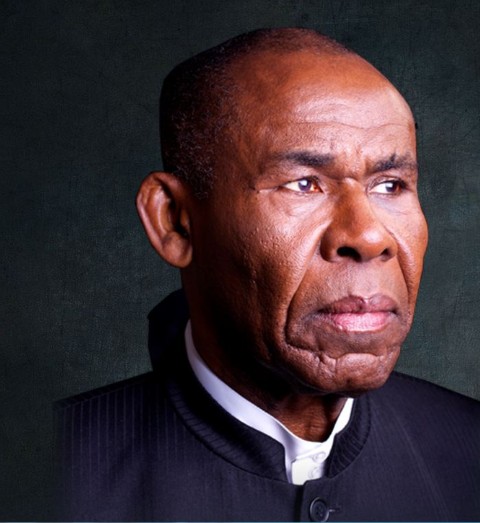
Get involved and help change our world