BOOK REVIEW
‘OF AFRICA’ – Wole Soyinka [Yale University Press. ISBN: 978-0-300-19833-1]
“What does the continent known as Africa possess that the rest – or a greater part – of the globe does not have already in superabundance?” [pvii]
Wole Soyinka’s adult life has spanned what can be called Africa’s independence years so he is well placed to provide an incisive overview of the socio-political, economic and cultural trends that have faced, challenged and emanated out of Afrika in the post-colonial era. The book starts with the above quote but it is only in its second half that the full-depth of that simple sentence really hits home. In the first half of the book we were wondering why someone of Soyinka’s stature was wasting his erudite, mesmerising prose and life experience on those grubby politicians, culture bandits, corrupt elites, religious hustlers and genocidaires whose sole purpose on earth seems to suck the value out of every possible human interaction and make the majority of the world’s population as miserable and impoverished as is humanly possible.
Inspired by a racist’s subhuman gangster philosophy during a dinner-table conversation about European innate superiority allowing them to subjugate other people ‘Of Africa’ explores history, geography, economics, sociology, psychology, anthropology, cosmology, religion, poetry, global politics, culture and the human imagination. But Soyinka also doesn’t flinch from some of the more existential issues related to our very Afrikan being and notions of Afrikan humanity such as our racial attitudes, inter-communal violence and the viability of nation-states whose boundaries were decided by outsiders without any thought for the residents welfare, community or cultural affinities. “Africa has never herself delineated her constituent national boundaries, those boundaries being humiliatingly inflicted on her by others. Is it really possible to deny the origins of some of her internecine conflicts to that carving out in the history of the continent? If the probability, at the very least, exists, is it then unthinkable that other conflicts presently “in denial,” and perhaps of far more catastrophic potential for the continent, will erupt even as the present ones – Congo, the Sudan, Ethiopia, etc – are doused?” [p10]
On that theme Soyinka continues: “Is it truly in the interest of the occupants of that continent that the present boundaries are being consolidated, defended, held so inviolate that the population is routinely decimated, millions maimed an incapacitated for life, vast hectares of farmland rendered useless by liberally sown antipersonnel mines?...what price is worth paying for the illusion of boundaries and “sovereignty”?” [p13]
However Soyinka’s view is not the catalogue of woe attached to the analysis of the western media and self-appointed analysts but a far more insightful appraisal which also pinpoints the positive aspects that can be built on to move Afrika towards a much more prosperous and conscious future that can be considered the equal – if not the teacher and arbiter - of anything else or anywhere else in the world. We have had and still have activists, literary giants, scientists, engineers, artisans, ethicists and religious leaders who continue to point the way forward. Soyinka draws on his Yoruba heritage and the role of the orisas and Ifa cosmology yet the examples he draws of what can lead the way for a better future not just for Afrikans but for all humanity could come from many of the dynamic, life-affirming Afrikan Traditional Religions, hence chapter six is titled ‘Not a “Way of Life” But a Guide to Existence’. “The Yoruba logos, Ase, in its variants among African belief systems, unites Nature, as both nurturer and healer, with the human psyche for the body’s and community’s well-being...Ase, a word that is so difficult to translate out of the Yoruba language but perhaps is best rendered as the vital or animating pronouncement – one that invokes the full authority of whichever is the presiding Orisa at an event, the cosmos, and the forces and energies that are represented in Nature.” [p126-7]
If we want to be seen as playing a major role in the direction of world affairs then we cannot stay outside, apart and beyond issues such as overconsumption of the world’s resources so we therefore have a duty to intervene to guide the earth back to the right path. Then surely, “The darkness that was so readily attributed to the “Dark Continent” may yet prove to be nothing but the wilful cataract in the eye of the beholder.” [p26]
In chapters three, ‘Fictioning the Fourth Dimension’ and four, ‘The Tree of Forgetfulness: Alive and Well in Darfur’ Soyinka touches on the issues on enslavement, apologies, reparations, complicity and the indignities Afrikans inflict on each other. Thus central to the history of Afrika are the Great Dispersals westward, eastward and northward. He looks at the Tree of Forgetfulness and the Well of Attenuation where enslaved and colonised Afrikans were expected to forget about the source of their humiliation and oppression and thus exonerate the perpetrators’ guilt in this life and any future. The failure of this can beer seen that there are still Afrikan cultural and linguistic retentions among communities who have been outside of the continent for centuries. He considers reparations as the fourth dimension of fiction after the adventurers, the commercial and the internal, power-driven fictioning of their successors. One of his formative experiences in recent times has been his involvement with the issue of genocide in Darfur. A visit to Sudan to examine the situation was cancelled on spurious grounds yet the United Nations still indicted President Omar Al-Bashir and his surrogate janjaweed who Soyinka considers the Ku Klux Klan of Darfur in the face of Arab League inaction. In the case of Sudan victim and perpetrator are both Muslim. Soyinka pours scorn on people hiding behind their religion as a cover for genocide – and those who follow secular deities - when “Not one of these, or any religion known to humanity, can affirm in any testable way the eternal verities of whatever “truths” they espouse.” [p133]
W E B DuBois said race would be the defining issue of the 20th Century and Soyinka, like most people, regard the crisis in religion as the issue for the 21st Century. “Judeo-Christianity and Islam – are soaked in intolerance, blood, hatred and insecurity, evincing every form of antihumanist deadliness as basic conditions for their survival...Can religion peacefully cohabit with humanism in the twenty-first century? In certain parts of the world the question indeed appears to be: Can religion cohabit with humanity itself?” [p136-7]
Soyinka points out that Ifa has different concepts from what are often regarded as the ‘world religions’ as “there is absolutely no foundation in reason or logic that the ascending order of godhead in monotheistic form represents a higher development in man’s conceptual capacities than the obverse.” [p131].
The Afrikan age group system and its related practices counter the alienation prevalent among youth in western societies that lead to dysfunctional relationships and school and college massacres. Thus Soyinka elucidates: “The priest of Ifa never presumes to take up cudgels on behalf of the slighted deity. No excommunication is pronounced, a killing fatwa is unheard of. The language of apostasy is anathema in the land of the Orisa. There is neither paradise nor hell. There is no purgatory. You can neither seduce nor intimidate a true Orisa faithful with projections of a punitive or rewarding afterlife.” [p150-151]
This is an essential book for seriously confronting the challenges facing Afrika and Afrikans in the diaspora. A book launch discussion can be viewed on Cspan Book TV.
OBITUARIES
~ NORRIS BUZZ JOHNSON: 1951 – 2014
Written by Jenny Bourne
Buzz Johnson, people’s educator and the founder of Karia Press, died this week.
Two giants of the Caribbean diaspora died this week – Stuart Hall, academic and cultural theorist; Buzz Johnson, publisher and people’s educator. They represented two ends of a black left spectrum of politics – the one an acclaimed theoretician and eminent wordsmith who influenced a phalanx of students with his ideas, the other a practical man who single-handedly ran a black publishing venture, Karia Press, which uncovered / discovered and publicised a whole range of Caribbean writers and thinkers. Stuart Hall has been rightly claimed and acclaimed for his massive contribution. But Buzz, in the shadows till the last, has never had his due recognition.
Born in Buccoo, a small fishing village in Tobago, Buzz set up the Karia Press in London in the early 1980s. Despite being dogged by constant financial problems and having frequently to move base, he managed, as a one-man-band, to publish an amazing array of over fifty books. And they were important ones. Many of the Caribbean poets who are now household names, were first published by Buzz – Elean Thomas, Merle Collins, Brother Resistance. He published key Caribbean writers on Language such as Hubert Devonish writing on Creole and Dr Morgan Dalphinis on language and memory. He kept in the public eye the works of veteran Caribbean stalwarts such as George Lamming and Richard Hart.
But more than that, Buzz was an innovator and excavator. It was he who researched, authored and published the first book on then forgotten Claudia Jones, ’I Think of My Mother’ in 1984. He commissioned and published Amos A. Ford’s book on the obscure British Honduran Forestry Commission’s work in Scotland 1941-44. Steeped as Karia was in Caribbean history and thought, Buzz was to use the press, too, as a tool in UK-based struggles. He published the report of the independent inquiry into the Broadwater Farm riots of 1985, chaired by Lord Gifford and followed it up with ‘Broadwater Farm Revisited’ in 1989. He published too the independent inquiry report into the shooting to death in Stoke Newington Police Station of Colin Roach in 1983.
For Buzz, publishing was never about fame or fortune; it was part of struggle, educational struggle. He pioneered the publishing of many books in London so as to then ship them back to small Caribbean islands that had no presses of their own. And he would also superintend the shipments of remaindered and used books to schools in Trinidad and Tobago that could not afford their own textbooks.
A fighter in his own right, a pioneer and risk-taker he was also a great friend, giving of himself – his smile shy and rueful, his manner gentle and self-effacing. He will be sorely missed.
Buzz Johnson’s body was returned to his Tobago homeland. Those who wish to send condolences and get more information can contact: Claudia Jones Organisation, 8 Palatine Road, London, N16 8SX.
FORTHCOMING NUBIART PROFILES
NUBIART: Focus on arts, business, education, health, political developments and the media.
MAR PROMOS
~ ‘SIRIÁ’ - Mestre Cupijó E Seu Ritmo [Analog Africa – Out 31 Mar] This latest instalment from the Analog Africa label is a timely Brazilian excursion and focuses on one of the greatest exponents of Siria, an Amazonian style fusing music of the quilombos with that of the indigenous population. Mestre Cupijo, who passed away in 2012, travelled to Cametá, an Amazonian town on the shores of the river Tocantins, which is the birthplace of Siriá and modernised that style and broadened its appeal and recognition. These tracks are taken from the six albums he recorded between 1975–1982. The album includes his hits ‘Caboclinha Do Igapo’, ‘Mambo do Martelo’ and ‘Mingau de Acai’ and is a top-class addition to this label’s already highly-respected catalogue.
~ ‘LION CITY’ – Dirtmusic [Glitterbeat Records – Out 31 Mar] ‘Lion City’ is the fourth album by Dirtmusic, the musical partnership of Hugo Race (Fatalists, Bad Seeds) and Chris Eckman (The Walkabouts). It comes from the same Bamako sessions that produced last year’s much acclaimed album ‘Troubles’ recorded in Studio Moffou during the 2012 political upheaval but this outing is at the more ambient and contemplative side of things. As with the previous album there is a sterling guest list of west Afrikan musicians.
The album kicks off with ‘Stars of Gao’, a guitar and calabash soundscape, featuring Super 11. Rokia Traore’s singing sister, Aminata Wassidjé Traoré and Virginie Dembele, follow up on ‘Narha’. Ousmane Ag Mossa (guitar), Cheikhe Ag Tiglia (bass) and Aghaly Ag Mohamedine (percussion) from Tamikrest are on the bluesy and meditative ‘Movin’ Careful’. Ben Zabo and his band - who helped out on many of the tracks - get their own name check on ‘Ballade de Ben Zabo’. While his compatriot Samba Touré provides the vocal for the bass heavy ‘Red Dust’, “How can we reconcile and forgive? How can we bring peace to those that hate us? Yet we have no choice / We need to stop fighting.”
Rising Malian hip-hop artist MC Jazz, adds a fiery incantation to the mostly instrumental ‘Day the Grid Went Down’. Senegalese Ibrahima Douf provides a powerful vocal on the album’s closer ‘September 12’, a song dedicated to his grandmother. ‘Starlight Club’ is an instrumental balafon-led groove. We also liked the powerful lyrics on ‘Justice’ and ‘Blind City’ – “Don’t pay a lawyer when you can buy a judge.”
NUBIART LIBRARY – MAR MEDIA
We will only review books we have read and DVDs we have seen and that are available at reasonable prices online or in shops or libraries. However, given the nature and current state of Afrikan publishing and film production there may be books and films on this list that are worth the extra effort to track down.
~ ‘OF AFRICA’ – Wole Soyinka [Yale University Press. ISBN: 978-0-300-19833-1]
“What does the continent known as Africa possess that the rest – or a greater part – of the globe does not have already in superabundance?” [pvii]
Wole Soyinka’s adult life has spanned what can be called Africa’s independence years so he is well placed to provide an incisive overview of the socio-political, economic and cultural trends that have faced, challenged and emanated out of Afrika in the post-colonial era. The book starts with the above quote but it is only in its second half that the full-depth of that simple sentence really hits home. In the first half of the book we were wondering why someone of Soyinka’s stature was wasting his erudite, mesmerising prose and life experience on those grubby politicians, culture bandits, corrupt elites, religious hustlers and genocidaires whose sole purpose on earth seems to suck the value out of every possible human interaction and make the majority of the world’s population as miserable and impoverished as is humanly possible. A book launch discussion can be viewed on Cspan Book TV.
~ BBM PRESENT ‘THE XTRA HISTORY SESSIONS’. Xtra History & Reasoning Sessions are free, intimate, family-friendly, semi-monthly Monday presentations and discussions facilitated by Akoben Award’s Kwaku, and hosted by Harrow Mayor Cllr Nana Asante. The Xtra Sessions are an opportunity to use History to discuss issues of concern, and to explore possible solutions and ways forward. ‘Session 6a Ghanaian & African Traditions and Their Relevance In Modern Society (Naa Korkoi Abotchi). On Mon 10 Mar at 6.30-8.30pm at the Mayor’s Parlour, Harrow Civic Centre, 1 Station Road, Harrow, HA1 2XY. Adm: Free. NB: Dress code - smart casual. No trainers, track suits or leggings. Because of limited space pre-book via the www.XtraHistory eventbrite.com booking page.
~ BLACK HISTORY STUDIES EVENTS
- ‘The Role of Women in the Black Panther Party’ and ‘Mama C: Urban Warrior in the African Bush’ . On Mon 10 Mar at 7-9.30pm at the PCS Headquarters, 160 Falcon Road, Clapham Junction, London, SW11 2LN. Adm: £5. In celebration of Women’s History Month, Black History the UK Premiere screening of ‘Mama C: Urban Warrior in the African Bush’. In 1971, Mama C and Pete joined Eldridge Cleaver and Black Panthers in exile in Algeria. A few years later, they moved to Tanzania to join African-American and international revolutionary expatriates who came to participate in President Julius Nyerere’s project of nation-building. ‘Mama C: Urban Warrior in the African Bush’ explores Charlotte O’Neal’s decade’s long project of coming to terms with who she is.
- ‘Sankofa Saturdays: Taking Root - The Vision of Wangari Maathai’. On Sat 15 Mar 5-8pm at the Marcus Garvey Library, Tottenham Green Centre, 1 Phillip Lane, Tottenham, London, N15 4JA.. Adm: Free. Planting trees for fuel, shade, and food is not something that anyone would imagine as the first step toward winning the Nobel Peace Prize. Yet with that simple act Wangari Maathai, a woman born in rural Kenya, started down the path that reclaimed her country’s land from 100 years of deforestation, provided new sources of food and income to rural communities, gave previously impoverished and powerless women a vital political role in their country, and ultimately helped to bring down Kenya’s twenty-four-year dictatorship.
Tel / Fax: 020 8881 0660. Mobile: 07951 234 233. E-mail: info@blackhistorystudies.com Web: http://www.blackhistorystudies.com
~ AFRICAN ODYSSEYS FILM PROGRAMME PRESENTS THE DOUBLE SCREENING OF ‘SIDEWALK STORIES’ & ‘OSCAR MICHEAUX - LEGEND IN BLACK’. ‘Sidewalk Stories’. Dir: Charles Lane. In this witty, Chaplinesque comedy-drama, Lane stars as a homeless Manhattan street artist who winds up taking care of a toddler after her father is murdered. Shot in black and white with no dialogue but a brilliantly evocative soundtrack, the film has been cited by Michel Hazanavicius as a key inspiration for his Oscar-winning film ‘The Artist’. Recently given a sparkling digital restoration, it’s a charming and subtly challenging look at life on the breadline in late 80s NYC. ‘Oscar Micheaux - Legend in Black’. Dir: Tim Reid. Oscar Micheaux was the first Afrikan-American to produce a feature-length film. Many have cited him as an influence, including filmmakers Spike Lee and Robert Townsend. Micheaux wrote, produced and directed 44 feature length films between 1919-1948 and has a star on Hollywood Boulevard’s Walk of Fame. At a time when most Afrikan Americans were relegated to subservient roles, and few could even dream of business ownership, Hollywood reflected that reality by depicting Afrikan people as servants and casting them in stereotypical roles. Oscar Micheaux wrote roles that showed the full range of occupations, activities and achievements of Afrikan American people. Presented by Tim Reid of the Legacy Media Institute. On Sat 15 Mar at 2pm at BFI Southbank, Belvedere Road, South Bank, London, SE1 8XT. Adm: £6. Box Office: 020 7928 3232. Web: www.bfi.org.uk
~ BLACK HISTORY WALKS
- Elephant & Castle. From Wars to Windrush. On Sat Mar 15 at 11am. This walk links the Imperial War Museum with the Cuming Museum. Both museums have collections on the Afrikan presence in WW2 totally relevant to the National Curriculum and adult education. The Cuming Museum also has ancient Egyptian items. We cover Afrikan mayors, WW2, Afrikan troops of the 18th century, Ira Aldridge, Paul Robeson, Queen Victoria’s favourite Afrikan people, Afrikan wealth creation, German Afrikans and more. This walk illustrates the Afrikan history of more than 200 years in the SE1 area.
- Fitzrovia / Soho. Sun 16 Mar at 12pm. In an area known for offices and clubs, this special walk delves into an amazing depth of history which proves and lists: ancient Afrikan civilisations, Afrikan women broadcasters of the 1940’s, civil rights activists who campaigned for equality in the military, Afrikan female entrepreneurs / heroines, Jimi Hendrix, Mary Seacole, Afrikan radicals of the 1800’s, Afrikan classical musicians, Pan-Afrikan conspiracies, propaganda and spies.
All walks are free. For more info check: www.blackhistorywalks.co.uk
~ THE NATIONAL ASSOCIATION OF BLACK SUPPLEMENTARY SCHOOLS WORKSHOPS
- ‘Black Supplementary Schools and the Role of the Black Churches’. On Sat 15 Mar.
- ‘Autism in the BME Community’. On Sat 29 Mar.
All events at 3-6pm at Birkbeck University, University Square, 1 Salway Place, Stratford, London, E15 1NN. Adm: Free, donations accepted. E-mail: info@nabss.org.uk Web: http://www.nabss.org.uk
~ ‘BEN OKRI ON AYUBA SULEIMAN DIALLO: A DIALOGUE ACROSS TIME’. The eighteenth-century portrait of Ayuba Suleiman Diallo is the earliest known British portrait of a freed enslaved Afrikan. Fascinated with Diallo’s enigmatic story, poet Ben Okri responds to the subject in a new poem, ‘Diallo’s Testament’, as part of his involvement in the portrait’s tour of partner venues around the UK. Until Sun 16 Mar 2014 at the National Portrait Gallery, Trafalgar Square, London, WC2. Adm: Free.
~ TIWANI CONTEMPORARY PRESENTS ‘UNTITLED LIFE’. A selection of socio-political works using a combination of woodcut and missed media by Ethiopian artist Ephrem Solomon in his London debut.
‘Untitled Life’ is an ambitious body of work that speaks not only to contemporary Ethiopia but also globally. Until Sat 29 Mar at 11am-6pm at Tiwani Contemporary, Little Portland Street, London, WC1.
~ THE BUSH THEATRE EUROPEAN PREMIERE OF JACKIE SIBBLIES DRURY’S ‘WE ARE PROUD TO PRESENT A PRESENTATION ABOUT THE HERERO OF NAMIBIA, FORMERLY KNOWN AS SOUTHWEST AFRICA, FROM THE GERMAN SUDWESTAFRIKA, BETWEEN THE YEARS 1884 – 1915’. Directed by Gbolahan Obisesan. A group of actors gather to tell the little-known story of the first genocide of the 20th Century. As the full force of a horrific past crashes into the good intentions of the present what seemed a far away place and time is suddenly all too close to home. Just whose story are they telling? Until Sat 12 Apr at 7.30pm with Sat & Wed matinees at 2.30pm at Shepherds Bush Theatre,
7 Uxbridge Road, London, W12 8LJ. Box Office: 020 8743 5050. Adm: £19.50 / £15 (matinees).
~ BUNDU DIA KONGO (BDK). Afrikan cultural and spiritual group working towards the spiritual and psychological growth and development of Afrikans all over the world. Let us make a positive change now. Learn about Afrikan prophets, Afrikan history and Afrikan spiritual practices at our weekly Zikua.
- Sun at 1.30–4.30pm at Chestnuts Community & Arts Centre, 280 St Ann’s Road, Tottenham, London, N15 5BN. Tel: Makaba - 07951 059 853.
- Sun at 12.30–3.15pm at Malika House, 81 George Street, Lozells, Birmingham, B19 1Sl. Tel: Mbuta Mayala – 07404 789 329.
~ THE AUSAR AUSET SOCIETY GI GONG CLASSES. Every Monday at 7.30–9pm at Hazel Road Community Centre, Hazel Road, Kensal Green, London, NW10 5PP. Adm: £5 per class. Tel: 07951- 252-427. E-mail: Tauinetwork.europe@gmail.com
~ EXHIBITION APPEAL: RETIRED CARIBBEAN NURSES IN HACKNEY / NEWHAM / EAST LONDON. Hackney Museum are working with Black Women in the Arts Project on an exhibition about Retired Caribbean Nurses to take place in Sep 2014 at Hackney Museum. Do you know of any retired Caribbean Nurses in Hackney / Newham / East London area? Contact: Cheryl Bowen, Community Education Manager, Health and Well Being, Hackney Museum Technology and Learning Centre, 1 Reading Lane, London, E8 1GQ. Tel: 020 8356 2658 / 2545. E-mail: cheryl.bowen@hackney.gov.uk
Web: www.hackney.gov.uk/hackneymuseum
Contact: Kubara Zamani, Afrikan Quest International, PO Box 35165, London, SE5 8WU. Tel: 07811 494 969. E-mail: afrikanquest@hotmail.com Web: www.southwark.tv/quest/aqhome.asp
External Links
Afrikan Quest InternationalBuzz Johnson: 1951 – 2014
‘OF AFRICA’ – Wole Soyinka [Yale University Press. ISBN: 978-0-300-19833-1]
“What does the continent known as Africa possess that the rest – or a greater part – of the globe does not have already in superabundance?” [pvii]
Wole Soyinka’s adult life has spanned what can be called Africa’s independence years so he is well placed to provide an incisive overview of the socio-political, economic and cultural trends that have faced, challenged and emanated out of Afrika in the post-colonial era. The book starts with the above quote but it is only in its second half that the full-depth of that simple sentence really hits home. In the first half of the book we were wondering why someone of Soyinka’s stature was wasting his erudite, mesmerising prose and life experience on those grubby politicians, culture bandits, corrupt elites, religious hustlers and genocidaires whose sole purpose on earth seems to suck the value out of every possible human interaction and make the majority of the world’s population as miserable and impoverished as is humanly possible.
Inspired by a racist’s subhuman gangster philosophy during a dinner-table conversation about European innate superiority allowing them to subjugate other people ‘Of Africa’ explores history, geography, economics, sociology, psychology, anthropology, cosmology, religion, poetry, global politics, culture and the human imagination. But Soyinka also doesn’t flinch from some of the more existential issues related to our very Afrikan being and notions of Afrikan humanity such as our racial attitudes, inter-communal violence and the viability of nation-states whose boundaries were decided by outsiders without any thought for the residents welfare, community or cultural affinities. “Africa has never herself delineated her constituent national boundaries, those boundaries being humiliatingly inflicted on her by others. Is it really possible to deny the origins of some of her internecine conflicts to that carving out in the history of the continent? If the probability, at the very least, exists, is it then unthinkable that other conflicts presently “in denial,” and perhaps of far more catastrophic potential for the continent, will erupt even as the present ones – Congo, the Sudan, Ethiopia, etc – are doused?” [p10]
On that theme Soyinka continues: “Is it truly in the interest of the occupants of that continent that the present boundaries are being consolidated, defended, held so inviolate that the population is routinely decimated, millions maimed an incapacitated for life, vast hectares of farmland rendered useless by liberally sown antipersonnel mines?...what price is worth paying for the illusion of boundaries and “sovereignty”?” [p13]
However Soyinka’s view is not the catalogue of woe attached to the analysis of the western media and self-appointed analysts but a far more insightful appraisal which also pinpoints the positive aspects that can be built on to move Afrika towards a much more prosperous and conscious future that can be considered the equal – if not the teacher and arbiter - of anything else or anywhere else in the world. We have had and still have activists, literary giants, scientists, engineers, artisans, ethicists and religious leaders who continue to point the way forward. Soyinka draws on his Yoruba heritage and the role of the orisas and Ifa cosmology yet the examples he draws of what can lead the way for a better future not just for Afrikans but for all humanity could come from many of the dynamic, life-affirming Afrikan Traditional Religions, hence chapter six is titled ‘Not a “Way of Life” But a Guide to Existence’. “The Yoruba logos, Ase, in its variants among African belief systems, unites Nature, as both nurturer and healer, with the human psyche for the body’s and community’s well-being...Ase, a word that is so difficult to translate out of the Yoruba language but perhaps is best rendered as the vital or animating pronouncement – one that invokes the full authority of whichever is the presiding Orisa at an event, the cosmos, and the forces and energies that are represented in Nature.” [p126-7]
If we want to be seen as playing a major role in the direction of world affairs then we cannot stay outside, apart and beyond issues such as overconsumption of the world’s resources so we therefore have a duty to intervene to guide the earth back to the right path. Then surely, “The darkness that was so readily attributed to the “Dark Continent” may yet prove to be nothing but the wilful cataract in the eye of the beholder.” [p26]
In chapters three, ‘Fictioning the Fourth Dimension’ and four, ‘The Tree of Forgetfulness: Alive and Well in Darfur’ Soyinka touches on the issues on enslavement, apologies, reparations, complicity and the indignities Afrikans inflict on each other. Thus central to the history of Afrika are the Great Dispersals westward, eastward and northward. He looks at the Tree of Forgetfulness and the Well of Attenuation where enslaved and colonised Afrikans were expected to forget about the source of their humiliation and oppression and thus exonerate the perpetrators’ guilt in this life and any future. The failure of this can beer seen that there are still Afrikan cultural and linguistic retentions among communities who have been outside of the continent for centuries. He considers reparations as the fourth dimension of fiction after the adventurers, the commercial and the internal, power-driven fictioning of their successors. One of his formative experiences in recent times has been his involvement with the issue of genocide in Darfur. A visit to Sudan to examine the situation was cancelled on spurious grounds yet the United Nations still indicted President Omar Al-Bashir and his surrogate janjaweed who Soyinka considers the Ku Klux Klan of Darfur in the face of Arab League inaction. In the case of Sudan victim and perpetrator are both Muslim. Soyinka pours scorn on people hiding behind their religion as a cover for genocide – and those who follow secular deities - when “Not one of these, or any religion known to humanity, can affirm in any testable way the eternal verities of whatever “truths” they espouse.” [p133]
W E B DuBois said race would be the defining issue of the 20th Century and Soyinka, like most people, regard the crisis in religion as the issue for the 21st Century. “Judeo-Christianity and Islam – are soaked in intolerance, blood, hatred and insecurity, evincing every form of antihumanist deadliness as basic conditions for their survival...Can religion peacefully cohabit with humanism in the twenty-first century? In certain parts of the world the question indeed appears to be: Can religion cohabit with humanity itself?” [p136-7]
Soyinka points out that Ifa has different concepts from what are often regarded as the ‘world religions’ as “there is absolutely no foundation in reason or logic that the ascending order of godhead in monotheistic form represents a higher development in man’s conceptual capacities than the obverse.” [p131].
The Afrikan age group system and its related practices counter the alienation prevalent among youth in western societies that lead to dysfunctional relationships and school and college massacres. Thus Soyinka elucidates: “The priest of Ifa never presumes to take up cudgels on behalf of the slighted deity. No excommunication is pronounced, a killing fatwa is unheard of. The language of apostasy is anathema in the land of the Orisa. There is neither paradise nor hell. There is no purgatory. You can neither seduce nor intimidate a true Orisa faithful with projections of a punitive or rewarding afterlife.” [p150-151]
This is an essential book for seriously confronting the challenges facing Afrika and Afrikans in the diaspora. A book launch discussion can be viewed on Cspan Book TV.
OBITUARIES
~ NORRIS BUZZ JOHNSON: 1951 – 2014
Written by Jenny Bourne
Buzz Johnson, people’s educator and the founder of Karia Press, died this week.
Two giants of the Caribbean diaspora died this week – Stuart Hall, academic and cultural theorist; Buzz Johnson, publisher and people’s educator. They represented two ends of a black left spectrum of politics – the one an acclaimed theoretician and eminent wordsmith who influenced a phalanx of students with his ideas, the other a practical man who single-handedly ran a black publishing venture, Karia Press, which uncovered / discovered and publicised a whole range of Caribbean writers and thinkers. Stuart Hall has been rightly claimed and acclaimed for his massive contribution. But Buzz, in the shadows till the last, has never had his due recognition.
Born in Buccoo, a small fishing village in Tobago, Buzz set up the Karia Press in London in the early 1980s. Despite being dogged by constant financial problems and having frequently to move base, he managed, as a one-man-band, to publish an amazing array of over fifty books. And they were important ones. Many of the Caribbean poets who are now household names, were first published by Buzz – Elean Thomas, Merle Collins, Brother Resistance. He published key Caribbean writers on Language such as Hubert Devonish writing on Creole and Dr Morgan Dalphinis on language and memory. He kept in the public eye the works of veteran Caribbean stalwarts such as George Lamming and Richard Hart.
But more than that, Buzz was an innovator and excavator. It was he who researched, authored and published the first book on then forgotten Claudia Jones, ’I Think of My Mother’ in 1984. He commissioned and published Amos A. Ford’s book on the obscure British Honduran Forestry Commission’s work in Scotland 1941-44. Steeped as Karia was in Caribbean history and thought, Buzz was to use the press, too, as a tool in UK-based struggles. He published the report of the independent inquiry into the Broadwater Farm riots of 1985, chaired by Lord Gifford and followed it up with ‘Broadwater Farm Revisited’ in 1989. He published too the independent inquiry report into the shooting to death in Stoke Newington Police Station of Colin Roach in 1983.
For Buzz, publishing was never about fame or fortune; it was part of struggle, educational struggle. He pioneered the publishing of many books in London so as to then ship them back to small Caribbean islands that had no presses of their own. And he would also superintend the shipments of remaindered and used books to schools in Trinidad and Tobago that could not afford their own textbooks.
A fighter in his own right, a pioneer and risk-taker he was also a great friend, giving of himself – his smile shy and rueful, his manner gentle and self-effacing. He will be sorely missed.
Buzz Johnson’s body was returned to his Tobago homeland. Those who wish to send condolences and get more information can contact: Claudia Jones Organisation, 8 Palatine Road, London, N16 8SX.
FORTHCOMING NUBIART PROFILES
NUBIART: Focus on arts, business, education, health, political developments and the media.
MAR PROMOS
~ ‘SIRIÁ’ - Mestre Cupijó E Seu Ritmo [Analog Africa – Out 31 Mar] This latest instalment from the Analog Africa label is a timely Brazilian excursion and focuses on one of the greatest exponents of Siria, an Amazonian style fusing music of the quilombos with that of the indigenous population. Mestre Cupijo, who passed away in 2012, travelled to Cametá, an Amazonian town on the shores of the river Tocantins, which is the birthplace of Siriá and modernised that style and broadened its appeal and recognition. These tracks are taken from the six albums he recorded between 1975–1982. The album includes his hits ‘Caboclinha Do Igapo’, ‘Mambo do Martelo’ and ‘Mingau de Acai’ and is a top-class addition to this label’s already highly-respected catalogue.
~ ‘LION CITY’ – Dirtmusic [Glitterbeat Records – Out 31 Mar] ‘Lion City’ is the fourth album by Dirtmusic, the musical partnership of Hugo Race (Fatalists, Bad Seeds) and Chris Eckman (The Walkabouts). It comes from the same Bamako sessions that produced last year’s much acclaimed album ‘Troubles’ recorded in Studio Moffou during the 2012 political upheaval but this outing is at the more ambient and contemplative side of things. As with the previous album there is a sterling guest list of west Afrikan musicians.
The album kicks off with ‘Stars of Gao’, a guitar and calabash soundscape, featuring Super 11. Rokia Traore’s singing sister, Aminata Wassidjé Traoré and Virginie Dembele, follow up on ‘Narha’. Ousmane Ag Mossa (guitar), Cheikhe Ag Tiglia (bass) and Aghaly Ag Mohamedine (percussion) from Tamikrest are on the bluesy and meditative ‘Movin’ Careful’. Ben Zabo and his band - who helped out on many of the tracks - get their own name check on ‘Ballade de Ben Zabo’. While his compatriot Samba Touré provides the vocal for the bass heavy ‘Red Dust’, “How can we reconcile and forgive? How can we bring peace to those that hate us? Yet we have no choice / We need to stop fighting.”
Rising Malian hip-hop artist MC Jazz, adds a fiery incantation to the mostly instrumental ‘Day the Grid Went Down’. Senegalese Ibrahima Douf provides a powerful vocal on the album’s closer ‘September 12’, a song dedicated to his grandmother. ‘Starlight Club’ is an instrumental balafon-led groove. We also liked the powerful lyrics on ‘Justice’ and ‘Blind City’ – “Don’t pay a lawyer when you can buy a judge.”
NUBIART LIBRARY – MAR MEDIA
We will only review books we have read and DVDs we have seen and that are available at reasonable prices online or in shops or libraries. However, given the nature and current state of Afrikan publishing and film production there may be books and films on this list that are worth the extra effort to track down.
~ ‘OF AFRICA’ – Wole Soyinka [Yale University Press. ISBN: 978-0-300-19833-1]
“What does the continent known as Africa possess that the rest – or a greater part – of the globe does not have already in superabundance?” [pvii]
Wole Soyinka’s adult life has spanned what can be called Africa’s independence years so he is well placed to provide an incisive overview of the socio-political, economic and cultural trends that have faced, challenged and emanated out of Afrika in the post-colonial era. The book starts with the above quote but it is only in its second half that the full-depth of that simple sentence really hits home. In the first half of the book we were wondering why someone of Soyinka’s stature was wasting his erudite, mesmerising prose and life experience on those grubby politicians, culture bandits, corrupt elites, religious hustlers and genocidaires whose sole purpose on earth seems to suck the value out of every possible human interaction and make the majority of the world’s population as miserable and impoverished as is humanly possible. A book launch discussion can be viewed on Cspan Book TV.
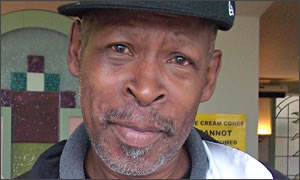
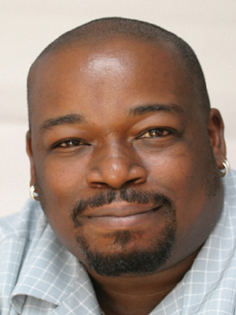
Buzz Johnson (Photo: Max Boucher)
Nubiart Diary
~ BBM PRESENT ‘THE XTRA HISTORY SESSIONS’. Xtra History & Reasoning Sessions are free, intimate, family-friendly, semi-monthly Monday presentations and discussions facilitated by Akoben Award’s Kwaku, and hosted by Harrow Mayor Cllr Nana Asante. The Xtra Sessions are an opportunity to use History to discuss issues of concern, and to explore possible solutions and ways forward. ‘Session 6a Ghanaian & African Traditions and Their Relevance In Modern Society (Naa Korkoi Abotchi). On Mon 10 Mar at 6.30-8.30pm at the Mayor’s Parlour, Harrow Civic Centre, 1 Station Road, Harrow, HA1 2XY. Adm: Free. NB: Dress code - smart casual. No trainers, track suits or leggings. Because of limited space pre-book via the www.XtraHistory eventbrite.com booking page.~ BLACK HISTORY STUDIES EVENTS
- ‘The Role of Women in the Black Panther Party’ and ‘Mama C: Urban Warrior in the African Bush’ . On Mon 10 Mar at 7-9.30pm at the PCS Headquarters, 160 Falcon Road, Clapham Junction, London, SW11 2LN. Adm: £5. In celebration of Women’s History Month, Black History the UK Premiere screening of ‘Mama C: Urban Warrior in the African Bush’. In 1971, Mama C and Pete joined Eldridge Cleaver and Black Panthers in exile in Algeria. A few years later, they moved to Tanzania to join African-American and international revolutionary expatriates who came to participate in President Julius Nyerere’s project of nation-building. ‘Mama C: Urban Warrior in the African Bush’ explores Charlotte O’Neal’s decade’s long project of coming to terms with who she is.
- ‘Sankofa Saturdays: Taking Root - The Vision of Wangari Maathai’. On Sat 15 Mar 5-8pm at the Marcus Garvey Library, Tottenham Green Centre, 1 Phillip Lane, Tottenham, London, N15 4JA.. Adm: Free. Planting trees for fuel, shade, and food is not something that anyone would imagine as the first step toward winning the Nobel Peace Prize. Yet with that simple act Wangari Maathai, a woman born in rural Kenya, started down the path that reclaimed her country’s land from 100 years of deforestation, provided new sources of food and income to rural communities, gave previously impoverished and powerless women a vital political role in their country, and ultimately helped to bring down Kenya’s twenty-four-year dictatorship.
Tel / Fax: 020 8881 0660. Mobile: 07951 234 233. E-mail: info@blackhistorystudies.com Web: http://www.blackhistorystudies.com
~ AFRICAN ODYSSEYS FILM PROGRAMME PRESENTS THE DOUBLE SCREENING OF ‘SIDEWALK STORIES’ & ‘OSCAR MICHEAUX - LEGEND IN BLACK’. ‘Sidewalk Stories’. Dir: Charles Lane. In this witty, Chaplinesque comedy-drama, Lane stars as a homeless Manhattan street artist who winds up taking care of a toddler after her father is murdered. Shot in black and white with no dialogue but a brilliantly evocative soundtrack, the film has been cited by Michel Hazanavicius as a key inspiration for his Oscar-winning film ‘The Artist’. Recently given a sparkling digital restoration, it’s a charming and subtly challenging look at life on the breadline in late 80s NYC. ‘Oscar Micheaux - Legend in Black’. Dir: Tim Reid. Oscar Micheaux was the first Afrikan-American to produce a feature-length film. Many have cited him as an influence, including filmmakers Spike Lee and Robert Townsend. Micheaux wrote, produced and directed 44 feature length films between 1919-1948 and has a star on Hollywood Boulevard’s Walk of Fame. At a time when most Afrikan Americans were relegated to subservient roles, and few could even dream of business ownership, Hollywood reflected that reality by depicting Afrikan people as servants and casting them in stereotypical roles. Oscar Micheaux wrote roles that showed the full range of occupations, activities and achievements of Afrikan American people. Presented by Tim Reid of the Legacy Media Institute. On Sat 15 Mar at 2pm at BFI Southbank, Belvedere Road, South Bank, London, SE1 8XT. Adm: £6. Box Office: 020 7928 3232. Web: www.bfi.org.uk
~ BLACK HISTORY WALKS
- Elephant & Castle. From Wars to Windrush. On Sat Mar 15 at 11am. This walk links the Imperial War Museum with the Cuming Museum. Both museums have collections on the Afrikan presence in WW2 totally relevant to the National Curriculum and adult education. The Cuming Museum also has ancient Egyptian items. We cover Afrikan mayors, WW2, Afrikan troops of the 18th century, Ira Aldridge, Paul Robeson, Queen Victoria’s favourite Afrikan people, Afrikan wealth creation, German Afrikans and more. This walk illustrates the Afrikan history of more than 200 years in the SE1 area.
- Fitzrovia / Soho. Sun 16 Mar at 12pm. In an area known for offices and clubs, this special walk delves into an amazing depth of history which proves and lists: ancient Afrikan civilisations, Afrikan women broadcasters of the 1940’s, civil rights activists who campaigned for equality in the military, Afrikan female entrepreneurs / heroines, Jimi Hendrix, Mary Seacole, Afrikan radicals of the 1800’s, Afrikan classical musicians, Pan-Afrikan conspiracies, propaganda and spies.
All walks are free. For more info check: www.blackhistorywalks.co.uk
~ THE NATIONAL ASSOCIATION OF BLACK SUPPLEMENTARY SCHOOLS WORKSHOPS
- ‘Black Supplementary Schools and the Role of the Black Churches’. On Sat 15 Mar.
- ‘Autism in the BME Community’. On Sat 29 Mar.
All events at 3-6pm at Birkbeck University, University Square, 1 Salway Place, Stratford, London, E15 1NN. Adm: Free, donations accepted. E-mail: info@nabss.org.uk Web: http://www.nabss.org.uk
~ ‘BEN OKRI ON AYUBA SULEIMAN DIALLO: A DIALOGUE ACROSS TIME’. The eighteenth-century portrait of Ayuba Suleiman Diallo is the earliest known British portrait of a freed enslaved Afrikan. Fascinated with Diallo’s enigmatic story, poet Ben Okri responds to the subject in a new poem, ‘Diallo’s Testament’, as part of his involvement in the portrait’s tour of partner venues around the UK. Until Sun 16 Mar 2014 at the National Portrait Gallery, Trafalgar Square, London, WC2. Adm: Free.
~ TIWANI CONTEMPORARY PRESENTS ‘UNTITLED LIFE’. A selection of socio-political works using a combination of woodcut and missed media by Ethiopian artist Ephrem Solomon in his London debut.
‘Untitled Life’ is an ambitious body of work that speaks not only to contemporary Ethiopia but also globally. Until Sat 29 Mar at 11am-6pm at Tiwani Contemporary, Little Portland Street, London, WC1.
~ THE BUSH THEATRE EUROPEAN PREMIERE OF JACKIE SIBBLIES DRURY’S ‘WE ARE PROUD TO PRESENT A PRESENTATION ABOUT THE HERERO OF NAMIBIA, FORMERLY KNOWN AS SOUTHWEST AFRICA, FROM THE GERMAN SUDWESTAFRIKA, BETWEEN THE YEARS 1884 – 1915’. Directed by Gbolahan Obisesan. A group of actors gather to tell the little-known story of the first genocide of the 20th Century. As the full force of a horrific past crashes into the good intentions of the present what seemed a far away place and time is suddenly all too close to home. Just whose story are they telling? Until Sat 12 Apr at 7.30pm with Sat & Wed matinees at 2.30pm at Shepherds Bush Theatre,
7 Uxbridge Road, London, W12 8LJ. Box Office: 020 8743 5050. Adm: £19.50 / £15 (matinees).
~ BUNDU DIA KONGO (BDK). Afrikan cultural and spiritual group working towards the spiritual and psychological growth and development of Afrikans all over the world. Let us make a positive change now. Learn about Afrikan prophets, Afrikan history and Afrikan spiritual practices at our weekly Zikua.
- Sun at 1.30–4.30pm at Chestnuts Community & Arts Centre, 280 St Ann’s Road, Tottenham, London, N15 5BN. Tel: Makaba - 07951 059 853.
- Sun at 12.30–3.15pm at Malika House, 81 George Street, Lozells, Birmingham, B19 1Sl. Tel: Mbuta Mayala – 07404 789 329.
~ THE AUSAR AUSET SOCIETY GI GONG CLASSES. Every Monday at 7.30–9pm at Hazel Road Community Centre, Hazel Road, Kensal Green, London, NW10 5PP. Adm: £5 per class. Tel: 07951- 252-427. E-mail: Tauinetwork.europe@gmail.com
~ EXHIBITION APPEAL: RETIRED CARIBBEAN NURSES IN HACKNEY / NEWHAM / EAST LONDON. Hackney Museum are working with Black Women in the Arts Project on an exhibition about Retired Caribbean Nurses to take place in Sep 2014 at Hackney Museum. Do you know of any retired Caribbean Nurses in Hackney / Newham / East London area? Contact: Cheryl Bowen, Community Education Manager, Health and Well Being, Hackney Museum Technology and Learning Centre, 1 Reading Lane, London, E8 1GQ. Tel: 020 8356 2658 / 2545. E-mail: cheryl.bowen@hackney.gov.uk
Web: www.hackney.gov.uk/hackneymuseum
Contact: Kubara Zamani, Afrikan Quest International, PO Box 35165, London, SE5 8WU. Tel: 07811 494 969. E-mail: afrikanquest@hotmail.com Web: www.southwark.tv/quest/aqhome.asp
Afrikan Quest International
External Links
Afrikan Quest InternationalBuzz Johnson: 1951 – 2014
Ligali is not responsible for the content of third party sites
Get involved and help change our world