DISCUSSION ARTICLE
AFRICAN AMERICANS CRITICISED AFRICAN LEADERS FOR ‘INACTIONS’
By Shaka Barak, President, The Marcus Garvey Institute, Chicago, USA.
(With the hope that the African American will study the African Union members, their leaders, and their partners).
1. The African Union member’s dues
Sources told us that Nkosazana Dlamini-Zuma, the AU Commission Chairperson, has constantly complained about Africa Union’s reliance on foreign aid to carry out its activities.
“She wants African countries to pay their dues and dig deeper into their coffers and stop relying on foreign aid,” one of our sources said. The AU’s annual budget stands at $308m. Of this, $170m is funded from outside Africa while $138m comes from the 54 AU member countries. Sources said as a way to force countries to pay up, the AU usually imposed sanctions on the defaulting countries, including denying them a voice at the summit.
There are countries which have cleared all their dues to the African Union. They include: Algeria, Botswana, Djibouti, Egypt, Liberia, Mauritius, DRC, Mozambique, Namibia, Rwanda, Burundi, South Africa, Swaziland, Guinea, Eritrea and Gambia. What group of African Americans can truly say they are familiar with the many challenges facing African countries?
2. Chinese in Africa
Trade between China and Africa largely grew exponentially following China’s joining of the World Trade Organization (WTO) and the opening up of China to emigration (of Chinese people to Africa) and the free movement of companies, peoples, and products both to and from the African continent starting from the early 2000 onwards.
Large-scale structural projects, often accompanied by a soft loan, are proposed to African countries rich in natural resources. China commonly funds the construction of infrastructure such as roads and railroads, dams, ports, and airports. These amenities aid the movement of natural resources back to China, and provide China with leverage to obtain exploration and drilling rights. While relations are mainly conducted through diplomacy and trade, military support via the provision of arms and other equipment is also a major component.
China, Asia’s economic superpower, is hungry for natural resources, energy, food and markets for its products. Africa can offer all of these things: about 40 percent of global reserves of natural resources, 60 percent of uncultivated agricultural land, a billion people with rising purchasing power and a potential army of low-wage workers.
Xi reminded his hosts of the warm relationship between the Great Chairman Mao Zedong and Tanzania’s first president, Julius Nyerere. He also praised the two countries’ shared struggle against imperialism and invoked the common interests of all developing countries. “We are true friends,” he said. “We treat each other as equal partners.”
China continues to expand its influence in the region on diplomatic, cultural, and commercial fronts, while working to secure and stabilize the region for long term gains. African leaders have pursued an increase of the share of raw material transformation both to add value to their exports and to provide manufacturing jobs for local Africans.
The recent Sino-Angolan association is illustrative. When a petroleum-rich area called for investment and rebuilding, China advanced a $5 billion loan to be repaid in oil.
Liberia: China Agrees to Provide U.S. $4.5 Million to Liberian Army
Chinese-built headquarters in Ethiopia’s Capital of Addis Ababa, is a 20 storey towering $200-million complex that has been called “China’s gift to Africa.” It has a conference hall, which can seat 2,500 people. Construction began four years ago by the China State. With a $308 budget, could the AU have built their $200 million headquarters in Addis, Ababa?
Construction Engineering Corporation, using building materials largely brought from China, and a mix of Chinese managers and Ethiopian laborers. Beijing agreed to pay for the complex in Addis Ababa around the time that the late Libyan leader Muammar Gaddafi was agitating to build the new AU headquarters in his desert hometown of Sirte.
With what happened to Africans in Libya after Gaddafi’s assassination, would that have been a wise place for an AU Headquarters? China recently became the largest trading partner, with trade of US$90 billion in 2009. Trade between China and Africa reached $120 billion in 2011. The building is the latest landmark in the long friendship between China and Africa.” that China firmly commits itself to enhancing solidarity and cooperation with African countries, firmly supports African efforts for strength through unity and the integration process, and that China firmly supports a greater African role in international and regional affairs.”
For the most part when China builds in Africa, “This condition stipulates that construction materials and services for the projects must be supplied from China only. It states that all goods, technologies, and services be purchased from China. Africans must negotiate terms to increase local sourcing.
In Tanzania, China was making a low-interest loan of $10 billion (€7.4 billion) available for the construction of a modern container terminal 15 kilometers (9 miles) south of the city, and also planned to fund the establishment of a special economic zone in the hinterlands behind the port.
U.S. $15 Million Chinese Loan to Complete Fibre Optic Connection: The government of Sierra Leone has concluded a U.S. $15 Million deal with China to allow the country switch on the Africa Coast to Europe cable scheduled for October.
Nigeria, China Signs Lagos-Ibadan Rail Contract: The federal government has signed a contract with China that the U.S. $1.5 billion Lagos–Ibadan express rail agreement recently approved is completed in the next 36 months.
China to Increase Support for African Science: The Chinese president says the country will increase its support for Africa’s science and innovation sectors which includes training and scholarships.
Africans in China
China has long made it a priority to provide study programs and host visits to China for government officials from across Africa, as part of a push to expand its reach and influence on the African continent. There is a near-constant flow of political visits of various levels between China and African countries, with China normally footing the bill.
For example, as part of a longstanding media training program, 36 African government press officers visited Chongqing earlier this year to tour the state-controlled media. In total, more than 200 press officers from 46 African countries have visited China under this program, according to China’s State Council Information Office.
Likewise, the Chinese who have come to the continent in skyrocketing numbers — as workers, entrepreneurs and tourists —
In summary, there are six special economic zones setup by the PRC in Africa as of 2011:
1: Chambishi, Zambia - copper and copper related industries.
2: Lusaka, Zambia - garments, food, appliances, tobacco and electronics. Is classified as a subzone of the Chambishi zone. Completed in 2009.
3: Jinfei, Mauritius - manufacturing (textiles, garments, machinery, high-tech), trade, tourism and finance.
4: Oriental, Ethiopia - electrical machinery, construction materials, steel and metallurgy.
5: Ogun, Nigeria, - construction materials, ceramics, ironware, furniture, wood processing, medicine, and computers.
6: Lekki, Nigeria - transportation equipment, textiles, home appliances, telecommunications, and light industry.
7: Suez, Egypt - petroleum equipment, electrical appliance, textile and automobile manufacturers. Completed in October 2010.
Many African Americans are expressing their concerns over what African Leaders are doing, and are not doing, as well as their fears of China’s role in Africa’s development, but where is the African American African Policy? (AAAP). Where is the African Americans “Africa Investment Fund?”(AIF).
The Honorable Marcus Mosiah Garvey criticized many of the actions on the part of leaders in Liberia and Ethiopia, but he had both an African policy and an African Fund. One billion from African Americans could solve the AU’s budget problems for 3 years, or be enough, for 5 headquarters like the one in Addis Ababa, for Africa’s North, South, East West, Central Regions and one for the African Diaspora 6th region somewhere outside of Africa.
-------
Marcus Garvey Institute, Shaka Barak (shakabarak1@yahoo.com)
OBITUARIES
STUART MCPHAIL HALL (3 Feb 1932 – 10 Feb 2014). Cultural theorist, lecturer, campaigner and arts patron. Stuart Hall was a Jamaican-born cultural theorist and sociologist who lived and worked in the Britain from 1951.
At the invitation of Richard Hoggart, Hall joined the Centre for Contemporary Cultural Studies at Birmingham University in 1964. Hall took over from Hoggart as director of the Centre in 1968, and remained there until 1979. While at the Centre, Hall is credited with playing a role in expanding the scope of cultural studies to deal with race and gender, and with helping to incorporate new ideas derived from the work of French theorists. Hall left the centre in 1979 to become a professor of sociology at the Open University. Hall retired from the Open University in 1997 and was a Professor Emeritus. He was married to Catherine Hall, a feminist professor of modern British history at University College London (UCL).
Biography
Hall was born in Kingston, Jamaica, into a middle-class Jamaican family of Indian, African and British descent. In Jamaica he attended Jamaica College, receiving an education modelled after the British school system. In an interview Hall describes himself as a “bright, promising scholar” in these years and his formal education as “a very ‘classical’ education; very good but in very formal academic terms.” With the help of sympathetic teachers, he expanded his education to include “T. S. Eliot, James Joyce, Freud, Marx, Lenin and some of the surrounding literature and modern poetry,” as well as “Caribbean literature.” Hall’s later works reveal that growing up in the pigmentocracy of the colonial West Indies, where he was of darker skin than much of his family, had a profound effect on his views of the world.
In 1951 Hall won a Rhodes Scholarship to Merton College at the University of Oxford, where he studied English and obtained an M.A., becoming part of the Windrush generation, the first large-scale immigration of West Indians, as that community was then known. He continued his studies at Oxford by beginning a Ph.D. on Henry James but, galvanised particularly by the 1956 Soviet invasion of Hungary (which saw many thousands of members leave the Communist Party of Great Britain(CPGB) and look for alternatives to previous orthodoxies) and Suez Crisis, abandoned this in 1957 or 1958 to focus on his political work. In 1957, he joined the Campaign for Nuclear Disarmament (CND) and it was on a CND march that he met his future wife. From 1958 to 1960, Hall worked as a teacher in a London secondary modern school and in adult education,
After working on the ‘Universities and Left Review’ during his time at Oxford, Hall joined E. P. Thompson, Raymond Williams and others to merge it with ‘The New Reasoner‘, launching the ‘New Left Review‘ in 1960 with Hall named as the founding editor. In 1958, the same group, with Raphael Samuel, launched the Partisan Coffee House in Soho as a meeting-place for left-wingers. Hall left the board of the ‘New Left Review’ in 1961 or 1962.
Hall’s academic career took off after co-writing ‘The Popular Arts’ with Paddy Whannel in 1964. As a direct result, Richard Hoggart invited Hall to join the Centre for Contemporary Cultural Studies at the University of Birmingham, initially as a research fellow and initially at Hoggart’s own expense. In 1968 Hall became director of the Centre. He wrote a number of influential articles in the years that followed, including ‘Situating Marx: Evaluations and Departures’ (1972) and ‘Encoding and Decoding in the Television Discourse’ (1973). He also contributed to the book ‘Policing the Crisis’ (1978) and co-edited the influential ‘Resistance Through Rituals’ (1975).
After his appointment as a professor of sociology at the Open University in 1979, Hall published further influential books, including ‘The Hard Road to Renewal’ (1988), ‘Formations of Modernity’ (1992), ‘Questions of Cultural Identity’ (1996) and ‘Cultural Representations and Signifying Practices’ (1997). Through the 1970s and 1980s, Hall was closely associated with the journal ‘Marxism Today‘; in 1995, he was a founding editor of ‘Soundings: A Journal of Politics and Culture‘. He was President of the British Sociological Association 1995–97. Hall retired from the Open University in 1997. He was made a fellow of the Royal Academy in 2005 and received the European Cultural Foundation‘s Princess Margriet Award in 2008. He died on 10 February 2014, from complications following kidney failure a week after his 82nd birthday. By the time of his death, he was widely known as the “godfather of multiculturalism”.
Ideas
Hall’s work covers issues of hegemony and cultural studies, taking a post-Gramscian stance. He regards language-use as operating within a framework of power, institutions and politics / economics. This view presents people as producers and consumers of culture at the same time. (Hegemony, in Gramscian theory, refers to the socio-cultural production of “consent” and “coercion”.) For Hall, culture was not something to simply appreciate or study, but a “critical site of social action and intervention, where power relations are both established and potentially unsettled”
Hall became one of the main proponents of reception theory, and developed Hall’s Theory of encoding and decoding. This approach to textual analysis focuses on the scope for negotiation and opposition on the part of the audience. This means that the audience does not simply passively accept a text — social control. Crime statistics, in Hall’s view, are often manipulated for political and economic purposes. Moral panics (e.g. over mugging) could thereby be ignited in order to create public support for the need to “police the crisis”. The media play a central role in the “social production of news” in order to reap the rewards of lurid crime stories.
Hall’s works, such as studies showing the link between racial prejudice and media, have a reputation as influential, and serve as important foundational texts for contemporary cultural studies. He also widely discussed notions of cultural identity, race and ethnicity, particularly in the creation of the politics of Black diasporic identities. Hall believed identity to be an ongoing product of history and culture, rather than a finished product.
Hall’s political influence extended to the Labour Party, perhaps related to the influential articles he wrote for the CPGB’s theoretical journal ‘Marxism Today (MT)’ that challenged the left’s views of markets and general organisational and political conservatism. This discourse had a profound impact on the Labour Party under both Neil Kinnock and Tony Blair, although Hall later decried New Labour as operating on “terrain defined by Thatcherism”.
Encoding and decoding model
Hall presented his encoding and decoding philosophy in various publications and at several oral events across his career. The first was in “Encoding and Decoding in the Television Discourse“ (1973), a paper he wrote for the Council of Europe Colloquy on “Training in the Critical Readings of Television Language” organised by the Council & the Centre for Mass Communication Research at the University of Leicester. It was produced for students at the Centre for Contemporary Cultural Studies, which Paddy Scannell explains: “largely accounts for the provisional feel of the text and its ‘incompleteness’”. In 1974 the paper was presented at a symposium on Broadcasters and the Audience in Venice. Hall also presented his encoding and decoding model in “Encoding / Decoding” in ‘Culture, Media, Language’ in 1980. The time difference between Hall’s first publication on encoding and decoding in 1973 and his 1980 publication is highlighted by several critics. Of particular note is Hall’s transition from the Centre for Contemporary Cultural Studies to the Open University.
Hall had a major influence on cultural studies, and many of the terms his texts set forth continue to be used in the field today. His 1973 text is viewed as marking a turning point in Hall’s research, towards structuralism and provides insight into some of the main theoretical developments Hall was exploring during his time at the Centre for Contemporary Cultural Studies.
Hall takes a semiotic approach and builds on the work of Roland Barthes and Umberto Eco. The essay takes up and challenges long-held assumptions on how media messages are produced, circulated and consumed, proposing a new theory of communication. “The ‘object’ of production practices and structures in television is the production of a message: that is, a sign-vehicle or rather sign-vehicles of a specific kind organized, like any other form of communication or language, through the operation of codes, within the syntagmatic chains of a discourse”.
According to Hall, “a message must be perceived as meaningful discourse and be meaningfully de-coded before it has an effect, a use, or satisfies a need”. There are four codes of the Encoding / Decoding Model of Communication. The first way of encoding is the dominant (i.e. hegemonic) code.
This is the code the encoder expects the decoder to recognize and decode. “When the viewer takes the connoted meaning full and straight and decodes the message in terms of the reference-code in which it has been coded, it operates inside the dominant code”. The second way of encoding is the professional code. It operates in tandem with the dominant code. “It serves to reproduce the dominant definitions precisely by bracketing the hegemonic quality, and operating with professional codings which relate to such questions as visual quality, news and presentational values, televisual quality, ‘professionalism’ etc.” The third way of encoding is the negotiated code. “It acknowledges the legitimacy of the hegemonic definitions to make the grand significations, while, at a more restricted, situational level, it makes its own ground-rules, it operates with ‘exceptions’ to the rule”.
The fourth way of encoding is the oppositional code also known as the globally contrary code. “It is possible for a viewer perfectly to understand both the literal and connotative inflection given to an event, but to determine to decode the message in a globally contrary way.” “Before this message can have an ‘effect’ (however defined), or satisfy a ‘need’ or be put to a ‘use’, it must first be perceived as a meaningful discourse and meaningfully de-coded.”
Hall challenged all four components of the mass communications model. He argues that (i) meaning is not simply fixed or determined by the sender; (ii) the message is never transparent; and (iii) the audience is not a passive recipient of meaning. For example, a documentary film on asylum seekers that aims to provide a sympathetic account of their plight, does not guarantee that audiences will decode it to feel sympathetic towards the asylum seekers. Despite its being realistic and recounting facts, the documentary form itself must still communicate through a sign system (the aural-visual signs of TV) that simultaneously distorts the intentions of producers and evokes contradictory feelings in the audience.
Distortion is built into the system, rather than being a “failure” of the producer or viewer. There is a “lack of fit”, Hall argues, “between the two sides in the communicative exchange”. That is, between the moment of the production of the message (“encoding”) and the moment of its reception (“decoding”). In “Encoding / decoding”, Hall suggests media messages accrue a common-sense status in part through their performative nature. Through the repeated performance, staging or telling of the narrative of “9/11“ (as an example; but there are others like it within the media) a culturally specific interpretation becomes not only simply plausible and universal, but is elevated to “common-sense”.
Once again he collaborated with – and learned from – people considerably younger than himself, chairing Autograph (the Association of Black Photographers) and the International Institute of Visual Arts. He was proud that he helped secure funding for Rivington Place, in Hoxton, east London, a location dedicated to public education in multicultural issues, drawing from contemporary art and photography. His involvement in the movement for black arts gave him a new lease of intellectual life. In 2005 he was made a fellow of the British Academy. This Stuart Hall was reflected in the history of his life and work produced by the film-maker John Akomfrah, in the form of a much lauded gallery installation, ‘The Unfinished Conversation‘ (2012), and in a widely distributed film, ‘The Stuart Hall Project‘ (2013), which brought Hall to the attention of a new generation.
Latterly Hall’s health, always more precarious than he let on, declined; he had to face intensive dialysis and later, at an advanced age, a kidney transplant. This ate up his time and energy, gradually constraining his mobility and his ability to take part in public life. But to the end, he held court at home to an endless stream of visitors keen to discuss the politics of contemporary times. He is survived by Catherine, Becky and Jess, his grandchildren, Noah and Ishaan and his sister Patricia. [Editor’s Note: The majority of this article was sourced from Stuart Hall’s Wikipedia entry.]
Publications (incomplete)
1960s
• (1960). “Crosland Territory”, ‘New Left Review’, no. 2, pp. 2–4.
• (1961), with P. Anderson. “Politics of the Common Market”, ‘New Left Review’, no. 10, pp. 1–15.
• (1961). “The New Frontier”, ‘New Left Review’, no. 8, pp. 47–48.
• (1961). “Student Journals”, ‘New Left Review’, no. 7, pp. 50–51.
• (1964), with Paddy Whannell. ‘The Popular Arts’. London: Hutchinson.
• (1968). ‘The Hippies: An American Moment’. Birmingham: Centre for Contemporary Cultural Studies.
1970s
• (1971). ‘Deviancy, Politics and the Media’. Birmingham: Centre for Contemporary Cultural Studies.
• (1971). “Life and Death of Picture Post”, ‘Cambridge Review’, vol. 92, no. 2201.
• (1972), with P. Walton. ‘Situating Marx: Evaluations and Departures’. London: Human Context Books.
• (1972). “The Social Eye of Picture Post”, ‘Working Papers in Cultural Studies’, no. 2, pp. 71–120.
• (1973). ‘Encoding and Decoding in the Television Discourse’. Birmingham: Centre for Contemporary Cultural Studies.
• (1973). ‘A ‘Reading’ of Marx’s 1857 Introduction to the Grundrisse’. Birmingham: Centre for Contemporary Cultural Studies.
• (1974). “Marx’s Notes on Method: A ‘Reading’ of the ‘1857 Introduction’”, ‘Working Papers in Cultural Studies’, no. 6, pp. 132–171.
• (1977), with T. Jefferson. ‘Resistance Through Rituals, Youth Subcultures in Post-War Britain’. London: Hutchinson.
• (1977). “Journalism of the Air under Review”, ‘Journalism Studies Review’, vol. 1, no. 1, pp. 43–45.
• (1978), with C. Critcher, T. Jefferson, J. Clarke, B. Roberts. ‘Policing the Crisis: Mugging, the State and Law and Order’. London: Macmillan. London: Macmillan Press. ISBN 0-333-22061-7 (paperback) ISBN 0-333-22060-9 (hardbound).
• (1979). ‘The Great Moving Right Show’, ‘Marxism Today’. January.
1980s
• (1980). “Encoding / Decoding.” In: Hall, D. Hobson, A. Lowe, and P. Willis (eds). ‘Culture, Media, Language: Working Papers in Cultural Studies’, 1972–79. London: Hutchinson, pp. 128–138.
• (1980). “Cultural Studies: two paradigms”. ‘Media, Culture and Society’. vol.2, pp. 57–72.
• (1980). ‘Culture, Media, Language’.
• (1981). “Notes on Deconstructing the Popular”. ‘In People’s History and Socialist Theory’. London: Routledge.
• (1981), with P. Scraton. “Law, Class and Control”. In: M. Fitzgerald, G. McLennan & J. Pawson (eds). ‘Crime and Society’, London: RKP.
• (1986). “Gramsci’s Relevance for the Study of Race and Ethnicity”, ‘Journal of Communication Inquiry’, vol. 10, no. 2, pp. 5–27.
• (1986), with M. Jacques. “People Aid: A New Politics Sweeps the Land”, ‘Marxism Today’, July, pp. 10–14.
• (1986). ‘Politics and Ideology’.
• (1988). ‘The Hard Road to Renewal: Thatcherism and the Crisis of the Left’. London: Verso.
• (1989). ‘New Times’.
1990s & 2000s
• (1992). “The Question of Cultural Identity”. In: Hall, David Held, Anthony McGrew (eds), ‘Modernity and Its Futures’. Cambridge: Polity Press, pp. 274–316.
• (1996). ‘Critical Dialogues in Cultural Studies’.
• (1997). ‘Representation: Cultural Representations and Signifying Practices’. London: SAGE Publications Ltd.
• (2001). ‘Different: A Historical Context: Contemporary Photographers and Black Identity’.
Legacy
• The Stuart Hall Library, Iniva‘s reference library at Rivington Place in Shoreditch, London, is named after Stuart Hall, who was the chair of the board of Iniva for many years.
Film
Hall’s lectures have been turned into several videos distributed by the Media Education Foundation:
• ‘Race, the Floating Signifier‘ (1997).
• ‘Representation & the Media‘ (1997).
• ‘The Origins of Cultural Studies‘ (2006).
Mike Dibb produced a film based on a long interview between journalist Maya Jaggi and Stuart Hall called ‘Personally Speaking‘ (2009). In August 2012, Professor Sut Jhally conducted an interview with Hall that touched on a number of themes and issues in cultural studies.
Further reading
• Davis, Helen. ‘Understanding Stuart Hall’ (London: Sage, 2004).
• Rutherford, Johnathan, ed. ‘Identity: Community, Culture, Difference’ (London: Lawrence & Wishart, 1990, pp. 223–237, chapter entitled “Cultural Identity and Diaspora”).
WAYNE ‘SLENG TENG’ SMITH (5 Dec 1965 – 17 Feb 2014). Singer, musician, record producer. Wayne Smith who invented ‘(Under Me) Sleng Teng’, the first fully computerised reggae rhythm, has passed away after a heart attack at Jamaica’s Kingston Public Hospital. Smith grew up in the city’s Waterhouse / ‘Firehouse’ area surrounded by great producers, engineers, musicians and singers such as King Tubby, the then Prince Jammy, Scientist, Vivian ‘Yabby You’ Jackson, The Gladiators, Black Uhuru, Rap Roze (Mykal Roze’s producer brother) and Marshall and Myrie. With King Tubby’s studio in the neighbourhood Smith had started recording in the nasally ‘Waterhouse’ singing style by the age of 14 and had recorded two full albums for Prince Jammy before he was out of his teens.
In the early 1980s very few musicians outside disco and the ambient world used computers as the core of their sound and kept them for expensive studio work such as concept albums, overdubs and sound effects. There were keyboard-based bands but they were considered niche or avant garde and there were serious doubts about the music’s longevity as so much of the dynamic range was missing. In 1984 Smith was playing with Noel Davey’s Casio MT-40 and the rock ‘n’ roll preset was a riff from Eddie Cochran’s ‘Somethin Else’. Smith worked on it and using lyrics inspired by Barrington Levy’s ‘Under Me Sensi’ took it to Prince Jammy who was unsure about the rhythm as it sounded too tinny. By the time the Prince had put his years of engineering experience to the rhythm and dropped it in a sound clash against another local sound, Jack Scorpio, it was obvious that not just reggae but the entire production of music was to change forever. The record was released on Jammy’s label with a slew of versions in 1985 and every producer had to upgrade their studios so they could build entirely computerised rhythms.
Smith left Jamaica for New York in 1989 where he set up his Sleng Teng Records. He made his first European tour with Little Lion Sound from Switzerland in 2011. Sleng Teng’s enduring appeal can be seen in the fact that it is one of the most versioned rhythms in the history of recorded music in any genre. Within a year of the rhythm’s release Prince Jammy dropped the diminutive he had been using for over a decade and became King Jammy - such was its all-conquering power and effect on the music industry. ‘Sleng Teng’ was the first credible, commercial fully computerised rhythm and it spread out and changed all genres of music including disco, hip-hop, R’n’B, indie, pop, rock, salsa, soca, rai, chaabi, bhangra and jazz. Every artist over the past three decades in the fields of ragga, dancehall, digital dub, dope beats, new jack swing, jungle, drum ‘n’ bass, trip-hop, garage, dubstep, grime, eski, reggaeton, Afrobeats and any of their offspring musical styles owe an eternal, immeasurable debt to this youth from Waterhouse.
FORTHCOMING NUBIART PROFILES
NUBIART: Focus on arts, business, education, health, political developments and the media.
FEB PROMOS
~ ‘Africa Moo Baalu’ – Sousou & Maher Cissoko [ARC Music – Out Now] This is the third album from the Swedish-based artists. Maher Cissoko comes from a long line of kora playing jalis from the Casamance region of Senegal. While Sousou has been around kora players since her father worked with the Gambian Alagi Mbye when she was 10. ‘Africa Moo Baalu’ is a beautifully crafted album and kicks off with ‘Wula’ a song dedicated to Maher’s brother Aliou who passed away in 2010. ‘Aline Sitoe Diatta’ is the name of a woman who led resistance to French colonialism in the city of Ziguinchor. She was imprisoned and passed away at the age of 24. Today the Senegalese national football stadium and the ferry that runs between Dakar and Ziguinchor are named after her. ‘Fentangya (Poverty)’ – ‘Poverty is like being in prison to live in slavery wanting to be free’. ‘Fall’ is a passionate love song that begins ‘I never fell in love I jumped in love and I let myself fall, fall, fall.’ ‘Doole (Power / Strength)’ pleads to be given the strength and fortitude to survive through all the obstacles. ‘Sinaya’ is a cautionary tale about some of the problems that can arise in families when the different branches from different parents don’t work together. ‘Malouya’ and ‘Gummal Sa Bopp’ speak in praise of the history of the jalis and for their eternal continuation. The album ends with the title track which means ‘big people of Afrika’ or ‘leaders of Afrika’. It calls for leaders to focus on peace, stability and economic advancement.
NUBIART LIBRARY – FEB MEDIA
We will only review books we have read and DVDs we have seen and that are available at reasonable prices online or in shops or libraries. However, given the nature and current state of Afrikan publishing and film production there may be books and films on this list that are worth the extra effort to track down.
~ ‘HORSEMEN ADORE PERFUMES AND OTHER STORIES’ - Wael Shawky. [Sharjah Art Foundation, Serpentine Galleries, Koenig Books. ISBN: 978-1-908617-17-0] This book is designed as an introduction to the work of Egyptian artist Wael Shawky, to accompany his exhibition which just ended at the Serpentine Gallery in London. It consists of three short stories by the writer Mohamed Mustagab from Upper Egypt that were used by Shawky as scripts in his most recent film series, ‘Al Araba Al Madfuna’ (2012) and ‘Al Araba Al Madfuna II’ (2013). The drawings throughout the book are by Shawky and were the sketches for his films which all featured child actors dressed as adults. The book is in English at the front with the same stories in Arabic starting from the back. Very handy for those learning either language.
‘The Offering’ tells of a village of farmers, traders and businessmen who through their eloquent speech had become very prosperous. In a short period of time all the villagers are struck dumb and there is no cure. The villagers are forced to learn to communicate by gesture and because no-one else wants to do serious business with them anymore they can only earn a living through entertaining as dancers and being expert clappers. The story ‘Horsemen Adore Perfumes’ features an evil Enchantress who is beheading warriors and their relatives who come to avenge them. ‘The J-B-Rs’ is another cycle story where The Great Jabirs just before their passing are continually asked for their final words and each time they advise their listeners to purchase a lesser and lesser auspicious animal.
Wael Shawky currently has another exhibition of films, soundscapes, drawings and metalwork called ‘Dictums’ at the Lisson Gallery in Paddington in London until Sat Mar 8. The recently ended exhibition at the Serpentine Gallery also featured his films ‘Cabaret Crusades: The Horror Show Files (2010)’ and ‘The Path to Cairo (2012)’ which retold some of the major events of the Crusades using puppets.

~ BBM PRESENT ‘THE XTRA HISTORY SESSIONS’. Xtra History & Reasoning Sessions are free, intimate, family-friendly, semi-monthly Monday presentations and discussions facilitated by Akoben Award’s Kwaku, and hosted by Harrow Mayor Cllr Nana Asante. The Xtra Sessions are an opportunity to use History to discuss issues of concern, and to explore possible solutions and ways forward.
- ‘Session 5 Nubian Jak’s African History Month International Quiz (Nubian Jak)’. On Mon 24 Feb at 6.30-8.30pm
- ‘Session 6 Laura Adorkor Kofi: Once A UNIA Woman Activist (Nana Asante)’. On Mon 3 Mar at 6.30-8.30pm
- ‘Session 6a Ghanaian & African Traditions And Their Relevance In Modern Society (Naa Korkoi Abotchi). On Mon 10 Mar at 6.30-8.30pm.
All events are at the Mayor’s Parlour in Harrow Civic Centre, 1 Station Road, Harrow, HA1 2XY. Adm: Free. NB: Dress code - smart casual. No trainers, track suits or leggings. Because of limited space pre-book via the www.XtraHistory eventbrite.com booking page.
~ BBM/BMC PRESENT ‘LOOK HOW FAR WE’VE COME...?’ Book & DVD documenting Afrikan British histories from the context of racism and racial equality policies launch. On Tues 25 Feb at House of Commons, Westminster, London, SW1. E-mail: editor@BritishBlackMusic.com Web: www.BritishBlackMusic.com www.LookHowFar.eventbrite.com
~ BRITISH MUSEUM PRESENT ‘ART / ARTEFACTS IN EAST AFRICA (KENYA, TANZANIA, UGANDA)’. A gallery talk by Elsbeth Court from the School of Oriental and African Studies. On Thurs 27 Feb at 1.15–2pm at Room 25, British Museum, Great Russell Street, London, WC1. Adm: Free.
~ THE DEPARTMENT OF HISTORY, THE CENTRE OF AFRICAN STUDIES AND THE CENTRE FOR MIGRATION & DIASPORA STUDIES PRESENT ‘HISTORY ON FILM: SLAVERY AND THE AFRICAN DIASPORA FROM A GLOBAL PERSPECTIVE’. Film series and panel discussions with the filmmakers propose to make visible people of African descent in India, Sri Lanka, Maldives, Brazil, Benin and along the Swahili Coast in East Africa. By combining the two oceanic worlds, the films and the discussion panels aim at questioning these biases. They examine the processes of integration and assimilation in the different African Diasporas, and how these communities produced diasporic cultural spheres which today surely constitute memoryscapes of the history of enslavement.
- ‘Cultural Heritage of the African Diaspora In the Indian Ocean: Musical and Linguistic Traditions of Afro-Asians on Film. On Thurs 27 Feb at 7-9pm in Khalili Lecture Theatre, SOAS, London, WC1. Adm: Free. Film screening, ‘Indian Ocean Memories and African Migrants’. Dir: Shihan de Silva. This film explores the cultural memories of the largest Afrikan-Sri Lankan community. Dances and songs in creolised Portuguese, the language of trade and commerce for 350 years on the island), connect the Afrikan-Sri Lankans to Afrika. Fading memories of enslavement and the slave holocaust can still be heard in the narratives of their oral histories. Panel discussion with Prof Parvati Nair (Queen Mary University, London) and Prof Tope Omoniyi (Roehampton University).
- ‘Making Heritage from Atlantic Slavery: What and how to remember?’ On Thurs 6 Mar at 7-9pm
at DLT, SOAS, London, WC1. Adm: Free. Film screening, ‘Memoire Promise (Promised Memories)’. Dir: Gaetano Ciarcia and Jean-Christophe Monferran. This film tracks two paths of historical memory between the towns of Ouidah and Abomey in Benin. Memories of the transatlantic slave holocaust and of Voodoo (Vodun) seem to be closely entangled and preserved as heritage on this UNESCO slave route. Panel discussion with Dr Toby Green (Kings College) and Prof Robin Law (Stirling).
~ THE BUSH THEATRE PRESENTS THE EUROPEAN PREMIERE OF JACKIE SIBBLIES DRURY’S PLAY ‘WE ARE PROUD TO PRESENT A PRESENTATION ABOUT THE HERERO OF NAMIBIA, FORMERLY KNOWN AS SOUTHWEST AFRICA, FROM THE GERMAN SUDWESTAFRIKA, BETWEEN THE YEARS 1884 – 1915’. Directed by Gbolahan Obisesan. A group of actors gather to tell the little-known story of the first genocide of the 20th Century. As the full force of a horrific past crashes into the good intentions of the present what seemed a far away place and time is suddenly all too close to home. Just whose story are they telling? From Fri 28 Feb – Sat 12 Apr at 7.30pm with Sat & Wed matinees at 2.30pm at Shepherds Bush Theatre, Shepherds Bush Green, London, W12. Adm: £19.50 / £15 (matinees).
~ BLACK HISTORY WALKS
- St Paul’s / Bank area: On Sat Mar 1 at 2pm. In 100 minutes your guide will take you through hundreds of years of the African presence, and contribution, to London’s way of life. Discover secret alleyways and enormous buildings all connected to Afrika and the Caribbean, in ways which the owners do not want you to know. Find out about black loyalists and Afrikan revolutionaries. Uncover the submerged links between racism, trade, religion, slavery and politics which are still evident in the very streets and buildings of the oldest part of London.
- Trafalgar Square. On Sun 2 Mar at 11.30am. Millions of people walk through WC2 (Trafalgar / Leicester Square area) every day and have no idea of the centuries of Afrikan history under their feet. In 2 hours your guide will uncover the black presence and influence in the area. Afrikan Princes, Generals, Resistance Fighters, Civil Rights Leaders, Pilots, Nurses and Sailors all make an appearance. We highlight the links between Afrika, China, India and the Caribbean and explain how history was whitewashed and racism institutionalised.
- Notting Hill. On Sun 2 Mar at 2pm. There is much more to Notting Hill than Carnival but even that history is often misrepresented. Find out about pioneering African-Caribbean people who literally fought for equality and laid the foundation for modern multi-cultural London. Why does Portobello Road have that name? Where in London is there evidence of 3500 years of Afrikan civilisation? Where in Notting Hill did the Black Panther Party have their meetings? How is Kelso Cochrane connected to Stephen Lawrence? We cover Baron Baker, Jamaican Freedom Fighters, White Defence League, Sus law, Sou-Sou / Partner System, Michael X, Peter Rachman, Claudia Jones, anti-black riots of 1958, Mau Mau, Shebeens and invisible black history.
- Elephant & Castle. From Wars to Windrush. On Sat Mar 15 at 11am. This walk links the Imperial War Museum with the Cuming Museum. Both museums have collections on the Afrikan presence in WW2 totally relevant to the National Curriculum and adult education. The Cuming Museum also has ancient Egyptian items. We cover Afrikan mayors, WW2, Afrikan troops of the 18th century, Ira Aldridge, Paul Robeson, Queen Victoria’s favourite Afrikan people, Afrikan wealth creation, German Afrikans and more. This walk illustrates the Afrikan history of more than 200 years in the SE1 area.
- Fitzrovia / Soho. Sun 16 Mar at 12pm. In an area known for offices and clubs, this special walk delves into an amazing depth of history which proves and lists: ancient Afrikan civilisations, Afrikan women broadcasters of the 1940’s, civil rights activists who campaigned for equality in the military, Afrikan female entrepreneurs / heroines, Jimi Hendrix, Mary Seacole, Afrikan radicals of the 1800’s, Afrikan classical musicians, Pan-Afrikan conspiracies, propaganda and spies.
All walks are free. For more info check: www.blackhistorywalks.co.uk
~ BLACK HISTORY STUDIES EVENTS
- ‘Sankofa Saturdays: Sisters in the Struggle - Women of the Bus Boycott’. On Sat 1 Mar at 5-8pm at the Marcus Garvey Library, Tottenham Green Centre, 1 Phillip Lane, Tottenham, London, N15 4JA. Adm: Free. When people think about women who participated in Bus Boycotts in America, most will automatically point to Rosa Parks. While Rosa Parks were integral to the Montgomery Bus Boycott and the Civil Rights Movement in America, there are many unrecognised women who contributed to the desegregation of the transport systems in America. This presentation by Black History Studies will focus on the role of the ten women before Rosa Parks who contributed to the desegregation of the transport systems in America.
- ‘The Role of Women in the Black Panther Party’ and ‘Mama C: Urban Warrior in the African Bush’ . On Mon 10 Mar at 7-9.30pm at the PCS Headquarters, 160 Falcon Road, Clapham Junction, London, SW11 2LN. Adm: £5. In celebration of Women’s History Month, Black History the UK Premiere screening of ‘Mama C: Urban Warrior in the African Bush’. In 1971, Mama C and Pete joined Eldridge Cleaver and Black Panthers in exile in Algeria. A few years later, they moved to Tanzania to join African-American and international revolutionary expatriates who came to participate in President Julius Nyerere’s project of nation-building. ‘Mama C: Urban Warrior in the African Bush’ explores Charlotte O’Neal’s decade’s long project of coming to terms with who she is.
- ‘Sankofa Saturdays: Taking Root - The Vision of Wangari Maathai’. On Sat 15 Mar 5-8pm at the Marcus Garvey Library, Tottenham Green Centre, 1 Phillip Lane, Tottenham, London, N15 4JA.. Adm: Free. Planting trees for fuel, shade, and food is not something that anyone would imagine as the first step toward winning the Nobel Peace Prize. Yet with that simple act Wangari Maathai, a woman born in rural Kenya, started down the path that reclaimed her country’s land from 100 years of deforestation, provided new sources of food and income to rural communities, gave previously impoverished and powerless women a vital political role in their country, and ultimately helped to bring down Kenya’s twenty-four-year dictatorship.
Tel / Fax: 020 8881 0660. Mobile: 07951 234 233. E-mail: info@blackhistorystudies.com Web: http://www.blackhistorystudies.com
~ PRESS RELEASE: NATIONAL BLACK PEOPLE’S DAY OF ACTION 2014
The National Black People’s Day of Action
March 2nd 2014
The interim National Afrikan People’s Parliament (iNAPP) is calling for all Afrikan (Black) communities to come together for this year’s National Black People’s Day of Action (NBPDA). This monumental event will take place on Sunday, March 2nd, 2014. This year’s theme is, “BLACK YOUTH – STAND UP!”.
It is iNAPP’s aim to engage all Afrikan / Black people, across various generational, socio-economic, faith, educational and political backgrounds. We aim to reach as many of our people as is possible, in as many regions across the UK, with a call to join us in a pro-active agenda towards building the NATIONAL AFRIKAN PEOPLE’S PARLIAMENT (NAPP).
The NAPP will be a nationwide, independent, representative body, whose purpose is to promote, preserve and protect the best interest of Afrikan (Black) people in the UK. We are aiming toward people-empowerment, institution-building and implementing solutions. Two years into our interim stage, iNAPP is well on course to fully establish the parliament by March 2nd, 2015. Thus far Afrikans from London, Birmingham, Bristol, Manchester, Buckinghamshire, Oxfordshire, Yorkshire and Nottingham are engaged with others soon to be on board.
Drawn from the inspiration of the original Black people’s Day of Action (1981); The NBPDA as a signature event, for mobilising, updating and engaging the Black community across the country in a consultative process towards taking responsibility and effecting solutions as part of a pro-active agenda.
The BPDA 1981, was the most powerful event in the recent history of our presence in Britain. 25,000 people took to the streets of London to protest the New Cross Massacre (18th January, 1981) - a suspected racist fire-bomb attack on a 16th birthday party, at 439 New Cross Rd, Lewisham. It killed thirteen Black youths, aged 15-22, injuring 27. We protested for many reasons: the brutal police treatment of survivors, racist media reporting, ongoing racial attacks, and the silence of the British government and Queen, resulting in the slogan, “Thirteen dead and nothing said!”
The original BPDA, not only demonstrated the power potential of our unity and solidarity, it ushered in a turbulent decade that changed the political landscape, breaking down racialised barriers to socio-economic progress. Uprisings mushroomed right across the nation, sending a clear message that our people will no longer tolerate racial injustice and serving as a catalyst for positive change.
Many years later, it is felt by many, that we had failed to make the best use of this mobilisation. We still had not engaged in the building of permanent structures, or institutions of self-empowerment and self determination, and therefore continued to suffer social injustices, particularly our youths.
The NAPP was thus proposed as a practical step toward tackling these issues on a national basis.
This year we will focus on the pivotal importance of Black Youths as an agent for social change. We will not only speak to challenges facing Black youth, but will highlight the work of Black Youths who are already working to change, develop and empower their communities.
We invite YOU to come and play YOUR PART! Let’s make history and determine a brighter, more productive and empowered future for our children, teens, and our Elders. Together, let’s build a
National Afrikan People’s Parliament.
ALL OTHER PEOPLE HAVE THEIR OWN PARLIAMENT... LET’S BUILD OURS!
March on Sun 2 Mar at 9am from Moonshot Community Centre, Fordham Park, New Cross, London, SE4 to J K Banqueting Suite, 15 Perry Vale, Forest Hill, London, SE23 2NE. Tel: 07908 814 152 or 020 8539 2154. E-mail: info@inapp.org.uk Web: http://inapp.org.uk
~ TIM REID BRINGS LEGACY MEDIA INSTITUTE TO THE BFI SOUTHBANK. Multi-award winning and acclaimed Actor, Director and Producer Tim Reid will once again present a 2-week intensive filmmakers workshop in partnership with the BFI Southbank. Reid, best known for his roles in the television series ‘Frank’s Place’, ‘Sister Sister’, and more recently ‘Tremé’, will host the workshop from Mon 3 Mar - Fri 14 Mar through his initiative the Legacy Media Institute (LMI).
The LMI workshop, unparalleled amongst the black British filmmaking community, creates a unique exchange where participants collaborate with top Hollywood and UK industry professionals to refine their filmmaking skills. The participants will culminate the programme by producing their own short narrative film to be screened at the end of the workshop in front of a UK audience. Under the guidance of Director / Producer, Tim Reid, the participants will be exposed to the expert advice of other established industry professionals such as: award-winning cinematographer John Simmons, ASC, UK’s award-winning actor and director, Burt Caesar, and Ken Roy, a producer and post-production supervisor. Various other UK industry professionals will also join the group to cover directing actors, marketing and promotion.
During this session, LMI will premiere a film created and directed by an LMI fellow who participated in the 2011 UK workshop. The film, “Troop 491, Adventures of the Muddy Lions,” will premiere on Sat on 8 Mar at 11am at the BFI-Southbank’s main theatre, Belvedere Road, South Bank, London, SE1 8XT. Adm: £6. Box Office: 020 7928 3232. Web: www.bfi.org.uk
~ AFRICAN ODYSSEYS FILM PROGRAMME PRESENTS THE DOUBLE SCREENING OF ‘SIDEWALK STORIES’ & ‘OSCAR MICHEAUX - LEGEND IN BLACK’. ‘Sidewalk Stories’. Dir: Charles Lane. In this witty, Chaplinesque comedy-drama, Lane stars as a homeless Manhattan street artist who winds up taking care of a toddler after her father is murdered. Shot in black and white with no dialogue but a brilliantly evocative soundtrack, the film has been cited by Michel Hazanavicius as a key inspiration for his Oscar-winning film ‘The Artist’. Recently given a sparkling digital restoration, it’s a charming and subtly challenging look at life on the breadline in late 80s NYC. ‘Oscar Micheaux - Legend in Black’. Dir: Tim Reid. Oscar Micheaux was the first Afrikan-American to produce a feature-length film. Many have cited him as an influence, including filmmakers Spike Lee and Robert Townsend. Micheaux wrote, produced and directed 44 feature length films between 1919-1948 and has a star on Hollywood Boulevard’s Walk of Fame. At a time when most Afrikan Americans were relegated to subservient roles, and few could even dream of business ownership, Hollywood reflected that reality by depicting Afrikan people as servants and casting them in stereotypical roles. Oscar Micheaux wrote roles that showed the full range of occupations, activities and achievements of Afrikan American people. Presented by Tim Reid of the Legacy Media Institute. On Sat 15 Mar at 2pm at BFI Southbank, Belvedere Road, South Bank, London, SE1 8XT. Adm: £6. Box Office: 020 7928 3232. Web: www.bfi.org.uk
~ TIWANI CONTEMPORARY PRESENTS ‘UNTITLED LIFE’. A selection of socio-political works using a combination of woodcut and missed media by Ethiopian artist Ephrem Solomon in his London debut.
‘Untitled Life’ is an ambitious body of work that speaks not only to contemporary Ethiopia but also globally. Until Sat 29 Mar at 11am-6pm at Tiwani Contemporary, Little Portland Street, London, WC1.
~ BUNDU DIA KONGO (BDK). Afrikan cultural and spiritual group working towards the spiritual and psychological growth and development of Afrikans all over the world. Let us make a positive change now. Learn about Afrikan prophets, Afrikan history and Afrikan spiritual practices at our weekly Zikua.
- Sun at 1.30–4.30pm at Chestnuts Community & Arts Centre, 280 St Ann’s Road, Tottenham, London, N15 5BN. Tel: Makaba - 07951 059 853.
- Sun at 12.30–3.15pm at Malika House, 81 George Street, Lozells, Birmingham, B19 1Sl. Tel: Mbuta Mayala – 07404 789 329.
~ THE AUSAR AUSET SOCIETY GI GONG CLASSES. Every Monday at 7.30–9pm at Hazel Road Community Centre, Hazel Road, Kensal Green, London, NW10 5PP. Adm: £5 per class. Tel: 07951- 252-427. E-mail: Tauinetwork.europe@gmail.com
~ ‘AUTOGRAPH ABP PRESENTS CONGO DIALOGUES: ALICE SEELEY HARRIS AND SAMMY BALOJI’. A rarely seen archive dating from 1904, created by English missionary Alice Seeley Harris in the Congo Free State. These pioneering photographs publicly exposed the violent consequences of human rights abuses at the turn of the century, and are exhibited alongside newly commissioned work from acclaimed contemporary Congolese artist Sammy Baloji. ‘Congo Dialogues’ marks the 175th anniversary of Anti-Slavery International and the invention of photography. The Alice Seeley Harris archive was last shown to the public 110 years ago. Until Fri 7 Mar at Rivington Place, London, EC2A 3BA. Adm: Free.
- ‘Film Screening & Q+A, Sven Augustijnen: Spectres’. On Mon 24 Feb at 6-8.30pm. Adm: Free, booking essential.
- ‘Film Screening & In Conversation, Sammy Baloji: Mémoire’. On Thu 27 Feb at 6.30-8.30pm. Adm: Free, booking essential.
- ‘Curators’ Gallery Talk’. On Sat 1 Mar at 2-3pm. Adm: Free, no booking require
All events at Rivington Place, London, EC2A 3BA.
~ ‘BEN OKRI ON AYUBA SULEIMAN DIALLO: A DIALOGUE ACROSS TIME’. The eighteenth-century portrait of Ayuba Suleiman Diallo is the earliest known British portrait of a freed enslaved Afrikan. Fascinated with Diallo’s enigmatic story, poet Ben Okri responds to the subject in a new poem, ‘Diallo’s Testament’, as part of his involvement in the portrait’s tour of partner venues around the UK. Until Sun 16 Mar 2014 at the National Portrait Gallery, Trafalgar Square, London, WC2. Adm: Free.
~ EXHIBITION APPEAL: RETIRED CARIBBEAN NURSES IN HACKNEY / NEWHAM / EAST LONDON. Hackney Museum are working with Black Women in the Arts Project on an exhibition about Retired Caribbean Nurses to take place in Sep 2014 at Hackney Museum. Do you know of any retired Caribbean Nurses in Hackney / Newham / East London area? Contact: Cheryl Bowen, Community Education Manager, Health and Well Being, Hackney Museum Technology and Learning Centre, 1 Reading Lane, London, E8 1GQ. Tel: 020 8356 2658 / 2545. E-mail: cheryl.bowen@hackney.gov.uk
Web: www.hackney.gov.uk/hackneymuseum
Contact: Kubara Zamani, Afrikan Quest International, PO Box 35165, London, SE5 8WU. Tel: 07811 494 969. E-mail: afrikanquest@hotmail.com Web: www.southwark.tv/quest/aqhome.asp
External Links
Afrikan Quest International
AFRICAN AMERICANS CRITICISED AFRICAN LEADERS FOR ‘INACTIONS’
By Shaka Barak, President, The Marcus Garvey Institute, Chicago, USA.
(With the hope that the African American will study the African Union members, their leaders, and their partners).
1. The African Union member’s dues
Sources told us that Nkosazana Dlamini-Zuma, the AU Commission Chairperson, has constantly complained about Africa Union’s reliance on foreign aid to carry out its activities.
“She wants African countries to pay their dues and dig deeper into their coffers and stop relying on foreign aid,” one of our sources said. The AU’s annual budget stands at $308m. Of this, $170m is funded from outside Africa while $138m comes from the 54 AU member countries. Sources said as a way to force countries to pay up, the AU usually imposed sanctions on the defaulting countries, including denying them a voice at the summit.
There are countries which have cleared all their dues to the African Union. They include: Algeria, Botswana, Djibouti, Egypt, Liberia, Mauritius, DRC, Mozambique, Namibia, Rwanda, Burundi, South Africa, Swaziland, Guinea, Eritrea and Gambia. What group of African Americans can truly say they are familiar with the many challenges facing African countries?
2. Chinese in Africa
Trade between China and Africa largely grew exponentially following China’s joining of the World Trade Organization (WTO) and the opening up of China to emigration (of Chinese people to Africa) and the free movement of companies, peoples, and products both to and from the African continent starting from the early 2000 onwards.
Large-scale structural projects, often accompanied by a soft loan, are proposed to African countries rich in natural resources. China commonly funds the construction of infrastructure such as roads and railroads, dams, ports, and airports. These amenities aid the movement of natural resources back to China, and provide China with leverage to obtain exploration and drilling rights. While relations are mainly conducted through diplomacy and trade, military support via the provision of arms and other equipment is also a major component.
China, Asia’s economic superpower, is hungry for natural resources, energy, food and markets for its products. Africa can offer all of these things: about 40 percent of global reserves of natural resources, 60 percent of uncultivated agricultural land, a billion people with rising purchasing power and a potential army of low-wage workers.
Xi reminded his hosts of the warm relationship between the Great Chairman Mao Zedong and Tanzania’s first president, Julius Nyerere. He also praised the two countries’ shared struggle against imperialism and invoked the common interests of all developing countries. “We are true friends,” he said. “We treat each other as equal partners.”
China continues to expand its influence in the region on diplomatic, cultural, and commercial fronts, while working to secure and stabilize the region for long term gains. African leaders have pursued an increase of the share of raw material transformation both to add value to their exports and to provide manufacturing jobs for local Africans.
The recent Sino-Angolan association is illustrative. When a petroleum-rich area called for investment and rebuilding, China advanced a $5 billion loan to be repaid in oil.
Liberia: China Agrees to Provide U.S. $4.5 Million to Liberian Army
Chinese-built headquarters in Ethiopia’s Capital of Addis Ababa, is a 20 storey towering $200-million complex that has been called “China’s gift to Africa.” It has a conference hall, which can seat 2,500 people. Construction began four years ago by the China State. With a $308 budget, could the AU have built their $200 million headquarters in Addis, Ababa?
Construction Engineering Corporation, using building materials largely brought from China, and a mix of Chinese managers and Ethiopian laborers. Beijing agreed to pay for the complex in Addis Ababa around the time that the late Libyan leader Muammar Gaddafi was agitating to build the new AU headquarters in his desert hometown of Sirte.
With what happened to Africans in Libya after Gaddafi’s assassination, would that have been a wise place for an AU Headquarters? China recently became the largest trading partner, with trade of US$90 billion in 2009. Trade between China and Africa reached $120 billion in 2011. The building is the latest landmark in the long friendship between China and Africa.” that China firmly commits itself to enhancing solidarity and cooperation with African countries, firmly supports African efforts for strength through unity and the integration process, and that China firmly supports a greater African role in international and regional affairs.”
For the most part when China builds in Africa, “This condition stipulates that construction materials and services for the projects must be supplied from China only. It states that all goods, technologies, and services be purchased from China. Africans must negotiate terms to increase local sourcing.
In Tanzania, China was making a low-interest loan of $10 billion (€7.4 billion) available for the construction of a modern container terminal 15 kilometers (9 miles) south of the city, and also planned to fund the establishment of a special economic zone in the hinterlands behind the port.
U.S. $15 Million Chinese Loan to Complete Fibre Optic Connection: The government of Sierra Leone has concluded a U.S. $15 Million deal with China to allow the country switch on the Africa Coast to Europe cable scheduled for October.
Nigeria, China Signs Lagos-Ibadan Rail Contract: The federal government has signed a contract with China that the U.S. $1.5 billion Lagos–Ibadan express rail agreement recently approved is completed in the next 36 months.
China to Increase Support for African Science: The Chinese president says the country will increase its support for Africa’s science and innovation sectors which includes training and scholarships.
Africans in China
China has long made it a priority to provide study programs and host visits to China for government officials from across Africa, as part of a push to expand its reach and influence on the African continent. There is a near-constant flow of political visits of various levels between China and African countries, with China normally footing the bill.
For example, as part of a longstanding media training program, 36 African government press officers visited Chongqing earlier this year to tour the state-controlled media. In total, more than 200 press officers from 46 African countries have visited China under this program, according to China’s State Council Information Office.
Likewise, the Chinese who have come to the continent in skyrocketing numbers — as workers, entrepreneurs and tourists —
In summary, there are six special economic zones setup by the PRC in Africa as of 2011:
1: Chambishi, Zambia - copper and copper related industries.
2: Lusaka, Zambia - garments, food, appliances, tobacco and electronics. Is classified as a subzone of the Chambishi zone. Completed in 2009.
3: Jinfei, Mauritius - manufacturing (textiles, garments, machinery, high-tech), trade, tourism and finance.
4: Oriental, Ethiopia - electrical machinery, construction materials, steel and metallurgy.
5: Ogun, Nigeria, - construction materials, ceramics, ironware, furniture, wood processing, medicine, and computers.
6: Lekki, Nigeria - transportation equipment, textiles, home appliances, telecommunications, and light industry.
7: Suez, Egypt - petroleum equipment, electrical appliance, textile and automobile manufacturers. Completed in October 2010.
Many African Americans are expressing their concerns over what African Leaders are doing, and are not doing, as well as their fears of China’s role in Africa’s development, but where is the African American African Policy? (AAAP). Where is the African Americans “Africa Investment Fund?”(AIF).
The Honorable Marcus Mosiah Garvey criticized many of the actions on the part of leaders in Liberia and Ethiopia, but he had both an African policy and an African Fund. One billion from African Americans could solve the AU’s budget problems for 3 years, or be enough, for 5 headquarters like the one in Addis Ababa, for Africa’s North, South, East West, Central Regions and one for the African Diaspora 6th region somewhere outside of Africa.
-------
Marcus Garvey Institute, Shaka Barak (shakabarak1@yahoo.com)
OBITUARIES
STUART MCPHAIL HALL (3 Feb 1932 – 10 Feb 2014). Cultural theorist, lecturer, campaigner and arts patron. Stuart Hall was a Jamaican-born cultural theorist and sociologist who lived and worked in the Britain from 1951.
At the invitation of Richard Hoggart, Hall joined the Centre for Contemporary Cultural Studies at Birmingham University in 1964. Hall took over from Hoggart as director of the Centre in 1968, and remained there until 1979. While at the Centre, Hall is credited with playing a role in expanding the scope of cultural studies to deal with race and gender, and with helping to incorporate new ideas derived from the work of French theorists. Hall left the centre in 1979 to become a professor of sociology at the Open University. Hall retired from the Open University in 1997 and was a Professor Emeritus. He was married to Catherine Hall, a feminist professor of modern British history at University College London (UCL).
Biography
Hall was born in Kingston, Jamaica, into a middle-class Jamaican family of Indian, African and British descent. In Jamaica he attended Jamaica College, receiving an education modelled after the British school system. In an interview Hall describes himself as a “bright, promising scholar” in these years and his formal education as “a very ‘classical’ education; very good but in very formal academic terms.” With the help of sympathetic teachers, he expanded his education to include “T. S. Eliot, James Joyce, Freud, Marx, Lenin and some of the surrounding literature and modern poetry,” as well as “Caribbean literature.” Hall’s later works reveal that growing up in the pigmentocracy of the colonial West Indies, where he was of darker skin than much of his family, had a profound effect on his views of the world.
In 1951 Hall won a Rhodes Scholarship to Merton College at the University of Oxford, where he studied English and obtained an M.A., becoming part of the Windrush generation, the first large-scale immigration of West Indians, as that community was then known. He continued his studies at Oxford by beginning a Ph.D. on Henry James but, galvanised particularly by the 1956 Soviet invasion of Hungary (which saw many thousands of members leave the Communist Party of Great Britain(CPGB) and look for alternatives to previous orthodoxies) and Suez Crisis, abandoned this in 1957 or 1958 to focus on his political work. In 1957, he joined the Campaign for Nuclear Disarmament (CND) and it was on a CND march that he met his future wife. From 1958 to 1960, Hall worked as a teacher in a London secondary modern school and in adult education,
After working on the ‘Universities and Left Review’ during his time at Oxford, Hall joined E. P. Thompson, Raymond Williams and others to merge it with ‘The New Reasoner‘, launching the ‘New Left Review‘ in 1960 with Hall named as the founding editor. In 1958, the same group, with Raphael Samuel, launched the Partisan Coffee House in Soho as a meeting-place for left-wingers. Hall left the board of the ‘New Left Review’ in 1961 or 1962.
Hall’s academic career took off after co-writing ‘The Popular Arts’ with Paddy Whannel in 1964. As a direct result, Richard Hoggart invited Hall to join the Centre for Contemporary Cultural Studies at the University of Birmingham, initially as a research fellow and initially at Hoggart’s own expense. In 1968 Hall became director of the Centre. He wrote a number of influential articles in the years that followed, including ‘Situating Marx: Evaluations and Departures’ (1972) and ‘Encoding and Decoding in the Television Discourse’ (1973). He also contributed to the book ‘Policing the Crisis’ (1978) and co-edited the influential ‘Resistance Through Rituals’ (1975).
After his appointment as a professor of sociology at the Open University in 1979, Hall published further influential books, including ‘The Hard Road to Renewal’ (1988), ‘Formations of Modernity’ (1992), ‘Questions of Cultural Identity’ (1996) and ‘Cultural Representations and Signifying Practices’ (1997). Through the 1970s and 1980s, Hall was closely associated with the journal ‘Marxism Today‘; in 1995, he was a founding editor of ‘Soundings: A Journal of Politics and Culture‘. He was President of the British Sociological Association 1995–97. Hall retired from the Open University in 1997. He was made a fellow of the Royal Academy in 2005 and received the European Cultural Foundation‘s Princess Margriet Award in 2008. He died on 10 February 2014, from complications following kidney failure a week after his 82nd birthday. By the time of his death, he was widely known as the “godfather of multiculturalism”.
Ideas
Hall’s work covers issues of hegemony and cultural studies, taking a post-Gramscian stance. He regards language-use as operating within a framework of power, institutions and politics / economics. This view presents people as producers and consumers of culture at the same time. (Hegemony, in Gramscian theory, refers to the socio-cultural production of “consent” and “coercion”.) For Hall, culture was not something to simply appreciate or study, but a “critical site of social action and intervention, where power relations are both established and potentially unsettled”
Hall became one of the main proponents of reception theory, and developed Hall’s Theory of encoding and decoding. This approach to textual analysis focuses on the scope for negotiation and opposition on the part of the audience. This means that the audience does not simply passively accept a text — social control. Crime statistics, in Hall’s view, are often manipulated for political and economic purposes. Moral panics (e.g. over mugging) could thereby be ignited in order to create public support for the need to “police the crisis”. The media play a central role in the “social production of news” in order to reap the rewards of lurid crime stories.
Hall’s works, such as studies showing the link between racial prejudice and media, have a reputation as influential, and serve as important foundational texts for contemporary cultural studies. He also widely discussed notions of cultural identity, race and ethnicity, particularly in the creation of the politics of Black diasporic identities. Hall believed identity to be an ongoing product of history and culture, rather than a finished product.
Hall’s political influence extended to the Labour Party, perhaps related to the influential articles he wrote for the CPGB’s theoretical journal ‘Marxism Today (MT)’ that challenged the left’s views of markets and general organisational and political conservatism. This discourse had a profound impact on the Labour Party under both Neil Kinnock and Tony Blair, although Hall later decried New Labour as operating on “terrain defined by Thatcherism”.
Encoding and decoding model
Hall presented his encoding and decoding philosophy in various publications and at several oral events across his career. The first was in “Encoding and Decoding in the Television Discourse“ (1973), a paper he wrote for the Council of Europe Colloquy on “Training in the Critical Readings of Television Language” organised by the Council & the Centre for Mass Communication Research at the University of Leicester. It was produced for students at the Centre for Contemporary Cultural Studies, which Paddy Scannell explains: “largely accounts for the provisional feel of the text and its ‘incompleteness’”. In 1974 the paper was presented at a symposium on Broadcasters and the Audience in Venice. Hall also presented his encoding and decoding model in “Encoding / Decoding” in ‘Culture, Media, Language’ in 1980. The time difference between Hall’s first publication on encoding and decoding in 1973 and his 1980 publication is highlighted by several critics. Of particular note is Hall’s transition from the Centre for Contemporary Cultural Studies to the Open University.
Hall had a major influence on cultural studies, and many of the terms his texts set forth continue to be used in the field today. His 1973 text is viewed as marking a turning point in Hall’s research, towards structuralism and provides insight into some of the main theoretical developments Hall was exploring during his time at the Centre for Contemporary Cultural Studies.
Hall takes a semiotic approach and builds on the work of Roland Barthes and Umberto Eco. The essay takes up and challenges long-held assumptions on how media messages are produced, circulated and consumed, proposing a new theory of communication. “The ‘object’ of production practices and structures in television is the production of a message: that is, a sign-vehicle or rather sign-vehicles of a specific kind organized, like any other form of communication or language, through the operation of codes, within the syntagmatic chains of a discourse”.
According to Hall, “a message must be perceived as meaningful discourse and be meaningfully de-coded before it has an effect, a use, or satisfies a need”. There are four codes of the Encoding / Decoding Model of Communication. The first way of encoding is the dominant (i.e. hegemonic) code.
This is the code the encoder expects the decoder to recognize and decode. “When the viewer takes the connoted meaning full and straight and decodes the message in terms of the reference-code in which it has been coded, it operates inside the dominant code”. The second way of encoding is the professional code. It operates in tandem with the dominant code. “It serves to reproduce the dominant definitions precisely by bracketing the hegemonic quality, and operating with professional codings which relate to such questions as visual quality, news and presentational values, televisual quality, ‘professionalism’ etc.” The third way of encoding is the negotiated code. “It acknowledges the legitimacy of the hegemonic definitions to make the grand significations, while, at a more restricted, situational level, it makes its own ground-rules, it operates with ‘exceptions’ to the rule”.
The fourth way of encoding is the oppositional code also known as the globally contrary code. “It is possible for a viewer perfectly to understand both the literal and connotative inflection given to an event, but to determine to decode the message in a globally contrary way.” “Before this message can have an ‘effect’ (however defined), or satisfy a ‘need’ or be put to a ‘use’, it must first be perceived as a meaningful discourse and meaningfully de-coded.”
Hall challenged all four components of the mass communications model. He argues that (i) meaning is not simply fixed or determined by the sender; (ii) the message is never transparent; and (iii) the audience is not a passive recipient of meaning. For example, a documentary film on asylum seekers that aims to provide a sympathetic account of their plight, does not guarantee that audiences will decode it to feel sympathetic towards the asylum seekers. Despite its being realistic and recounting facts, the documentary form itself must still communicate through a sign system (the aural-visual signs of TV) that simultaneously distorts the intentions of producers and evokes contradictory feelings in the audience.
Distortion is built into the system, rather than being a “failure” of the producer or viewer. There is a “lack of fit”, Hall argues, “between the two sides in the communicative exchange”. That is, between the moment of the production of the message (“encoding”) and the moment of its reception (“decoding”). In “Encoding / decoding”, Hall suggests media messages accrue a common-sense status in part through their performative nature. Through the repeated performance, staging or telling of the narrative of “9/11“ (as an example; but there are others like it within the media) a culturally specific interpretation becomes not only simply plausible and universal, but is elevated to “common-sense”.
Once again he collaborated with – and learned from – people considerably younger than himself, chairing Autograph (the Association of Black Photographers) and the International Institute of Visual Arts. He was proud that he helped secure funding for Rivington Place, in Hoxton, east London, a location dedicated to public education in multicultural issues, drawing from contemporary art and photography. His involvement in the movement for black arts gave him a new lease of intellectual life. In 2005 he was made a fellow of the British Academy. This Stuart Hall was reflected in the history of his life and work produced by the film-maker John Akomfrah, in the form of a much lauded gallery installation, ‘The Unfinished Conversation‘ (2012), and in a widely distributed film, ‘The Stuart Hall Project‘ (2013), which brought Hall to the attention of a new generation.
Latterly Hall’s health, always more precarious than he let on, declined; he had to face intensive dialysis and later, at an advanced age, a kidney transplant. This ate up his time and energy, gradually constraining his mobility and his ability to take part in public life. But to the end, he held court at home to an endless stream of visitors keen to discuss the politics of contemporary times. He is survived by Catherine, Becky and Jess, his grandchildren, Noah and Ishaan and his sister Patricia. [Editor’s Note: The majority of this article was sourced from Stuart Hall’s Wikipedia entry.]
Publications (incomplete)
1960s
• (1960). “Crosland Territory”, ‘New Left Review’, no. 2, pp. 2–4.
• (1961), with P. Anderson. “Politics of the Common Market”, ‘New Left Review’, no. 10, pp. 1–15.
• (1961). “The New Frontier”, ‘New Left Review’, no. 8, pp. 47–48.
• (1961). “Student Journals”, ‘New Left Review’, no. 7, pp. 50–51.
• (1964), with Paddy Whannell. ‘The Popular Arts’. London: Hutchinson.
• (1968). ‘The Hippies: An American Moment’. Birmingham: Centre for Contemporary Cultural Studies.
1970s
• (1971). ‘Deviancy, Politics and the Media’. Birmingham: Centre for Contemporary Cultural Studies.
• (1971). “Life and Death of Picture Post”, ‘Cambridge Review’, vol. 92, no. 2201.
• (1972), with P. Walton. ‘Situating Marx: Evaluations and Departures’. London: Human Context Books.
• (1972). “The Social Eye of Picture Post”, ‘Working Papers in Cultural Studies’, no. 2, pp. 71–120.
• (1973). ‘Encoding and Decoding in the Television Discourse’. Birmingham: Centre for Contemporary Cultural Studies.
• (1973). ‘A ‘Reading’ of Marx’s 1857 Introduction to the Grundrisse’. Birmingham: Centre for Contemporary Cultural Studies.
• (1974). “Marx’s Notes on Method: A ‘Reading’ of the ‘1857 Introduction’”, ‘Working Papers in Cultural Studies’, no. 6, pp. 132–171.
• (1977), with T. Jefferson. ‘Resistance Through Rituals, Youth Subcultures in Post-War Britain’. London: Hutchinson.
• (1977). “Journalism of the Air under Review”, ‘Journalism Studies Review’, vol. 1, no. 1, pp. 43–45.
• (1978), with C. Critcher, T. Jefferson, J. Clarke, B. Roberts. ‘Policing the Crisis: Mugging, the State and Law and Order’. London: Macmillan. London: Macmillan Press. ISBN 0-333-22061-7 (paperback) ISBN 0-333-22060-9 (hardbound).
• (1979). ‘The Great Moving Right Show’, ‘Marxism Today’. January.
1980s
• (1980). “Encoding / Decoding.” In: Hall, D. Hobson, A. Lowe, and P. Willis (eds). ‘Culture, Media, Language: Working Papers in Cultural Studies’, 1972–79. London: Hutchinson, pp. 128–138.
• (1980). “Cultural Studies: two paradigms”. ‘Media, Culture and Society’. vol.2, pp. 57–72.
• (1980). ‘Culture, Media, Language’.
• (1981). “Notes on Deconstructing the Popular”. ‘In People’s History and Socialist Theory’. London: Routledge.
• (1981), with P. Scraton. “Law, Class and Control”. In: M. Fitzgerald, G. McLennan & J. Pawson (eds). ‘Crime and Society’, London: RKP.
• (1986). “Gramsci’s Relevance for the Study of Race and Ethnicity”, ‘Journal of Communication Inquiry’, vol. 10, no. 2, pp. 5–27.
• (1986), with M. Jacques. “People Aid: A New Politics Sweeps the Land”, ‘Marxism Today’, July, pp. 10–14.
• (1986). ‘Politics and Ideology’.
• (1988). ‘The Hard Road to Renewal: Thatcherism and the Crisis of the Left’. London: Verso.
• (1989). ‘New Times’.
1990s & 2000s
• (1992). “The Question of Cultural Identity”. In: Hall, David Held, Anthony McGrew (eds), ‘Modernity and Its Futures’. Cambridge: Polity Press, pp. 274–316.
• (1996). ‘Critical Dialogues in Cultural Studies’.
• (1997). ‘Representation: Cultural Representations and Signifying Practices’. London: SAGE Publications Ltd.
• (2001). ‘Different: A Historical Context: Contemporary Photographers and Black Identity’.
Legacy
• The Stuart Hall Library, Iniva‘s reference library at Rivington Place in Shoreditch, London, is named after Stuart Hall, who was the chair of the board of Iniva for many years.
Film
Hall’s lectures have been turned into several videos distributed by the Media Education Foundation:
• ‘Race, the Floating Signifier‘ (1997).
• ‘Representation & the Media‘ (1997).
• ‘The Origins of Cultural Studies‘ (2006).
Mike Dibb produced a film based on a long interview between journalist Maya Jaggi and Stuart Hall called ‘Personally Speaking‘ (2009). In August 2012, Professor Sut Jhally conducted an interview with Hall that touched on a number of themes and issues in cultural studies.
Further reading
• Davis, Helen. ‘Understanding Stuart Hall’ (London: Sage, 2004).
• Rutherford, Johnathan, ed. ‘Identity: Community, Culture, Difference’ (London: Lawrence & Wishart, 1990, pp. 223–237, chapter entitled “Cultural Identity and Diaspora”).
WAYNE ‘SLENG TENG’ SMITH (5 Dec 1965 – 17 Feb 2014). Singer, musician, record producer. Wayne Smith who invented ‘(Under Me) Sleng Teng’, the first fully computerised reggae rhythm, has passed away after a heart attack at Jamaica’s Kingston Public Hospital. Smith grew up in the city’s Waterhouse / ‘Firehouse’ area surrounded by great producers, engineers, musicians and singers such as King Tubby, the then Prince Jammy, Scientist, Vivian ‘Yabby You’ Jackson, The Gladiators, Black Uhuru, Rap Roze (Mykal Roze’s producer brother) and Marshall and Myrie. With King Tubby’s studio in the neighbourhood Smith had started recording in the nasally ‘Waterhouse’ singing style by the age of 14 and had recorded two full albums for Prince Jammy before he was out of his teens.
In the early 1980s very few musicians outside disco and the ambient world used computers as the core of their sound and kept them for expensive studio work such as concept albums, overdubs and sound effects. There were keyboard-based bands but they were considered niche or avant garde and there were serious doubts about the music’s longevity as so much of the dynamic range was missing. In 1984 Smith was playing with Noel Davey’s Casio MT-40 and the rock ‘n’ roll preset was a riff from Eddie Cochran’s ‘Somethin Else’. Smith worked on it and using lyrics inspired by Barrington Levy’s ‘Under Me Sensi’ took it to Prince Jammy who was unsure about the rhythm as it sounded too tinny. By the time the Prince had put his years of engineering experience to the rhythm and dropped it in a sound clash against another local sound, Jack Scorpio, it was obvious that not just reggae but the entire production of music was to change forever. The record was released on Jammy’s label with a slew of versions in 1985 and every producer had to upgrade their studios so they could build entirely computerised rhythms.
Smith left Jamaica for New York in 1989 where he set up his Sleng Teng Records. He made his first European tour with Little Lion Sound from Switzerland in 2011. Sleng Teng’s enduring appeal can be seen in the fact that it is one of the most versioned rhythms in the history of recorded music in any genre. Within a year of the rhythm’s release Prince Jammy dropped the diminutive he had been using for over a decade and became King Jammy - such was its all-conquering power and effect on the music industry. ‘Sleng Teng’ was the first credible, commercial fully computerised rhythm and it spread out and changed all genres of music including disco, hip-hop, R’n’B, indie, pop, rock, salsa, soca, rai, chaabi, bhangra and jazz. Every artist over the past three decades in the fields of ragga, dancehall, digital dub, dope beats, new jack swing, jungle, drum ‘n’ bass, trip-hop, garage, dubstep, grime, eski, reggaeton, Afrobeats and any of their offspring musical styles owe an eternal, immeasurable debt to this youth from Waterhouse.
FORTHCOMING NUBIART PROFILES
NUBIART: Focus on arts, business, education, health, political developments and the media.
FEB PROMOS
~ ‘Africa Moo Baalu’ – Sousou & Maher Cissoko [ARC Music – Out Now] This is the third album from the Swedish-based artists. Maher Cissoko comes from a long line of kora playing jalis from the Casamance region of Senegal. While Sousou has been around kora players since her father worked with the Gambian Alagi Mbye when she was 10. ‘Africa Moo Baalu’ is a beautifully crafted album and kicks off with ‘Wula’ a song dedicated to Maher’s brother Aliou who passed away in 2010. ‘Aline Sitoe Diatta’ is the name of a woman who led resistance to French colonialism in the city of Ziguinchor. She was imprisoned and passed away at the age of 24. Today the Senegalese national football stadium and the ferry that runs between Dakar and Ziguinchor are named after her. ‘Fentangya (Poverty)’ – ‘Poverty is like being in prison to live in slavery wanting to be free’. ‘Fall’ is a passionate love song that begins ‘I never fell in love I jumped in love and I let myself fall, fall, fall.’ ‘Doole (Power / Strength)’ pleads to be given the strength and fortitude to survive through all the obstacles. ‘Sinaya’ is a cautionary tale about some of the problems that can arise in families when the different branches from different parents don’t work together. ‘Malouya’ and ‘Gummal Sa Bopp’ speak in praise of the history of the jalis and for their eternal continuation. The album ends with the title track which means ‘big people of Afrika’ or ‘leaders of Afrika’. It calls for leaders to focus on peace, stability and economic advancement.
NUBIART LIBRARY – FEB MEDIA
We will only review books we have read and DVDs we have seen and that are available at reasonable prices online or in shops or libraries. However, given the nature and current state of Afrikan publishing and film production there may be books and films on this list that are worth the extra effort to track down.
~ ‘HORSEMEN ADORE PERFUMES AND OTHER STORIES’ - Wael Shawky. [Sharjah Art Foundation, Serpentine Galleries, Koenig Books. ISBN: 978-1-908617-17-0] This book is designed as an introduction to the work of Egyptian artist Wael Shawky, to accompany his exhibition which just ended at the Serpentine Gallery in London. It consists of three short stories by the writer Mohamed Mustagab from Upper Egypt that were used by Shawky as scripts in his most recent film series, ‘Al Araba Al Madfuna’ (2012) and ‘Al Araba Al Madfuna II’ (2013). The drawings throughout the book are by Shawky and were the sketches for his films which all featured child actors dressed as adults. The book is in English at the front with the same stories in Arabic starting from the back. Very handy for those learning either language.
‘The Offering’ tells of a village of farmers, traders and businessmen who through their eloquent speech had become very prosperous. In a short period of time all the villagers are struck dumb and there is no cure. The villagers are forced to learn to communicate by gesture and because no-one else wants to do serious business with them anymore they can only earn a living through entertaining as dancers and being expert clappers. The story ‘Horsemen Adore Perfumes’ features an evil Enchantress who is beheading warriors and their relatives who come to avenge them. ‘The J-B-Rs’ is another cycle story where The Great Jabirs just before their passing are continually asked for their final words and each time they advise their listeners to purchase a lesser and lesser auspicious animal.
Wael Shawky currently has another exhibition of films, soundscapes, drawings and metalwork called ‘Dictums’ at the Lisson Gallery in Paddington in London until Sat Mar 8. The recently ended exhibition at the Serpentine Gallery also featured his films ‘Cabaret Crusades: The Horror Show Files (2010)’ and ‘The Path to Cairo (2012)’ which retold some of the major events of the Crusades using puppets.
Nubiart Diary
~ BBM PRESENT ‘THE XTRA HISTORY SESSIONS’. Xtra History & Reasoning Sessions are free, intimate, family-friendly, semi-monthly Monday presentations and discussions facilitated by Akoben Award’s Kwaku, and hosted by Harrow Mayor Cllr Nana Asante. The Xtra Sessions are an opportunity to use History to discuss issues of concern, and to explore possible solutions and ways forward.- ‘Session 5 Nubian Jak’s African History Month International Quiz (Nubian Jak)’. On Mon 24 Feb at 6.30-8.30pm
- ‘Session 6 Laura Adorkor Kofi: Once A UNIA Woman Activist (Nana Asante)’. On Mon 3 Mar at 6.30-8.30pm
- ‘Session 6a Ghanaian & African Traditions And Their Relevance In Modern Society (Naa Korkoi Abotchi). On Mon 10 Mar at 6.30-8.30pm.
All events are at the Mayor’s Parlour in Harrow Civic Centre, 1 Station Road, Harrow, HA1 2XY. Adm: Free. NB: Dress code - smart casual. No trainers, track suits or leggings. Because of limited space pre-book via the www.XtraHistory eventbrite.com booking page.
~ BBM/BMC PRESENT ‘LOOK HOW FAR WE’VE COME...?’ Book & DVD documenting Afrikan British histories from the context of racism and racial equality policies launch. On Tues 25 Feb at House of Commons, Westminster, London, SW1. E-mail: editor@BritishBlackMusic.com Web: www.BritishBlackMusic.com www.LookHowFar.eventbrite.com
~ BRITISH MUSEUM PRESENT ‘ART / ARTEFACTS IN EAST AFRICA (KENYA, TANZANIA, UGANDA)’. A gallery talk by Elsbeth Court from the School of Oriental and African Studies. On Thurs 27 Feb at 1.15–2pm at Room 25, British Museum, Great Russell Street, London, WC1. Adm: Free.
~ THE DEPARTMENT OF HISTORY, THE CENTRE OF AFRICAN STUDIES AND THE CENTRE FOR MIGRATION & DIASPORA STUDIES PRESENT ‘HISTORY ON FILM: SLAVERY AND THE AFRICAN DIASPORA FROM A GLOBAL PERSPECTIVE’. Film series and panel discussions with the filmmakers propose to make visible people of African descent in India, Sri Lanka, Maldives, Brazil, Benin and along the Swahili Coast in East Africa. By combining the two oceanic worlds, the films and the discussion panels aim at questioning these biases. They examine the processes of integration and assimilation in the different African Diasporas, and how these communities produced diasporic cultural spheres which today surely constitute memoryscapes of the history of enslavement.
- ‘Cultural Heritage of the African Diaspora In the Indian Ocean: Musical and Linguistic Traditions of Afro-Asians on Film. On Thurs 27 Feb at 7-9pm in Khalili Lecture Theatre, SOAS, London, WC1. Adm: Free. Film screening, ‘Indian Ocean Memories and African Migrants’. Dir: Shihan de Silva. This film explores the cultural memories of the largest Afrikan-Sri Lankan community. Dances and songs in creolised Portuguese, the language of trade and commerce for 350 years on the island), connect the Afrikan-Sri Lankans to Afrika. Fading memories of enslavement and the slave holocaust can still be heard in the narratives of their oral histories. Panel discussion with Prof Parvati Nair (Queen Mary University, London) and Prof Tope Omoniyi (Roehampton University).
- ‘Making Heritage from Atlantic Slavery: What and how to remember?’ On Thurs 6 Mar at 7-9pm
at DLT, SOAS, London, WC1. Adm: Free. Film screening, ‘Memoire Promise (Promised Memories)’. Dir: Gaetano Ciarcia and Jean-Christophe Monferran. This film tracks two paths of historical memory between the towns of Ouidah and Abomey in Benin. Memories of the transatlantic slave holocaust and of Voodoo (Vodun) seem to be closely entangled and preserved as heritage on this UNESCO slave route. Panel discussion with Dr Toby Green (Kings College) and Prof Robin Law (Stirling).
~ THE BUSH THEATRE PRESENTS THE EUROPEAN PREMIERE OF JACKIE SIBBLIES DRURY’S PLAY ‘WE ARE PROUD TO PRESENT A PRESENTATION ABOUT THE HERERO OF NAMIBIA, FORMERLY KNOWN AS SOUTHWEST AFRICA, FROM THE GERMAN SUDWESTAFRIKA, BETWEEN THE YEARS 1884 – 1915’. Directed by Gbolahan Obisesan. A group of actors gather to tell the little-known story of the first genocide of the 20th Century. As the full force of a horrific past crashes into the good intentions of the present what seemed a far away place and time is suddenly all too close to home. Just whose story are they telling? From Fri 28 Feb – Sat 12 Apr at 7.30pm with Sat & Wed matinees at 2.30pm at Shepherds Bush Theatre, Shepherds Bush Green, London, W12. Adm: £19.50 / £15 (matinees).
~ BLACK HISTORY WALKS
- St Paul’s / Bank area: On Sat Mar 1 at 2pm. In 100 minutes your guide will take you through hundreds of years of the African presence, and contribution, to London’s way of life. Discover secret alleyways and enormous buildings all connected to Afrika and the Caribbean, in ways which the owners do not want you to know. Find out about black loyalists and Afrikan revolutionaries. Uncover the submerged links between racism, trade, religion, slavery and politics which are still evident in the very streets and buildings of the oldest part of London.
- Trafalgar Square. On Sun 2 Mar at 11.30am. Millions of people walk through WC2 (Trafalgar / Leicester Square area) every day and have no idea of the centuries of Afrikan history under their feet. In 2 hours your guide will uncover the black presence and influence in the area. Afrikan Princes, Generals, Resistance Fighters, Civil Rights Leaders, Pilots, Nurses and Sailors all make an appearance. We highlight the links between Afrika, China, India and the Caribbean and explain how history was whitewashed and racism institutionalised.
- Notting Hill. On Sun 2 Mar at 2pm. There is much more to Notting Hill than Carnival but even that history is often misrepresented. Find out about pioneering African-Caribbean people who literally fought for equality and laid the foundation for modern multi-cultural London. Why does Portobello Road have that name? Where in London is there evidence of 3500 years of Afrikan civilisation? Where in Notting Hill did the Black Panther Party have their meetings? How is Kelso Cochrane connected to Stephen Lawrence? We cover Baron Baker, Jamaican Freedom Fighters, White Defence League, Sus law, Sou-Sou / Partner System, Michael X, Peter Rachman, Claudia Jones, anti-black riots of 1958, Mau Mau, Shebeens and invisible black history.
- Elephant & Castle. From Wars to Windrush. On Sat Mar 15 at 11am. This walk links the Imperial War Museum with the Cuming Museum. Both museums have collections on the Afrikan presence in WW2 totally relevant to the National Curriculum and adult education. The Cuming Museum also has ancient Egyptian items. We cover Afrikan mayors, WW2, Afrikan troops of the 18th century, Ira Aldridge, Paul Robeson, Queen Victoria’s favourite Afrikan people, Afrikan wealth creation, German Afrikans and more. This walk illustrates the Afrikan history of more than 200 years in the SE1 area.
- Fitzrovia / Soho. Sun 16 Mar at 12pm. In an area known for offices and clubs, this special walk delves into an amazing depth of history which proves and lists: ancient Afrikan civilisations, Afrikan women broadcasters of the 1940’s, civil rights activists who campaigned for equality in the military, Afrikan female entrepreneurs / heroines, Jimi Hendrix, Mary Seacole, Afrikan radicals of the 1800’s, Afrikan classical musicians, Pan-Afrikan conspiracies, propaganda and spies.
All walks are free. For more info check: www.blackhistorywalks.co.uk
~ BLACK HISTORY STUDIES EVENTS
- ‘Sankofa Saturdays: Sisters in the Struggle - Women of the Bus Boycott’. On Sat 1 Mar at 5-8pm at the Marcus Garvey Library, Tottenham Green Centre, 1 Phillip Lane, Tottenham, London, N15 4JA. Adm: Free. When people think about women who participated in Bus Boycotts in America, most will automatically point to Rosa Parks. While Rosa Parks were integral to the Montgomery Bus Boycott and the Civil Rights Movement in America, there are many unrecognised women who contributed to the desegregation of the transport systems in America. This presentation by Black History Studies will focus on the role of the ten women before Rosa Parks who contributed to the desegregation of the transport systems in America.
- ‘The Role of Women in the Black Panther Party’ and ‘Mama C: Urban Warrior in the African Bush’ . On Mon 10 Mar at 7-9.30pm at the PCS Headquarters, 160 Falcon Road, Clapham Junction, London, SW11 2LN. Adm: £5. In celebration of Women’s History Month, Black History the UK Premiere screening of ‘Mama C: Urban Warrior in the African Bush’. In 1971, Mama C and Pete joined Eldridge Cleaver and Black Panthers in exile in Algeria. A few years later, they moved to Tanzania to join African-American and international revolutionary expatriates who came to participate in President Julius Nyerere’s project of nation-building. ‘Mama C: Urban Warrior in the African Bush’ explores Charlotte O’Neal’s decade’s long project of coming to terms with who she is.
- ‘Sankofa Saturdays: Taking Root - The Vision of Wangari Maathai’. On Sat 15 Mar 5-8pm at the Marcus Garvey Library, Tottenham Green Centre, 1 Phillip Lane, Tottenham, London, N15 4JA.. Adm: Free. Planting trees for fuel, shade, and food is not something that anyone would imagine as the first step toward winning the Nobel Peace Prize. Yet with that simple act Wangari Maathai, a woman born in rural Kenya, started down the path that reclaimed her country’s land from 100 years of deforestation, provided new sources of food and income to rural communities, gave previously impoverished and powerless women a vital political role in their country, and ultimately helped to bring down Kenya’s twenty-four-year dictatorship.
Tel / Fax: 020 8881 0660. Mobile: 07951 234 233. E-mail: info@blackhistorystudies.com Web: http://www.blackhistorystudies.com
~ PRESS RELEASE: NATIONAL BLACK PEOPLE’S DAY OF ACTION 2014
The National Black People’s Day of Action
March 2nd 2014
The interim National Afrikan People’s Parliament (iNAPP) is calling for all Afrikan (Black) communities to come together for this year’s National Black People’s Day of Action (NBPDA). This monumental event will take place on Sunday, March 2nd, 2014. This year’s theme is, “BLACK YOUTH – STAND UP!”.
It is iNAPP’s aim to engage all Afrikan / Black people, across various generational, socio-economic, faith, educational and political backgrounds. We aim to reach as many of our people as is possible, in as many regions across the UK, with a call to join us in a pro-active agenda towards building the NATIONAL AFRIKAN PEOPLE’S PARLIAMENT (NAPP).
The NAPP will be a nationwide, independent, representative body, whose purpose is to promote, preserve and protect the best interest of Afrikan (Black) people in the UK. We are aiming toward people-empowerment, institution-building and implementing solutions. Two years into our interim stage, iNAPP is well on course to fully establish the parliament by March 2nd, 2015. Thus far Afrikans from London, Birmingham, Bristol, Manchester, Buckinghamshire, Oxfordshire, Yorkshire and Nottingham are engaged with others soon to be on board.
Drawn from the inspiration of the original Black people’s Day of Action (1981); The NBPDA as a signature event, for mobilising, updating and engaging the Black community across the country in a consultative process towards taking responsibility and effecting solutions as part of a pro-active agenda.
The BPDA 1981, was the most powerful event in the recent history of our presence in Britain. 25,000 people took to the streets of London to protest the New Cross Massacre (18th January, 1981) - a suspected racist fire-bomb attack on a 16th birthday party, at 439 New Cross Rd, Lewisham. It killed thirteen Black youths, aged 15-22, injuring 27. We protested for many reasons: the brutal police treatment of survivors, racist media reporting, ongoing racial attacks, and the silence of the British government and Queen, resulting in the slogan, “Thirteen dead and nothing said!”
The original BPDA, not only demonstrated the power potential of our unity and solidarity, it ushered in a turbulent decade that changed the political landscape, breaking down racialised barriers to socio-economic progress. Uprisings mushroomed right across the nation, sending a clear message that our people will no longer tolerate racial injustice and serving as a catalyst for positive change.
Many years later, it is felt by many, that we had failed to make the best use of this mobilisation. We still had not engaged in the building of permanent structures, or institutions of self-empowerment and self determination, and therefore continued to suffer social injustices, particularly our youths.
The NAPP was thus proposed as a practical step toward tackling these issues on a national basis.
This year we will focus on the pivotal importance of Black Youths as an agent for social change. We will not only speak to challenges facing Black youth, but will highlight the work of Black Youths who are already working to change, develop and empower their communities.
We invite YOU to come and play YOUR PART! Let’s make history and determine a brighter, more productive and empowered future for our children, teens, and our Elders. Together, let’s build a
National Afrikan People’s Parliament.
ALL OTHER PEOPLE HAVE THEIR OWN PARLIAMENT... LET’S BUILD OURS!
March on Sun 2 Mar at 9am from Moonshot Community Centre, Fordham Park, New Cross, London, SE4 to J K Banqueting Suite, 15 Perry Vale, Forest Hill, London, SE23 2NE. Tel: 07908 814 152 or 020 8539 2154. E-mail: info@inapp.org.uk Web: http://inapp.org.uk
~ TIM REID BRINGS LEGACY MEDIA INSTITUTE TO THE BFI SOUTHBANK. Multi-award winning and acclaimed Actor, Director and Producer Tim Reid will once again present a 2-week intensive filmmakers workshop in partnership with the BFI Southbank. Reid, best known for his roles in the television series ‘Frank’s Place’, ‘Sister Sister’, and more recently ‘Tremé’, will host the workshop from Mon 3 Mar - Fri 14 Mar through his initiative the Legacy Media Institute (LMI).
The LMI workshop, unparalleled amongst the black British filmmaking community, creates a unique exchange where participants collaborate with top Hollywood and UK industry professionals to refine their filmmaking skills. The participants will culminate the programme by producing their own short narrative film to be screened at the end of the workshop in front of a UK audience. Under the guidance of Director / Producer, Tim Reid, the participants will be exposed to the expert advice of other established industry professionals such as: award-winning cinematographer John Simmons, ASC, UK’s award-winning actor and director, Burt Caesar, and Ken Roy, a producer and post-production supervisor. Various other UK industry professionals will also join the group to cover directing actors, marketing and promotion.
During this session, LMI will premiere a film created and directed by an LMI fellow who participated in the 2011 UK workshop. The film, “Troop 491, Adventures of the Muddy Lions,” will premiere on Sat on 8 Mar at 11am at the BFI-Southbank’s main theatre, Belvedere Road, South Bank, London, SE1 8XT. Adm: £6. Box Office: 020 7928 3232. Web: www.bfi.org.uk
~ AFRICAN ODYSSEYS FILM PROGRAMME PRESENTS THE DOUBLE SCREENING OF ‘SIDEWALK STORIES’ & ‘OSCAR MICHEAUX - LEGEND IN BLACK’. ‘Sidewalk Stories’. Dir: Charles Lane. In this witty, Chaplinesque comedy-drama, Lane stars as a homeless Manhattan street artist who winds up taking care of a toddler after her father is murdered. Shot in black and white with no dialogue but a brilliantly evocative soundtrack, the film has been cited by Michel Hazanavicius as a key inspiration for his Oscar-winning film ‘The Artist’. Recently given a sparkling digital restoration, it’s a charming and subtly challenging look at life on the breadline in late 80s NYC. ‘Oscar Micheaux - Legend in Black’. Dir: Tim Reid. Oscar Micheaux was the first Afrikan-American to produce a feature-length film. Many have cited him as an influence, including filmmakers Spike Lee and Robert Townsend. Micheaux wrote, produced and directed 44 feature length films between 1919-1948 and has a star on Hollywood Boulevard’s Walk of Fame. At a time when most Afrikan Americans were relegated to subservient roles, and few could even dream of business ownership, Hollywood reflected that reality by depicting Afrikan people as servants and casting them in stereotypical roles. Oscar Micheaux wrote roles that showed the full range of occupations, activities and achievements of Afrikan American people. Presented by Tim Reid of the Legacy Media Institute. On Sat 15 Mar at 2pm at BFI Southbank, Belvedere Road, South Bank, London, SE1 8XT. Adm: £6. Box Office: 020 7928 3232. Web: www.bfi.org.uk
~ TIWANI CONTEMPORARY PRESENTS ‘UNTITLED LIFE’. A selection of socio-political works using a combination of woodcut and missed media by Ethiopian artist Ephrem Solomon in his London debut.
‘Untitled Life’ is an ambitious body of work that speaks not only to contemporary Ethiopia but also globally. Until Sat 29 Mar at 11am-6pm at Tiwani Contemporary, Little Portland Street, London, WC1.
~ BUNDU DIA KONGO (BDK). Afrikan cultural and spiritual group working towards the spiritual and psychological growth and development of Afrikans all over the world. Let us make a positive change now. Learn about Afrikan prophets, Afrikan history and Afrikan spiritual practices at our weekly Zikua.
- Sun at 1.30–4.30pm at Chestnuts Community & Arts Centre, 280 St Ann’s Road, Tottenham, London, N15 5BN. Tel: Makaba - 07951 059 853.
- Sun at 12.30–3.15pm at Malika House, 81 George Street, Lozells, Birmingham, B19 1Sl. Tel: Mbuta Mayala – 07404 789 329.
~ THE AUSAR AUSET SOCIETY GI GONG CLASSES. Every Monday at 7.30–9pm at Hazel Road Community Centre, Hazel Road, Kensal Green, London, NW10 5PP. Adm: £5 per class. Tel: 07951- 252-427. E-mail: Tauinetwork.europe@gmail.com
~ ‘AUTOGRAPH ABP PRESENTS CONGO DIALOGUES: ALICE SEELEY HARRIS AND SAMMY BALOJI’. A rarely seen archive dating from 1904, created by English missionary Alice Seeley Harris in the Congo Free State. These pioneering photographs publicly exposed the violent consequences of human rights abuses at the turn of the century, and are exhibited alongside newly commissioned work from acclaimed contemporary Congolese artist Sammy Baloji. ‘Congo Dialogues’ marks the 175th anniversary of Anti-Slavery International and the invention of photography. The Alice Seeley Harris archive was last shown to the public 110 years ago. Until Fri 7 Mar at Rivington Place, London, EC2A 3BA. Adm: Free.
- ‘Film Screening & Q+A, Sven Augustijnen: Spectres’. On Mon 24 Feb at 6-8.30pm. Adm: Free, booking essential.
- ‘Film Screening & In Conversation, Sammy Baloji: Mémoire’. On Thu 27 Feb at 6.30-8.30pm. Adm: Free, booking essential.
- ‘Curators’ Gallery Talk’. On Sat 1 Mar at 2-3pm. Adm: Free, no booking require
All events at Rivington Place, London, EC2A 3BA.
~ ‘BEN OKRI ON AYUBA SULEIMAN DIALLO: A DIALOGUE ACROSS TIME’. The eighteenth-century portrait of Ayuba Suleiman Diallo is the earliest known British portrait of a freed enslaved Afrikan. Fascinated with Diallo’s enigmatic story, poet Ben Okri responds to the subject in a new poem, ‘Diallo’s Testament’, as part of his involvement in the portrait’s tour of partner venues around the UK. Until Sun 16 Mar 2014 at the National Portrait Gallery, Trafalgar Square, London, WC2. Adm: Free.
~ EXHIBITION APPEAL: RETIRED CARIBBEAN NURSES IN HACKNEY / NEWHAM / EAST LONDON. Hackney Museum are working with Black Women in the Arts Project on an exhibition about Retired Caribbean Nurses to take place in Sep 2014 at Hackney Museum. Do you know of any retired Caribbean Nurses in Hackney / Newham / East London area? Contact: Cheryl Bowen, Community Education Manager, Health and Well Being, Hackney Museum Technology and Learning Centre, 1 Reading Lane, London, E8 1GQ. Tel: 020 8356 2658 / 2545. E-mail: cheryl.bowen@hackney.gov.uk
Web: www.hackney.gov.uk/hackneymuseum
Contact: Kubara Zamani, Afrikan Quest International, PO Box 35165, London, SE5 8WU. Tel: 07811 494 969. E-mail: afrikanquest@hotmail.com Web: www.southwark.tv/quest/aqhome.asp
Afrikan Quest International
External Links
Afrikan Quest International
Ligali is not responsible for the content of third party sites
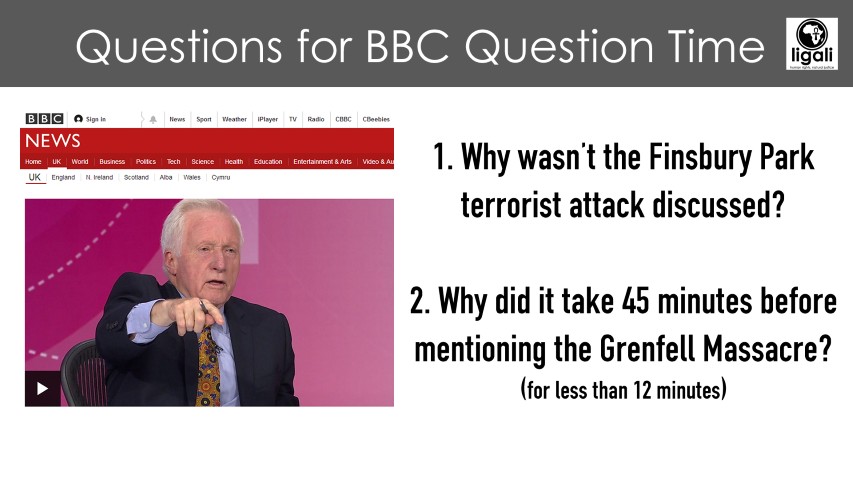
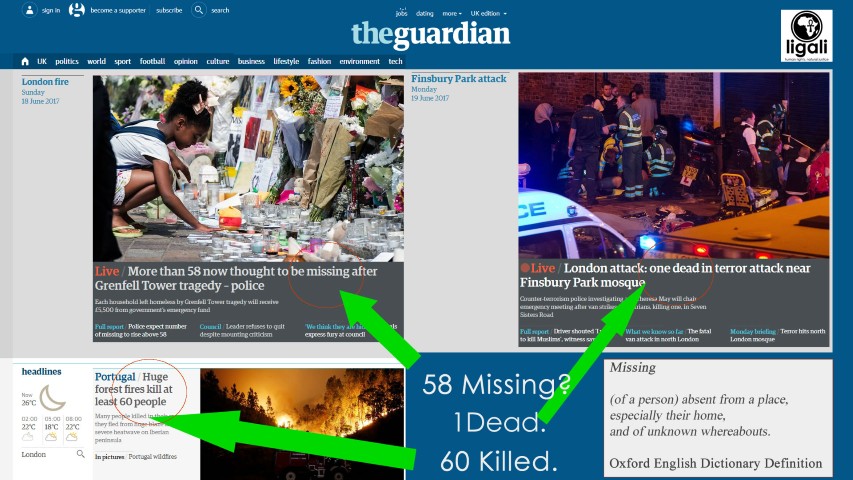
Get involved and help change our world