WEST AFRIKAN EBOLA UPDATE
The Ebola outbreak is thought to have infected more than 14,000 people, almost all of them in West Africa. The death toll has risen to 5,160. We attended a preview screening and Q&A session of ‘Liberia – Living with Ebola’ in Al Jazeera’s Africa Investigates series with the director Clive Patterson & Emmy- and BAFTA-winning reporter Sorious Samura, moderated by Tom Clarke, the Science Editor for Channel 4 News. It was filmed in Liberia in August and finished last month. One interviewee was Mae Azango, a Liberian journalist for FrontPage Africa, awarded the International Press Freedom Award of the Committee to Protect Journalists. She pointed out the devastating effects Ebola is having on the economy with many people avoiding markets and not having spare money to buy anything but the most essential items which are overpriced eg buckets for chlorine which used to be $2 are now being sold for $15. The film was an opportunity to hear the voices of the Liberians affected as survivors, relatives, healthcare workers and policy makers. There is still an ongoing lack of trust in the advice being given and the role that the medical services are playing in the crisis. In the ensuing discussion Sorious Samura said “People are dying not just because of Ebola but because hospitals are also focussing on Ebola.”
Sorious Samura pointed out that while President Sirleaf is highly regarded in the West it is not the same inside the country where there is a lot of criticism of her both historically since becoming President. In Sierra Leone, there are questions being asked about where all the money spent by the British DfID over the last decade has gone and how projects were passed as satisfactorily delivered and the money properly accounted for. “Why is it every time you send money to a politician it just disappears?”
Clive Patterson emphasised the complicated relationships between Afrikans and the West where positions such as Liberia’s Auditor-General are appointed externally by the European Union.
Liberia is also locked into its historical colonial relationship with America. This is similar to Sierra Leone’s with Britain and Guinea’s with France. When President Sirleaf got Liberia’s debt cancelled the agreement was for the money to be used to develop the country’s healthcare but it visibly has not happened. When the Ebola crisis started there were only two functioning ambulances in the whole country. The meeting actually returned to this issue at the end with a discussion about the role of aid, its siphoning in corruption not just by Afrikan politicians but also by donors and companies. It is strange that with all the money now being pledged there are disputes over local health workers not being paid $300 a month when WHO workers are getting $300 a day. Sorious Samura said that after 50 years of ‘independence’ it is time for Afrikan governments to stop acting as mere middlemen between donors and their own country people and if they need to work with overseas donors then it should be an effective partnership. He praised President Yahya Jammeh of the Gambia who took control of the situation and ensured no cases were found in the country.
Robtel Pailey, a Liberian activist studying in London, highlighted the need to change the narrative on aid because while the numbers seem high most of the money goes to western ‘expatriate’ workers. She pointed out the political nature of aid and when Liberia went through the HPIC process it was healthcare that was actually the first thing to be cut.
To a question about the number of reported cases in Liberia falling. Sorious Samura pointed out that there were two waves and while there was a dip the number of cases was soon on the rise. This could be because as well as the 21 day quarantine time there is a 60-90 day period when the virus could still be active within the body fluids so people given the all-clear may go back into circulation and thus infect people. As well as people being in denial there are funerals being held ‘up-country’ in rural areas and the cases take time to be reported or are yet to be found.
The production team returned to Britain on the first day that testing started at Heathrow Airport. It surprised them that it was voluntary for people who had come from Ebola-affected countries to provide information especially as they told border control they had been making a film about Ebola. Tom Clarke, who did six reports from Freetown, Sierra Leone’s capital, filled out a questionnaire but was not considered a risk.
Sorious Samura pointed out that although there have been no outbreaks in the general population outside of west Afrika Ebola is only a flight away as seen by the death of Thomas Duncan, the Liberian man sent home by health workers in the US when he presented with symptoms.
On possible treatments Colin Patterson said that as there is no vaccine fully operational yet the only thing to be done is rehydration and eating lots of nutritional foods. Tom Clarke highlighted that the use of blood plasma by recovered patients seems to have some effect. The role of the work civil society organisations are undertaking was not in the film although Sorious Samura said they did interview people but these were not included due to having to fit many themes into 27 minutes. But it was important to acknowledge their views because in Sierra Leone some people thought Ebola was a government plot to decimate opposition areas.
In further news the Liberian government has lifted its state of emergency imposed in August to counteract the Ebola outbreak. In a radio address President Ellen Johnson Sirleaf said night curfews would be reduced, weekly markets could take place and plans were underway for the re-opening of schools. However, with the devastation of the country’s health system there are fears that the maternal mortality rate in the country could reach one in seven. That compares with one in 4,000 for Britain. President Sirleaf also said four soldiers and their commanding officer will be punished after a boy was killed during protests against quarantine measures in the capital, Monrovia. The boy was shot and others were injured in August. A disciplinary board found the soldiers guilty of indiscretion and indiscipline.
Sierra Leone’s government has announced a $5,000 (£3,000) one-off payment for the family of any health worker who dies fighting Ebola. More than 400 health workers involved in treating Ebola patients went on strike at Bandajuma clinic near Bo, the only Ebola treatment centre in the south of the country. The staff - who include nurses, porters and cleaners - are protesting about the government’s failure to pay an agreed weekly $100 (£63) hazard payment. The Bandajuma clinic is run by the medical charity MSF, which said it would be forced to close the facility if the strike continued. MSF’s emergency co-ordinator in Sierra Leone, Ewald Stars, said that about 60 patients had been left unattended because of the strike at the clinic in Bandajuma. Martin Salia, a surgeon from Sierra Leone, critically ill with Ebola, has arrived in the US for treatment. Dr Salia, who has US residency and is married to an American, was taken to a hospital in Nebraska. He is the tenth person treated for Ebola in the US. All but one - the Liberian Thomas Duncan - have recovered.
There are still complaints that people quarantined in their homes are not getting adequate access to food and medicines. The government has extended the three-month health of emergency to one year. A report from two weeks ago said there were 873 orphaned children in the country. With schools still closed if they do not reopen before the next summer then a whole year will have been missed. Although the curriculum is being broadcast on radio few children are listening to it as they don’t want to or are unable to stay in one place for long periods of time when they are not in a classroom. Also given the perilous state of the economy many children are out trying to earn money to help their families buy food and other essentials.
A hunger strike has been launched in Guinea in protest against the military’s presence in a village where eight members of an Ebola awareness team and some journalists were killed in September. Some of the bodies were found in a septic tank in the town 50km from the south-eastern city of Nzerekore. The motive for the attack was not clear but it came at a time when many communities either denied the existence of Ebola or accused health workers of spreading the virus. About 20 leaders from the southern Wome village are camping outside parliament since beginning the strike against the military in Wome which has forced 6,000 people to flee their homes into a nearby forest. Thirteen people died because of the appalling living conditions in the forest. Guinea’s opposition Liberal Party leader Faya Millimono said that he had joined the hunger strike in solidarity with the villagers who were under military occupation with soldiers accused of carrying out human rights abuses. In Mali, a nurse and the patient he was treating, became the second and third people to die from Ebola there leading France to issue advice to its citizens not to travel to parts of Mali. The Democratic Republic of Congo declared itself Ebola-free after a three-month outbreak, unrelated to the spread of the disease in West Africa, claimed at least 49 lives in the country.
The Confederation of African Football (CAF) has barred Morocco from hosting the 2015 Africa Cup of Nations scheduled to run 17 Jan - 8 Feb 2015 and banned them from the tournament. Equatorial Guinea - which co-hosted the 2012 tournament with Gabon and so already has the required stadiums and infrastructure - will now host the tournament which the Moroccans wanted to delay until June because of fears over Ebola spreading to a country free of the disease. Matches will be held at four venues in Bata, Ebebiyin, Mongomo and the capital Malabo. Equatorial Guinea had been disqualified in July for fielding an ineligible player in a preliminary qualifier against Mauritania on 17 May. CAF Secretary-General Hicham El Amrani said the decision by the Moroccans to allow flights in from the affected countries had been a factor in CAF’s thinking, as had the decision to allow Guinea to play matches recently in Casablanca. Only the Guineans, of the heavily-affected countries, have any realistic chance of qualifying for Afrika’s biggest sporting event. Morocco is also scheduled to host FIFA’s Club World Cup next month featuring Champions League winners Real Madrid. The Moroccans are willing to host that tournament because it did not expect many supporters to travel from Ebola-affected regions as the two Afrikan teams in that competition are from Morocco and Algeria.
Clinical trials to try to find an effective treatment for Ebola patients are to start in West Africa next month.
Three of MSF’s treatment centres will host three separate research projects. Initial results could be available in February 2015. There will be a total of 400 patients. The World Health Organization announced in September that experimental treatments and vaccines for Ebola should be fast-tracked. Two experimental vaccines tests are underway: GlaxoSmithKline (GSK) – currently embroiled in a massive corruption scandal in China - testing in Mali, the UK and the US; and the Public Health Agency of Canada, testing in the US.
The three latest trials are: at the Donka Ebola centre in Conakry, Guinea, led by the Antwerp Institute of Tropical Medicine (ITM), involving convalescent blood and plasma therapy - using blood from recovered patients containing antibodies that successfully fought off the virus to boost the patient’s immune system; at a site yet to be officially announced funded by the Wellcome Trust and led by the University of Oxford using the antiviral drug brincidofovir made by Chimerix of Durham, North Carolina. It works by interfering with the virus’ ability to multiply and up to 140 consenting patients will take the tablets twice a week over a two week period with survival rates being compared to those before the trial; in Gueckedou, Guinea, led by the French National Institute of Health and Medical Research (Inserm), using the antiviral drug favipiravir developed by Toyama Chemical of Japan and used against influenza. Positive results of tests in animals against Ebola were published in February.
Organising safe blood donations in countries with decimated health systems is an enormous task. The first patients will be treated next month and by February scientists expect to have some idea as to whether the drugs have any effect. The test will be whether more patients survive over a 14-day period than have done until now in that particular treatment centre. There is a chance that death rates could go up. If so, the drug trials are meant to be immediately dropped. Prof Denis Malvy, who will lead the Inserm trial in Guinea said those involved in the three trials would work closely together so they could learn from each other’s experiences and adapt what they were doing. The Inserm trial, which will aim to treat 200 patients, will analyse the results after every 20th patient to ensure the drug provides benefits and not detrimental effects.
The trial will be stopped prematurely if the mortality rate is under 40%.
ZMapp, the drug given to some of the foreign health workers who were infected earlier in the epidemic, is not among those being trialled at this stage because it takes too long to produce. The drugs to be tested were chosen because there is some promising data either in Ebola or other viral infections, they can be produced in sufficient quantities and they are not prohibitively expensive unlike ZMapp.
Researchers from the New England Journal of Medicine traced the current outbreak to a two-year-old toddler, who died on 6 December 2013 in Meliandou, a small village in south-eastern Guinea. It was at the same time as a US infectious diseases unit based at Kenema Hospital in Sierra Leone were carrying out Ebola trials in exactly the same area of Guinea. In March, hospital staff alerted Guinea’s Ministry of Health and then MSF. They reported a mysterious disease in the south-eastern regions of Gueckedou, Macenta, Nzerekore, and Kissidougou. It caused fever, diarrhoea and vomiting and also had a high death rate. Infection may occur through direct contact with contaminated bedding, clothing and surfaces - but only through broken skin. It can take from two to 21 days for humans with the virus to show symptoms but they are not infectious until the symptoms develop. People are infectious as long as their blood and secretions contain the virus - in some cases, up to seven weeks after they recover. There are reports semen and breast milk can remain infected for up to 90 days but people are not always warned about this after they get the initial all-clear. The virus can exist on surfaces for to six days. Bleach and chlorine can kill Ebola.
The White House held a conference to discuss the possible role of technology in fighting Ebola. One idea presented by Worcester Polytechnic Institute (WPI) in Massachusetts along with Texas A&M and the University of California, Berkeley, is to stop designing new robots from scratch which could be a huge investment in time and money and instead existing robots could be repurposed to work on Ebola-specific tasks. One of the robots WPI has begun adapting is the Aero (Autonomous Exploration Rover). It was originally designed for space exploration but is now being converted to help with decontamination work by adding sprayer tanks to its body. A person sitting safely outside a contaminated area would control it remotely putting the workers further away from the disease.
The university is also looking to repurpose another robot, Baxter, which was designed to be fixed to one spot in factories and has the relatively small price tag of $26,000 (£16,392). It could keep healthcare workers safe by removing their clothing. The robots would have a human operator based a safe distance away so you wouldn’t need another person to help take the clothing off reducing the risk of spreading contamination. WPI Professor Taskin Padir proposed repurposing field hospital tents to become tech tents incorporating the sensors used to keep watch over elderly patients. A smart tent would have networked sensors to provide a mobile robot with reliable navigation. Such a robot can be used to deliver water, food and medicine to the patients and be monitored from all over the world. They can detect a door opening or closing and can even monitor if a person breaks out of isolation.
The White House workshop also discussed if people would accept help from robots during an outbreak.
Helen Greiner, chief executive of CyPhy Works, which specialises in drones such as Parc (persistent aerial reconnaissance and communications), a drone that can carry out round-the-clock surveillance from the sky if its tether is connected to a power source below. Parc’s tether could also be used to send video and audio to and from isolated victims. Ms Grenier is not worried about the robots being accepted. “If they are bringing you something that you want or need, if they’re bring clothing and stuff, I think people will be very excited.”
===============================================================================
Greetings Kubara,
PRESS RELEASE RE:IMI OPEN LETTER RE: BAND AID 30 EBOLA CHARITY SINGLE
November 15 2014
RE:IMI (Race Equality: In Music Industry) notes that Bob Geldof is recording a new ‘Do They Know It’s Christmas?’ single by Band Aid 30 this weekend, with profits going towards the ebola response in west Africa. Whilst we appreciate this initiative and the many less high profile efforts by African community organisations in Britain, it is a shame that 30 years on, Geldof, a man who seems to have a passion for Africa, has not widened his address book to include African artists.
To the best of our knowledge the only African included in the Band Aid 30 line-up is Emeli Sande. Is it that Geldof is not aware of the numerous African British artists with commercial success such as Tinie Tempah, Leona Lewis, Dizzee Rascal, Beverley Knight, Corrine Bailey Rae, Omar, Sade Adu, Alexandra Burke, to name a few who could have been included?
Whilst this is not a personal attack on Geldof, the reality is that for all the good intentions of the Band Aid 30 project to help Africans, what many within the African British and black music communities see from the published lineup is another form of Eurocentrism - the European off to help the African, without engagement with African musicians in Britain, let alone on the African continent.
If the music industry is serious about engaging with diversity, particularly race equality, which is the reason RE:IMI has been formed, then that message needs to feed through more, and be reflected in a British collective of artists such as Band Aid 30. As it is, whilst Emeli Sande’s place in the Band Aid 30 line-up is well-deserved, as she is one of Britain’s top selling recording artists, her inclusion as the only African could be perceived as a tokenistic effort.
We hope that this open letter comes to the attention of the organisers of the recording session in order to redress the situation for future efforts. It would be helpful if today’s multi-cultural Britain was better represented in the Band Aid 30 lineup. 29 years on, perhaps lessons can still be learnt from Michael Jackson, Lionel Richie, and Quincy Jones, whose ‘We Are The World’ effort was performed by a truly multi-cultural collection of artists known as USA For Africa.
Outside of Band Aid 30 and the big charities and NGOs, there are initiatives led by Africans both here in Britain and on the African continent. In London, the newly formed collective Elbow Out Ebola has a conference at Zanzibar in south London on December 5 to find out where ebola-hit countries are at, and how Diasporan Africans can help, and community groups BTWSC and African Histories Revisited are organising a dinner fundraiser on December 6 at Best Western Cumberland Hotel in Harrow in aid of Médecins Sans Frontières UK’s ebola response.
Interestingly, a number of African artists on the continent have recorded songs to raise awareness about the ebola virus, but as the organisers or artists do not have the same profile or media access as Geldof, you’ve probably not of heard of them. One of the songs is ‘Africa Stop Ebola’, which features singers well-known on the so-called world music scene, such as Tiken Jah Fakoly, Amadou & Mariam, Salif Keita, Oumou Sangare, Kandia Kora, Mory Kante, and rapper Didier Awadi.
The song is a message about what people can do to help stop the spread of ebola in Africa, and is performed in French and local languages widely spoken across west Africa to ensure that the message is understood.
RE:IMI encourages Geldof, if he would like to help Africans, to engage with them and work with them rather than merely doing things for their benefit. We thank all the Band Aid 30 artists, but we are now wise to the rise in sales and profile which charity records, and concerts, provide.
Kwaku, RE:IMI co-ordinator
editor@BritishBlackMusic.com
P O Box 14092, London NW10 1WL
Diane Dunkley, artist manager, RM2 Music
Dr Robbie Shilliam, lecturer, Queen Mary, University of London
Hugh Francis, chair UK Black Music Industry
Rikki Stein, artist manager, Fela Anikulapo Kuti Estate
Zita Holbourne, spoken word & visual artist, co-chair BARAC
OBITUARY
LINCOLN VALENTINE ‘STYLE’ SCOTT (29 Apr 1956 – 9 Oct 2014). Drummer, producer, percussionist and founding member of Roots Radics. Style Scott was found by police at his home in the Williamsfield district of Manchester, Jamaica, after gunshots were heard. He was the anchor of the all-conquering reggae outfit that totally dominated reggae in the period 1979-85. It was the sound I had been waiting all my life to hear yet when it came along it was so familiar and it was after studying his drumming style and buying every record I came across that he had ever played on that I decided to become a drummer for the Afrikan Ambassadors in the mid-1980s.
Style Scott was born in the Jamaican parish of Clarendon and lived with his paternal grandparents on their farm. His grandfather taught him the steel guitar but Style quickly moved to the drums. During his teens he worked in the tourist hotels of Montego Bay on the island’s north coast. He then joined the Jamaica Defence Force and moved to Kingston as a member of the Jamaica Military Band Drum Corps. He began sitting in on studio sessions at Randy’s and Channel One, where Sly Dunbar was his chief role model. After he got his release papers the guitarist Roy Hamilton took Style to Studio One introducing him to bassist and singer Errol ‘Flabba’ Holt and the late great singer-guitarist Eric ‘Bingy Bunny’ Lamont of The Morwells and together they played as Roots Rock. Style’s early recordings included hits such as Sugar Minott’s ‘Hard Time Pressure’. They backed Prince Fari on vinyl and on tour as The Arabs on the Cry Tuff Dub Encounter series, which included killer tracks such as ‘Plant Up’ and ‘Shake the Nation’.
The Roots Radics, as the Channel One Allstars, sat in on a session for Henry ‘Junjo’ Lawes, an up-and-coming producer who ran Volcano sound system. The result - Barrington Levy’s ‘Bounty Hunter’ – was considered the first dancehall album. They became the resident band at Channel One, filling the void left by Sly Dunbar who had split up the Revolutionaries and started the Taxi label with Robbie Shakespeare. At the time Style was sharing drumming duties with Carlton ‘Santa’ Davis but he soon moved on to Earl ‘Chinna’ Smith’s Hard Times outfit and from 1980 virtually all Roots Radics recordings had Style as the drummer with a very rare occasion when Ranking Barnabas would sit in on studio sessions he was engineering. Greensleeves Records made a link with Junjo and for the next five years they blossomed with this new sound for which they were the main distributors in Europe which loved the Roots Radics sparse and springy yet doom-laden sound with hits for Michael Prophet (‘Gunman’), Yellowman, Johnny Osbourne, Ranking Toyan, Al Campbell, Eek-a-Mouse, Wayne Jarrett, Frankie Paul, Cocoa Tea, Barry Brown, Anthony Johnson, Little John, Triston Palma, Cultural Roots, The Itals, Josey Wales, Ranking Joe, Peter Broggs, Knowledge and Clint Eastwood and General Saint. Even established artists such as John Holt, The Meditations, Freddie McGregor, Don Evans, Freddy McKay, Junior Murvin, Culture, the Wailing Souls, the Mighty Diamonds, Winston Jarrett, Israel Vibration, The Viceroys and Don Carlos were backed by the Radics.
Style aimed to make his bass drum mirror reggae’s walking basslines and his army band experience meant that he had metronomic timing and a deep understanding of musical dynamics. Singers, deejays and mixing engineers loved the space he provided and the fact that he could emphasise offbeats but still be relied on to keep the core beat in his head and heart. What also marked out The Roots Radics was that as well as being top-notch musicians they were all singer-songwriters with many already having production credits to their name. They would also arrange songs so that the horn sections were prominent throughout the tune rather than only in a middle eight and on the dub. Other early members of the band included: the late Wycliffe ‘Steely’ Johnson, a keyboardist who learnt his trade after being adopted into the Browne Bunch family who would become the Studio One Band from the late 1970s. He would then go on to conquer the dancehall world as part of the digital pairing Steely and Clevie; Dwight Pickney, the guitarist with Zap-Pow who would eventually have his own band, Gifted Roots; Gladstone Anderson, a singing keyboard player and pianist who had hit tunes in the 1960s; Winston Wright, like Anderson, another keyboard player and pianist who had sat in on many of the sessions that formed Rock Steady and reggae; the recently deceased Noel ‘Sowell Radics’ Bailey, one of the best exponents of the wah-wah pedal guitar style in any genre of music; percussionists were picked from the trio of Zoot ‘Scully’ Simms, Uzziah ‘Sticky’ Thompson and Sky Juice; on horn duties there was a selection from ‘Deadly’ Headley Bennett and the Radication Squad of Dean ‘Cannon’ Fraser - now a producer and one of Jamaica’s greatest singers as can be attested by his mid-80s version of ‘Girlfriend’ – Nambo Robinson, Bobby Ellis, Herman Marquis and Vin Gordon. On engineering duties the Radics are best-known for the mixes by Scientist from Channel One and King Tubby’s studio which are still ahead of their time but they also delivered crucial cuts with Barnabas, Solgie, Maxie, Bunny Tom Tom, Errol Brown, Sylvan Morris and Prince Jammy, who used the Roots Radics on the early Junior Reid sessions when he went solo after leaving Voice of Progress. Other producers that used the band include Linval Thompson for his Thompson Sounds and Strong Like Sampson labels, ‘Nkrumah’ Jah Thomas for Midnight Rock, Ossie Thomas for Black Solidarity, Bunny Wailer for Solomonic, Mikey Dread for Dread at the Controls, Ossie Hibbert for Ossie’s, Lion and Fox for Ras Records, Roy Cousins for his Tamoki Wambesi and Dove labels, Delroy Wright for Live and Learn, Rusty for Rusty International and Paul ‘Jah Screw’ Love for Time Records. Even Trojan Records, which had been going through a fallow period, reactivated itself as people tuned into the rub-a-dub sound.
When Gregory Isaacs had become sufficiently established in the early 1980s he decided to put together his own band to record and tour with him. Touring and producing for Black Uhuru and recording for international stars in Island Records’ Nassau studios in the Bahamas had taken Sly and Robbie out of Jamaica and The Wailers were tied to Bob Marley and the Tuff Gong empire so Gregory went for Roots Rock, renaming them Roots Radics, who had become the most in-demand session musicians on the island. Unlike the usual reggae version excursions the early Roots Radics rhythms for Gregory were almost exclusively his as you can hear on the ‘More Gregory’, ‘Night Nurse’ and ‘Out Deh!’ albums. The plan was to release reggae concept albums properly marketed internationally following in the footsteps of other reggae artists who had signed to Island Records and not just a collection of singles and ‘fillers’. This would cut down on the amount of low or unpaid session work the Roots Radics would have to do as everyone would get paid a proper retainer. However, the plan went awry due to Gregory’s drug habit and gun possession charges for which he was jailed just after the release of ‘Night Nurse’, the most influential album in my life. For 18 months I used to go to sleep with that album on repeat so that I could subliminally ingest the album’s aura into my consciousness - and DNA – by osmosis. The Roots Radics were prepared to wait around cutting further albums with Gregory such as ‘Judge Not’ for Gussie Clarke and ‘Easy’ and ‘All I Have Is Love, Love, Love’ for Tad’s Records after Island’s interest waned but the Cool Ruler’s problems were so enduring throughout the 1980s and into the 90s that the Roots Radics went back to what they knew best as well as embarking on their own individual projects while Gregory returned to being a voice for hire doing the rounds of all the studios. They did work with Gregory again in 1987 on ‘Victim’ for Redman and for Blacka Morwell in the 1990s when an album included an early version of ‘Rude Boy Saddam’ about the first US President Bush’s Desert Storm attack on Iraq in 1990-91. Gregory would regularly revisit those lyrics especially after George Bush junior invaded Iraq again in 2003. If I was to name my all-time top ten tracks in any genre half would come from this combination with ‘Hot Stepper’, ‘Material Man’, ‘Out Deh!’, ‘Dieting’ and ‘Yes, I Do’ right in there.
Through Prince Fari Style had a musical link with Adrian Sherwood, a British-based promoter-distributor with a few productions under his belt, most notably Creation Rebel’s ‘Threat to Creation’ on Hitrun, which featured Jamaican musicians living in England. Sherwood was setting up the On-U Sound label which would eventually become a mix of the cream of musicians and singers such as Congo Ashanti Roy, Lee ‘Scratch’ Perry, Mikey Dread, Bim Sherman, Prince Fari, New Age Steppers, Akabu, The Sugarhill Gang, Jamal Nuruddin of The Last Poets, The Pop Group, Shara Nelson, Playgroup and the NW10 / Creation Rebel / Undivided Roots / Ruff Cutt / 2Badcard members. Style had a minor role on the early Creation Rebel albums ‘Close Encounters of the Third World’ (1978) and ‘Rebel Vibrations’ (1979). He played on the first two African Head Charge albums, ‘My Life in a Hole in the Ground’ (1981) and ‘Environmental Studies’ (1982) and early Dub Syndicate albums. He eventually took over production duties for the latter when computerised reggae in Jamaica meant less work for an outfit like the Roots Radics. He built the rhythm tracks in Jamaica and brought them to London for the final mix by Adrian Sherwood with releases on both On-U Sound and Style’s own Lion and Roots label. At the time of his passing a new Dub Syndicate album called ‘Hard Food’ was in the pipeline. Style stayed true to the early 80s dancehall rub-a-dub sound, my favourite period. As well as the tunes and labels highlighted above no memory would be complete without mention of one of his earliest productions - ‘Rum Tree’ by The Radicals - with roots lyrics and a heavy dub that reflected the best of one of the drum fraternity’s most influential sons. Style is survived by two sons and two daughters. Another daughter predeceased him.
FORTHCOMING NUBIART PROFILES
NUBIART: Focus on arts, business, education, health, political developments and the media.
NOV PROMOS
~ ‘FEEDBACK MADAGASCAR’ – Various Artists [ARC Music – Out Now] A stellar album of 17 tracks that shows the diverse range of musical influences on this Indian Ocean island – mbaqanqa, East Afrikan rumba, blues, sega, mangaliba, betsilebo, kolahota, kabosy and tsapiky. The album kicks off with ‘Madagasikara’, the Malagasy spelling of the island’s name, by Rossy - the only artist we had previously heard of - and the standard never drops. Every track here is a fire cracker that could get any party started with particular stand out tracks such as Oladad’s ‘Maintsokely (Little Green)’, Jaojoby’s ‘Somaiko Somaino (I Play It, You Play It)’, Zambey’s ‘Tsy Hagnatigno (I Will Never Forget You)’, Tiharea’s ‘Hoe Raho (This Is What I Say)’, Mam’be’s ‘Aia Hiboahanao Iny? (Where Do You Go?)’, Raprosy & Raoul’s ‘Sadamenabaka (The Red and White Bow-Horned Cow)’, Akoni Mania’s ‘Manina An-Droky (I Miss You)’ and Teta’s ‘Any Aminao Any (There, Where You Are Far Away)’.
Half the proceeds from the sale of the album goes to the artists while the other half goes on reforestation and community projects. The island has been facing ongoing political instability over the past few years meaning there has not been the government funds and focussed involvement for health and social issues so it falls to musicians and civil society activists to provide many of the essential services that most citizens expect from central government.
~ ‘IN THE LAND OF THE LION’ – Moipei Quartet [ARC Music – Out Now] A stunning acapella album of four part harmonies by the Moipei Quartet – triplets Mary Nenkai, Magdaline Namanyara and Marta
Siteiua and their younger sister Seraphine Setoon Moipei. There is something about families of singers that allows them to cover the necessary vocal range intuitively given their shared early musical influences and the sisters were appointed UNESCO’s first Child Ambassadors from Kenya in 2006. The album title is a reference to the lion, the king of the jungle whose numbers across Afrika have diminished by 90% to 21,000 in the last three decades. The 16 songs here are a mixture of hymns – ‘Ave Maria’, ‘Veni Sanctus Spiritus’ and ‘O Holy Night – traditional Kenyan songs – ‘Pole Musa’, ‘Malaika’ and ‘Ashe Naleng Enkai Ai’ – and songs from the American songbook such as the opener to the set John Denver’s ‘Country Road’.
NUBIART LIBRARY – NOV MEDIA
We will only review books we have read and DVDs we have seen and that are available at reasonable prices online or in shops or libraries. However, given the nature and current state of Afrikan publishing and film production there may be books and films on this list that are worth the extra effort to track down.
~ ‘IN THE NAME OF THE PEOPLE: ANGOLA’S FORGOTTEN MASSACRE’ – Lara Pawson [I.B.Tauris. ISBN: 978-1-78076-905-9] Former BBC Africa correspondent Lara Pawson delves into the barely discussed massacre of MPLA cadres by their own comrades – with Cuban support - in Angola in the aftermath of protests on 27 May 1977. From early on the reader knows there in for one of those notorious internecine left-wing splits when one faction following the deposed Minister of the Interior Nito Alves and his deputy Ze Van Dunem are called the ‘nitistas’ while those under the control of the President Agostinho Neto are called ‘netistas’.
Even now the dispute is mainly framed within the Marxist rhetoric language of the protestors being factionalists, pseudo Marxists, elitists and ‘abusers of the good faith of the People’. While the netistas were accused of being Maoist in a political spectrum that included terms such as Marxist-Leninist, Stalinist, Trotskyist, communist, socialist, nationalist, bourgeois, revisionist, etc. However, there is even more serious racial, regional and group politics at play as the Nitistas were accused of being ‘racist’ to non-Afrikans for pointing out that despite the slogans regarding equality even the most lowly educated or poor white person or mestico (mixed European and Afrikan ancestry) would be found a clerical or military job and not be expected to sweep the streets while the majority of cadres in influential political and economic positions were either Europeans, mesticos or their partners. Very few of the leadership spoke Kimbundu, the language spoken by the majority of the population and some insisted on being classed as mestico on their ID cards even when they were patently not so. There were fewer opportunities for educational scholarships for those of Afrikan descent.
An additional element was that those MPLA comrades from the north or of Bakongo origins were purged as they were assumed to have closer affinities to Holden Roberto’s Bakongo-dominated FNLA and were in touch with Jonas Savimbi’s UNITA regardless of the dedication they had shown to the Angolan liberation cause. We have spoken to Bakongo former MPLA comrades who escaped but many of their associates were killed, jailed, tortured or went into exile for no other reason than their ethnic origins. Pawson interviewed many of those involved and their relatives in Angola, Portugal and Britain and looked through the newspaper records but a true record of what the motives of the protestors were, how many were killed – ranging from ‘a few thousand’ to 50,000 – and why it is still rarely mentioned among Angolans at home and their diaspora remains elusive but she has a good stab at it. Interestingly, she takes to task both Basil Davidson and Victoria Brittain - prominent British journalists and broadcasters on Afrikan affairs whose writings have inspired a generation of people to engage with the continent – for their refusal to address the topic in any meaningful way throughout the breadth of their work.
.
~ CUBA AND ANGOLA: FIGHTING FOR AFRICA’S FREEDOM AND OUR OWN’ - Fidel Castro, Raul Castro, Nelson Mandela, et al. [Pathfinder Press. ISBN: 978-1-60488-046-5]
‘And if I fall, / What is life? / I already / Gave it up for lost / When, / Without fear, / I tore of the yoke / Of the slave.’ – Jose de Espronceda, The Pirate’s Song
This book explores another aspect of Angolan history – its longstanding relationship with Cuba and the political, military and social support the Cubans have extended as part of their international solidarity missions. Between 1975 and 1991 over 425,000 Cubans volunteered to go to Angola in response to requests from the Angolan government to help defend the newly independent country against multiple invasions by apartheid South Africa backed by its allies in America, Israel and other white supremacist regimes. Here this history is told by those who lived it and made it.
Included here are: several speeches by then Cuban President Fidel Castro at the start of Operation Carlota in the run-up to Angolan independence in Nov 1975, the defeat of the apartheid forces at Cuito Cuanavale in 1988 and on Nelson Mandela’s visit; a speech by his brother, the current Cuban President and former Defence Minister Raúl Castro; Nelson Mandela on his visit to Cuba to receive the Jose Marti medal; accounts by three of the Cuban Five about their experiences in Angola; accounts of four Cuban generals several of whom were of Cuban-Chinese extraction but played their full role in the liberation struggle; and the 1977 essay ‘Operation Carlotta’ by Gabriel García Márquez about the early stages of the Cuban involvement in Angola which was named after a female Afrikan resistance fighter who led a rebellion on a sugar plantation in Cuba in 1843.
In ‘We Staked Everything In Angola’ Fidel says: “The imperialists can’t understand very well the reason for Cuba’s broad relations on the international scene, Cuba’s prestige on the international scene. But the African peoples, who have been so humiliated by apartheid and racism, have been able to appraise in all its dimensions the noble, generous gesture, the historical dimension, the heroism of our people who were capable not only of defending themselves here from such a powerful enemy but also help the Africans in their struggle against the fascists and racists.” (p47)
While in ‘All We Take With Us From Africa Are The Remains Of Our Combatants Who Died fighting For Freedom’ he says: “There is no just cause in Africa that has not received our people’s support. Che Guevara and a large group of Cuban revolutionaries fought white mercenaries in the eastern part of what is now Zaire, and today doctors and teachers are working generously and selflessly in the Western Sahara republic, helping its people, who are fighting for their freedom.” (p52) He followed this with his analysis of the destructive effects of rampant global capitalism which “means the neocolonization of billions of human beings through more sophisticated economic and political methods - methods that are cheaper, more effective, and more ruthless.” (p53-54) “It’s a well-known fact that a large part of the wealth of the developed capitalist world comes from unequal trade with these countries. For centuries, those nations were plundered as colonies. Millions of their sons and daughters were enslaved. In many instances their silver and other mineral resources were exhausted. They were pitilessly exploited and underdevelopment was imposed upon them. Underdevelopment was the most direct and clearest consequence of the period of colonial rule. Today they’re exploited through payment of interest on endless unpayable debt. Their basic commodities are extracted at ridiculously low prices. And they’re forced to pay ever higher prices for the industrial goods they import. Financial and human resources are constantly being drawn from those nations through the flight of capital and the brain drain. Their trade is blocked through “dumping,” high tariffs, import quotas, synthetic substitutes produced through advanced technological processes, and subsidizing production in the developed countries when they aren’t competitive.” (p55)
In one page in ‘Our Volunteers Learned What Cuba Used To Be Like’ Luis Alfonso Zayas gives an alternative account of the May 27 1977 protests led by Nito Alves and their aftermath which closely reflects the official MPLA government position. He outlines the different policies adopted by the Cubans and Soviets towards Angolan military strategy – while the Soviets preferred large battalions the Cubans favoured smaller units of at most 70 combatants as this made them more easy to supply and less likely to have large resources tied up if they got stranded in inclement weather or if a bridge had been blown up and rivers were impassable until it was repaired or a replacement constructed. Zayas also outlined how the Cabinda enclave came about when the Belgian genocidaire King Leopold needed access to the sea for the personal fiefdom he stole in the 1884-85 Berlin Conference carve-up. It is now the source of Angola’s oil wealth and three of the Cuban Five, who were jailed for their pro-Cuban activities in the US, served there.
One of the Five Rene Gonzalez in his piece ‘Angola Taught Me That The Most Beautiful Works Are Accomplished By Imperfect Men’ says: “The Angolan experience taught me that the most beautiful works are accomplished by imperfect men, each one of us a short impulse in history: that continual righting of wrongs that began with the first human injustice.” (p118)

We welcome feedback on any event you have attended that was listed in Nubiart Diary. It helps us with the selection of future listings and is also info we can pass on to the event organisers where appropriate.
~ BLACK HISTORY STUDIES UNIA-ACL CENTENARY PRESENTS
- ‘Secrets of the Desert’ UK Premiere. On Tues 18 Nov at 7-9pm at PCS Headquarters, 160 Falcon Road, Clapham Junction, London, SW11 2LN. Adm: £5 / U-16 – Free. The ancestry of the ‘Black Arab’ Bedouins dates back to before the Ottoman and Mameluke empires. They can trace their lineage directly to the Prophet Muhammad (PBUH). In fact to be a Bedouin one has to be a descendent of Abraham and Ishmael. This documentary is filmed deep in the Negev, where Sheikh Aied Al Abeed, the leader of the Tarabin tribe, and Uncle Abu Awaad, share the history. In 1948 the battle of Auja al-Hafir in the Israeli-Arab war marked a significant time in the so-called Middle East. It was a time of severe chaos in the region yet nothing is mentioned of the Black Arabs who were the original inhabitants of the Negev. Many of them took flight leaving their lands, homes, families and friends seeking refuge in Jordan, Egypt and Iraq. Sadly this is the historical reality of the tribes Azazme and Tarabin.
- ‘Domestic Violence In The Black Community’. On Wed 19 Nov at 7-9pm at PCS Headquarters, 160 Falcon Road, Clapham Junction, London, SW11 2LN. Adm: £5 / U-16 – Free. Domestic violence is a problem in the Black community. It involves more than physical violence and both men and women are affected. In this presentation, ‘Domestic Violence in the Black Community,’ Award winning Criminal Justice Safeguarding Consultant Empress Jai will cover the following topics and more: What constitutes abuse?; What are some of the indicators of an abusive relationship?; What are the effects of domestic violence on children and young people?; and how to support victims of domestic violence?
- Black History Studies and the Marcus Garvey Library Presents Sankofa Saturdays screening of ‘Hidden Colors 3: The Rules Of Racism’. On Sat 29 Nov at 5-8pm at the Marcus Garvey Library, Tottenham Green Centre, 1 Phillip Lane, Tottenham, London, N15 4JA. This instalment of Hidden Colors explores how institutional racism effects all areas of human activity and the rules, laws and public policies that are utilized to maintain this system. With commentary David Banner, Nas, Paul Mooney, Dick Gregory, Tariq Nasheed, Dr Frances Cress Welsing, Dr Umar Johnson, George Fraser, Dr Phil Valentine, Carol Anderson, Khalil Gibran Muhammad, Kaba Kamene, Sharazad Ali and Dr Joy Degruy.
For all events e-mail: info@blackhistorystudies.com Web: http://www.blackhistorystudies.com
~ BRENDA LEE VITAMIN D HEALTH TALK. On Thurs 20 Nov at Wembley Library, Brent Cross Centre, Engineers Way, Wembley, HA9 0PJ. Tel: 020 8937 3500. E-mail: brenda@brendaleenutritionandhealth.com Web: http://www.vitamindafrikandiet.info/
~ LONDON SCHOOL OF HYGIENE & TROPICAL MEDICINE EVENTS
- ‘Living with Ebola’ screening about the work of Medecins sans Frontieres in Liberia. On Thurs 20 Nov at 5.30-6.30 pm at John Snow Lecture Theatre, LSHTM, Keppel Street, London, WC1E 7HT. Adm: Free. E-mail: events@lshtm.ac.uk
- Global Health Lecture Series (GHLS): ‘Ebola’. Speaker: Professor Peter Piot, Director, London School of Hygiene & Tropical Medicine. On Mon 24 Nov at 5.15-6.15 pm at John Snow Lecture Theatre, LSHTM, Keppel Street, London, WC1E 7HT. Adm: Free. E-mail: GHLS@lshtm.ac.uk
~ BRITISH MUSEUM TALKS
- ‘Who Were The Ancient Egyptians’. On Fri 21 Nov at 1.30pm. Adm: Free, booking essential. Prof Joel D Irish gives an overview of the peoples of the Nile Valley, investigating population origins, biological affinities and migration patterns within and beyond Egypt drawn from his extensive work on dental anthropology.
- ‘Curator’s Introduction to ‘Ancient Lives, New Discoveries’ Exhibition with Daniel Antoine. On Fri 28 Nov at 1.30pm. Adm: Free.
All events at the British Museum, Great Russell Street, London, WC1B 3DG. Web: www.britishmuseum.org
~ AUTOGRAPH ABP PRESENTS BLACK CHRONICLES II’. A new exhibition exploring Afrikan presences in 19th and early 20th century Britain, through the prism of photography – particularly studio portraiture. Drawing on the metaphor of the chronicle, the exhibition presents over 200 photographs, the majority of which have never been exhibited or published before. This research also coincides with Autograph ABP’s continuous search for the earliest photographic image of a black person created in the UK. Curated by Renée Mussai and Mark Sealy. Exhibition runs until Mon 24 Nov at Autograph, Rivington Place, London, EC2A 3BA. Adm: Free.
- ‘Through a Lens Darkly: Black Photographers and the Emergence of a People’ screening. On Fri 21 Nov at 6.30pm at Rivington Place, London, EC2A 3BA. Adm: £5. Documentary about how Afrikan American communities have used the camera as a tool for social change from the invention of photography to the present giving voice to images long suppressed, forgotten, and hidden from sight.
- ‘Black Chronicles II’ Exhibition Closing Party. On Thurs 27 Nov at 6-9pm at Rivington Place, London, EC2A 3BA. Adm: Free.
~ HARROW BHM GROUP SEASON HIGHLIGHTS MARCUS GARVEY / UNIA @ 100. Pan-Africanist icon Marcus Garvey founded the Universal Negro Improvement Association-African Communities League (UNIA) in Jamaica in 1914. By the 1920s it had become the biggest Afrikan-focused organisation in the world. The UNIA advocated self-confidence, entrepreneurship, connection to Afrika, its history, and Afrikan pride. In marking UNIA@100, we aim to examine different aspects of Garvey’s organisation, and what we can take from it, going forward.
- ‘AfricanHistory+ @ Croydon’. On Sat 22 Nov at 12.30-9.30pm at 1 Matthews Yard, off Surrey Street, Croydon, CR0 1FF. Adm: £5. Web: www.AfricanHistoryPlus.eventbrite.com
- BTWSC and African Histories Revisited Fundraising Dinner in aid of Médecins Sans Frontières UK. On Sun 6 Dec at 7-11.30pm at Best Western Cumberland Hotel, Harrow. Web: www.AfricanHistoryPlus.eventbrite.com or http://www.msf.org.uk/event/black-tie-fundraising-dinner-msfs-ebola-response
- ‘Moving Forward: Taking From The Garvey / UNIA Legacy’ (Brother Andrew Muhammad) including Youth Opportunity. On Fri 19 Dec at 6.30-8.30pm at Civic Centre 1, Harrow Council, Station Road, Harrow, HA1 2XY. Adm: Free.
Booking for all events: www.harrowbhm.eventbrite.com E-mail: harrowBHM@hotmail.com Web: www.harrowbhm.co.uk
~ AFRICAN WOMEN’S CHARITY ORGANIZATION CONFERENCE ‘THE UNIFICATION OF AFRICA THROUGH THE EMANCIPATION AND LEADERSHIP OF WOMEN’. Panel Topics: The Necessity of Organization for the Unification of Africa; The Importance of Women’s Leadership in the Unification of Africa; The Role of Youth in the Unification of Africa; Solidarity with Women and Youth of the World and World Unity; Men for the Emancipation of Women; and the Relationship between the Unification of Africa and Self-Reliance. Women have been in the leadership of humanity for 98% of the time that humans have been on earth in a mode of production called communalism under which all land and means of production belonged to the community. Labour was the need and habit of all with no exploitation. Women were the first agriculturalists, doctors, architects and educators. Former President of Guinea-Conakry Sekou Toure said, “Women’s struggle for liberation must be seen as a part of the more general struggle against capitalism, and never as an isolated struggle directed against men.” Please wear white as a symbol of unity and solidarity. On Sat 22 Nov at 2-6pm at Richmond Public Library, 325 Civic Center Plaza Madeline F. Whittlesey Community Room, Richmond, California 94804 USA. Adm: Free. Tel: 415 789 7360. E-mail: forafricanwomen@att.net
~ ANCESTRAL VIBRATIONS PAYS TRIBUTE TO MOTHER OF THE NATION WINNIE MANDELA. With Sankofa playing jazz fusion, KPI Youth, Afrikan dance and drumming. On Sun 23 Nov at 2-8pm at Avenues Youth Centre, 3-7 Third Avenue, London, W10 4RS. Adm: £12.50 / U-18s - £3. Tel 07951 252 427. E-mail: tauinetwork.europe@gmail.com Web: ausarausetsocietyeurope.com
~ CENTRE OF AFRICAN STUDIES PRESENT ‘THE MEMORY OF THE CROWD: EXPLORING THE POTENTIAL OF DIGITAL MEDIA PLATFORMS TO RE-IMAGINE A NATIONAL NARRATIVE IN KENYA’. PhD student Sam Hopkins, a site-specific and media artist in conversation with Prof Anne Coombes, Director of the Peltz Gallery and Professor of Material and Visual Culture, Birkbeck University of London. On Mon 24 Nov at 5.15pm in Rm 4429, SOAS, Thornhaugh Street, London, WC1. E-mail: cas@soas.ac.uk Web: www.soas.ac.uk/cas
~ AFRICAN ODYSSEYS PRESENTS ‘AN OVERSIMPLIFICATION OF HER BEAUTY’. On Sat 29 Nov at 2pm at BFI Southbank, Belvedere Road, London, SE1. Adm: £6.50. Web: www.bfi.org.uk
~ FIND YOUR VOICE LOOKS AT THE WORKS OF DR LLAILA AFRIKA. Includes a screening of his DVD on high blood pressure and stress and its impact on our mental health. Followed by a panel discussion with experienced health practitioners: Sister Debrose, lecturer, researcher & radio presenter; Brother Minty, supporting community mental health; Dr Elaine Arnold, lecturer in detachment in mental health; Melvin Barrett, finding our purpose through power of our mind; Gillian Bolton, nutritional solutions for mental health & stress. On Sat 29 Nov at 4-8pm Park View School, West Green Road, London, N15 3RB. Adm: £7 / £5 (Adv) from BodyMusic or Brother Dougie. Tel: 07960 239 493 / 07882 403 871. E-mail: findyourvoice@hotmail.co.uk Web: findyourvoiceuk.org
~ SABLE READING SERIES CHRISTMAS CELEBRATION 2014 - ‘ART IS THE HEART OF THE NATION’. With SABLE Poet-in-residence, Patricia Foster, word sculptor Dzifa Benson, spoken word educator Raymond Antrobus and powerful new voice Debrah Mowlem. On Thurs 4 Dec at 6.30-10pm at All Nations Café & Bar, 8 Sandringham Road, Dalston, London, E8 2LP.
~ ‘HOW GREAT THOU ART: 50 YEARS OF AFRICAN-CARIBBEAN FUNERALS IN LONDON’. An exhibition of photographs by Charlie Phillips. The title of the exhibition comes from the popular hymn sung at many funerals. There is a series of events and talks with the curator and Charlie Phillips. Until 5 Dec on Mon-Sat at 10am-5pm at Photofusion, 17a Electric Lane, London, SW9 8LA. Tel: 020 7738 5774. E-mail: info@photofusion.org Web: www.photofusion.org
~ BARAC UK PRESENT ‘ELBOW OUT EBOLA’ CONFERENCE. This is an urgent call to the people of the world on behalf of the people of West Afrika to come together in a grassroots people’s movement. Governments will only do so much without political pressure from people. It’s vitally important to ensure that the world is in no doubt of the demand for increased action to respond to the current crisis and agree a longer term plan to establish a regional health network in West Africa. On Fri 5 Dec at 9am–5pm at the Zanzibar Club, 291 Kirkdale, Sydenham, London, SE26 4QD. Tel: 07961 909 595. E-mail: info@elbowoutebola.com / press@elbowoutebola.com Web: http://www.elbowoutebola.com
~ THE AFRIKAN FAMILY WORKS PRESENTS THE AFRIKAN FOOD HALL LIVE & EBOLA CRISIS APPEAL. The first large scale not-for-profit supermarket, owned and run by us for us! For only £1 annual membership fee you will be an owner of the Afrikan Food Hall and have the right to help shape the future of the social enterprise. They also need your unwanted clothes and shoes for children impacted by Ebola in Sierra Leone. They plan to send a 20ft shipping container to Sierra Leone. On Sat 6 Dec at 1-5pm at St. Giles Centre, 81 Camberwell Church Street, London, SE5 8RB. Tel: 020 8265 8357. Mob: 07783 188 100. Web: www.stgilescamberwell.org.uk / www.theafrikanfamilyworks.net
~ TIWANI CONTEMPORARY PRESENTS MIRRORS & ECHOES EXHIBITION. A collaboration between Mary Evans and Emeka Ogboh focussing on the interface between sound and image, ‘Mirrors & Echoes’ is an immersive installation and a portrait of Lagos, the ever-changing Nigerian megacity.
Until Sat 20 Dec on Tues-Fri at 11am-6pm and Sat at 12-5pm at Tiwani Contemporary, 16 Little Portland Street, London, W1. Adm: Free.
~ HACKNEY MUSEUM EXHIBITIONS
- ‘Strike A Pose: Portraits From A Hackney Photo Studio’. Until 17 Jan 2015.
- ‘What A Journey! Retired Caribbean Nurses and the NHS’. Until 31 Jan 2015. E-mail: info@retiredcaribbeannurses.org.uk
- ‘The Slave Owners of Hackney’. Until 7 Feb 2015.
All exhibitions on Tues, Weds & Fri at 9.30am-5.30pm / Thurs 9.30am-8pm / Sat 10am-5pm at Hackney Museum, Technology and Learning Centre, 1 Reading Lane, London, E8 1GQ. Tel: 020 8356 3500. Web: www.hackney.gov.uk/museum Twitter: @hackneymuseum
~ CHI CREATIONS PRESENTS ‘THE GRIOT WAY STORYTELLING TRAINING’. On 13-15 Feb 2015 and 15-17 May 2015 at Etherly Farm, Dorking, RH5 6PA. E-mail: Info@shanti-chi.com Web: www.shanti-chi.com
~ BUNDU DIA KONGO (BDK). Afrikan cultural and spiritual group working towards the spiritual and psychological growth and development of Afrikans all over the world. Let us make a positive change now. Learn about Afrikan prophets, Afrikan history and Afrikan spiritual practices at our weekly Zikua.
- Sun at 1.30–4.30pm at Chestnuts Community & Arts Centre, 280 St Ann’s Road, Tottenham, London, N15 5BN. Tel: Makaba - 07951 059 853.
- Sun at 12.30–3.15pm at Malika House, 81 George Street, Lozells, Birmingham, B19 1Sl. Tel: Mbuta Mayala – 07404 789 329.
~ THE AUSAR AUSET SOCIETY GI GONG CLASSES. Every Monday at 7.30–9pm at Hazel Road Community Centre, Hazel Road, Kensal Green, London, NW10 5PP. Adm: £5 per class. Tel: 07951- 252-427. E-mail: Tauinetwork.europe@gmail.com
~ THE GREAT AFRIKAN BOOK SALE! Every book and CD is on sale at 50% off or more! There are over 5000 titles in the sale - never before have so many Afrikan interest books been offered on this scale in a sale. The finances raised will go towards the development of the MAA MAAT Project. On Fri & Sat at 5-10pm, Sat 12-8pm and Sun 12-5pm at Maa Maat Centre, 366a High Road, Tottenham, London, N17 9HT. Tel 07956 052 821.
Contact: Kubara Zamani, Afrikan Quest International, PO Box 35165, London, SE5 8WU. Tel: 07811 494 969. E-mail: afrikanquest@hotmail.com NB
External Links
Afrikan Quest International
The Ebola outbreak is thought to have infected more than 14,000 people, almost all of them in West Africa. The death toll has risen to 5,160. We attended a preview screening and Q&A session of ‘Liberia – Living with Ebola’ in Al Jazeera’s Africa Investigates series with the director Clive Patterson & Emmy- and BAFTA-winning reporter Sorious Samura, moderated by Tom Clarke, the Science Editor for Channel 4 News. It was filmed in Liberia in August and finished last month. One interviewee was Mae Azango, a Liberian journalist for FrontPage Africa, awarded the International Press Freedom Award of the Committee to Protect Journalists. She pointed out the devastating effects Ebola is having on the economy with many people avoiding markets and not having spare money to buy anything but the most essential items which are overpriced eg buckets for chlorine which used to be $2 are now being sold for $15. The film was an opportunity to hear the voices of the Liberians affected as survivors, relatives, healthcare workers and policy makers. There is still an ongoing lack of trust in the advice being given and the role that the medical services are playing in the crisis. In the ensuing discussion Sorious Samura said “People are dying not just because of Ebola but because hospitals are also focussing on Ebola.”
Sorious Samura pointed out that while President Sirleaf is highly regarded in the West it is not the same inside the country where there is a lot of criticism of her both historically since becoming President. In Sierra Leone, there are questions being asked about where all the money spent by the British DfID over the last decade has gone and how projects were passed as satisfactorily delivered and the money properly accounted for. “Why is it every time you send money to a politician it just disappears?”
Clive Patterson emphasised the complicated relationships between Afrikans and the West where positions such as Liberia’s Auditor-General are appointed externally by the European Union.
Liberia is also locked into its historical colonial relationship with America. This is similar to Sierra Leone’s with Britain and Guinea’s with France. When President Sirleaf got Liberia’s debt cancelled the agreement was for the money to be used to develop the country’s healthcare but it visibly has not happened. When the Ebola crisis started there were only two functioning ambulances in the whole country. The meeting actually returned to this issue at the end with a discussion about the role of aid, its siphoning in corruption not just by Afrikan politicians but also by donors and companies. It is strange that with all the money now being pledged there are disputes over local health workers not being paid $300 a month when WHO workers are getting $300 a day. Sorious Samura said that after 50 years of ‘independence’ it is time for Afrikan governments to stop acting as mere middlemen between donors and their own country people and if they need to work with overseas donors then it should be an effective partnership. He praised President Yahya Jammeh of the Gambia who took control of the situation and ensured no cases were found in the country.
Robtel Pailey, a Liberian activist studying in London, highlighted the need to change the narrative on aid because while the numbers seem high most of the money goes to western ‘expatriate’ workers. She pointed out the political nature of aid and when Liberia went through the HPIC process it was healthcare that was actually the first thing to be cut.
To a question about the number of reported cases in Liberia falling. Sorious Samura pointed out that there were two waves and while there was a dip the number of cases was soon on the rise. This could be because as well as the 21 day quarantine time there is a 60-90 day period when the virus could still be active within the body fluids so people given the all-clear may go back into circulation and thus infect people. As well as people being in denial there are funerals being held ‘up-country’ in rural areas and the cases take time to be reported or are yet to be found.
The production team returned to Britain on the first day that testing started at Heathrow Airport. It surprised them that it was voluntary for people who had come from Ebola-affected countries to provide information especially as they told border control they had been making a film about Ebola. Tom Clarke, who did six reports from Freetown, Sierra Leone’s capital, filled out a questionnaire but was not considered a risk.
Sorious Samura pointed out that although there have been no outbreaks in the general population outside of west Afrika Ebola is only a flight away as seen by the death of Thomas Duncan, the Liberian man sent home by health workers in the US when he presented with symptoms.
On possible treatments Colin Patterson said that as there is no vaccine fully operational yet the only thing to be done is rehydration and eating lots of nutritional foods. Tom Clarke highlighted that the use of blood plasma by recovered patients seems to have some effect. The role of the work civil society organisations are undertaking was not in the film although Sorious Samura said they did interview people but these were not included due to having to fit many themes into 27 minutes. But it was important to acknowledge their views because in Sierra Leone some people thought Ebola was a government plot to decimate opposition areas.
In further news the Liberian government has lifted its state of emergency imposed in August to counteract the Ebola outbreak. In a radio address President Ellen Johnson Sirleaf said night curfews would be reduced, weekly markets could take place and plans were underway for the re-opening of schools. However, with the devastation of the country’s health system there are fears that the maternal mortality rate in the country could reach one in seven. That compares with one in 4,000 for Britain. President Sirleaf also said four soldiers and their commanding officer will be punished after a boy was killed during protests against quarantine measures in the capital, Monrovia. The boy was shot and others were injured in August. A disciplinary board found the soldiers guilty of indiscretion and indiscipline.
Sierra Leone’s government has announced a $5,000 (£3,000) one-off payment for the family of any health worker who dies fighting Ebola. More than 400 health workers involved in treating Ebola patients went on strike at Bandajuma clinic near Bo, the only Ebola treatment centre in the south of the country. The staff - who include nurses, porters and cleaners - are protesting about the government’s failure to pay an agreed weekly $100 (£63) hazard payment. The Bandajuma clinic is run by the medical charity MSF, which said it would be forced to close the facility if the strike continued. MSF’s emergency co-ordinator in Sierra Leone, Ewald Stars, said that about 60 patients had been left unattended because of the strike at the clinic in Bandajuma. Martin Salia, a surgeon from Sierra Leone, critically ill with Ebola, has arrived in the US for treatment. Dr Salia, who has US residency and is married to an American, was taken to a hospital in Nebraska. He is the tenth person treated for Ebola in the US. All but one - the Liberian Thomas Duncan - have recovered.
There are still complaints that people quarantined in their homes are not getting adequate access to food and medicines. The government has extended the three-month health of emergency to one year. A report from two weeks ago said there were 873 orphaned children in the country. With schools still closed if they do not reopen before the next summer then a whole year will have been missed. Although the curriculum is being broadcast on radio few children are listening to it as they don’t want to or are unable to stay in one place for long periods of time when they are not in a classroom. Also given the perilous state of the economy many children are out trying to earn money to help their families buy food and other essentials.
A hunger strike has been launched in Guinea in protest against the military’s presence in a village where eight members of an Ebola awareness team and some journalists were killed in September. Some of the bodies were found in a septic tank in the town 50km from the south-eastern city of Nzerekore. The motive for the attack was not clear but it came at a time when many communities either denied the existence of Ebola or accused health workers of spreading the virus. About 20 leaders from the southern Wome village are camping outside parliament since beginning the strike against the military in Wome which has forced 6,000 people to flee their homes into a nearby forest. Thirteen people died because of the appalling living conditions in the forest. Guinea’s opposition Liberal Party leader Faya Millimono said that he had joined the hunger strike in solidarity with the villagers who were under military occupation with soldiers accused of carrying out human rights abuses. In Mali, a nurse and the patient he was treating, became the second and third people to die from Ebola there leading France to issue advice to its citizens not to travel to parts of Mali. The Democratic Republic of Congo declared itself Ebola-free after a three-month outbreak, unrelated to the spread of the disease in West Africa, claimed at least 49 lives in the country.
The Confederation of African Football (CAF) has barred Morocco from hosting the 2015 Africa Cup of Nations scheduled to run 17 Jan - 8 Feb 2015 and banned them from the tournament. Equatorial Guinea - which co-hosted the 2012 tournament with Gabon and so already has the required stadiums and infrastructure - will now host the tournament which the Moroccans wanted to delay until June because of fears over Ebola spreading to a country free of the disease. Matches will be held at four venues in Bata, Ebebiyin, Mongomo and the capital Malabo. Equatorial Guinea had been disqualified in July for fielding an ineligible player in a preliminary qualifier against Mauritania on 17 May. CAF Secretary-General Hicham El Amrani said the decision by the Moroccans to allow flights in from the affected countries had been a factor in CAF’s thinking, as had the decision to allow Guinea to play matches recently in Casablanca. Only the Guineans, of the heavily-affected countries, have any realistic chance of qualifying for Afrika’s biggest sporting event. Morocco is also scheduled to host FIFA’s Club World Cup next month featuring Champions League winners Real Madrid. The Moroccans are willing to host that tournament because it did not expect many supporters to travel from Ebola-affected regions as the two Afrikan teams in that competition are from Morocco and Algeria.
Clinical trials to try to find an effective treatment for Ebola patients are to start in West Africa next month.
Three of MSF’s treatment centres will host three separate research projects. Initial results could be available in February 2015. There will be a total of 400 patients. The World Health Organization announced in September that experimental treatments and vaccines for Ebola should be fast-tracked. Two experimental vaccines tests are underway: GlaxoSmithKline (GSK) – currently embroiled in a massive corruption scandal in China - testing in Mali, the UK and the US; and the Public Health Agency of Canada, testing in the US.
The three latest trials are: at the Donka Ebola centre in Conakry, Guinea, led by the Antwerp Institute of Tropical Medicine (ITM), involving convalescent blood and plasma therapy - using blood from recovered patients containing antibodies that successfully fought off the virus to boost the patient’s immune system; at a site yet to be officially announced funded by the Wellcome Trust and led by the University of Oxford using the antiviral drug brincidofovir made by Chimerix of Durham, North Carolina. It works by interfering with the virus’ ability to multiply and up to 140 consenting patients will take the tablets twice a week over a two week period with survival rates being compared to those before the trial; in Gueckedou, Guinea, led by the French National Institute of Health and Medical Research (Inserm), using the antiviral drug favipiravir developed by Toyama Chemical of Japan and used against influenza. Positive results of tests in animals against Ebola were published in February.
Organising safe blood donations in countries with decimated health systems is an enormous task. The first patients will be treated next month and by February scientists expect to have some idea as to whether the drugs have any effect. The test will be whether more patients survive over a 14-day period than have done until now in that particular treatment centre. There is a chance that death rates could go up. If so, the drug trials are meant to be immediately dropped. Prof Denis Malvy, who will lead the Inserm trial in Guinea said those involved in the three trials would work closely together so they could learn from each other’s experiences and adapt what they were doing. The Inserm trial, which will aim to treat 200 patients, will analyse the results after every 20th patient to ensure the drug provides benefits and not detrimental effects.
The trial will be stopped prematurely if the mortality rate is under 40%.
ZMapp, the drug given to some of the foreign health workers who were infected earlier in the epidemic, is not among those being trialled at this stage because it takes too long to produce. The drugs to be tested were chosen because there is some promising data either in Ebola or other viral infections, they can be produced in sufficient quantities and they are not prohibitively expensive unlike ZMapp.
Researchers from the New England Journal of Medicine traced the current outbreak to a two-year-old toddler, who died on 6 December 2013 in Meliandou, a small village in south-eastern Guinea. It was at the same time as a US infectious diseases unit based at Kenema Hospital in Sierra Leone were carrying out Ebola trials in exactly the same area of Guinea. In March, hospital staff alerted Guinea’s Ministry of Health and then MSF. They reported a mysterious disease in the south-eastern regions of Gueckedou, Macenta, Nzerekore, and Kissidougou. It caused fever, diarrhoea and vomiting and also had a high death rate. Infection may occur through direct contact with contaminated bedding, clothing and surfaces - but only through broken skin. It can take from two to 21 days for humans with the virus to show symptoms but they are not infectious until the symptoms develop. People are infectious as long as their blood and secretions contain the virus - in some cases, up to seven weeks after they recover. There are reports semen and breast milk can remain infected for up to 90 days but people are not always warned about this after they get the initial all-clear. The virus can exist on surfaces for to six days. Bleach and chlorine can kill Ebola.
The White House held a conference to discuss the possible role of technology in fighting Ebola. One idea presented by Worcester Polytechnic Institute (WPI) in Massachusetts along with Texas A&M and the University of California, Berkeley, is to stop designing new robots from scratch which could be a huge investment in time and money and instead existing robots could be repurposed to work on Ebola-specific tasks. One of the robots WPI has begun adapting is the Aero (Autonomous Exploration Rover). It was originally designed for space exploration but is now being converted to help with decontamination work by adding sprayer tanks to its body. A person sitting safely outside a contaminated area would control it remotely putting the workers further away from the disease.
The university is also looking to repurpose another robot, Baxter, which was designed to be fixed to one spot in factories and has the relatively small price tag of $26,000 (£16,392). It could keep healthcare workers safe by removing their clothing. The robots would have a human operator based a safe distance away so you wouldn’t need another person to help take the clothing off reducing the risk of spreading contamination. WPI Professor Taskin Padir proposed repurposing field hospital tents to become tech tents incorporating the sensors used to keep watch over elderly patients. A smart tent would have networked sensors to provide a mobile robot with reliable navigation. Such a robot can be used to deliver water, food and medicine to the patients and be monitored from all over the world. They can detect a door opening or closing and can even monitor if a person breaks out of isolation.
The White House workshop also discussed if people would accept help from robots during an outbreak.
Helen Greiner, chief executive of CyPhy Works, which specialises in drones such as Parc (persistent aerial reconnaissance and communications), a drone that can carry out round-the-clock surveillance from the sky if its tether is connected to a power source below. Parc’s tether could also be used to send video and audio to and from isolated victims. Ms Grenier is not worried about the robots being accepted. “If they are bringing you something that you want or need, if they’re bring clothing and stuff, I think people will be very excited.”
===============================================================================
Greetings Kubara,
PRESS RELEASE RE:IMI OPEN LETTER RE: BAND AID 30 EBOLA CHARITY SINGLE
November 15 2014
RE:IMI (Race Equality: In Music Industry) notes that Bob Geldof is recording a new ‘Do They Know It’s Christmas?’ single by Band Aid 30 this weekend, with profits going towards the ebola response in west Africa. Whilst we appreciate this initiative and the many less high profile efforts by African community organisations in Britain, it is a shame that 30 years on, Geldof, a man who seems to have a passion for Africa, has not widened his address book to include African artists.
To the best of our knowledge the only African included in the Band Aid 30 line-up is Emeli Sande. Is it that Geldof is not aware of the numerous African British artists with commercial success such as Tinie Tempah, Leona Lewis, Dizzee Rascal, Beverley Knight, Corrine Bailey Rae, Omar, Sade Adu, Alexandra Burke, to name a few who could have been included?
Whilst this is not a personal attack on Geldof, the reality is that for all the good intentions of the Band Aid 30 project to help Africans, what many within the African British and black music communities see from the published lineup is another form of Eurocentrism - the European off to help the African, without engagement with African musicians in Britain, let alone on the African continent.
If the music industry is serious about engaging with diversity, particularly race equality, which is the reason RE:IMI has been formed, then that message needs to feed through more, and be reflected in a British collective of artists such as Band Aid 30. As it is, whilst Emeli Sande’s place in the Band Aid 30 line-up is well-deserved, as she is one of Britain’s top selling recording artists, her inclusion as the only African could be perceived as a tokenistic effort.
We hope that this open letter comes to the attention of the organisers of the recording session in order to redress the situation for future efforts. It would be helpful if today’s multi-cultural Britain was better represented in the Band Aid 30 lineup. 29 years on, perhaps lessons can still be learnt from Michael Jackson, Lionel Richie, and Quincy Jones, whose ‘We Are The World’ effort was performed by a truly multi-cultural collection of artists known as USA For Africa.
Outside of Band Aid 30 and the big charities and NGOs, there are initiatives led by Africans both here in Britain and on the African continent. In London, the newly formed collective Elbow Out Ebola has a conference at Zanzibar in south London on December 5 to find out where ebola-hit countries are at, and how Diasporan Africans can help, and community groups BTWSC and African Histories Revisited are organising a dinner fundraiser on December 6 at Best Western Cumberland Hotel in Harrow in aid of Médecins Sans Frontières UK’s ebola response.
Interestingly, a number of African artists on the continent have recorded songs to raise awareness about the ebola virus, but as the organisers or artists do not have the same profile or media access as Geldof, you’ve probably not of heard of them. One of the songs is ‘Africa Stop Ebola’, which features singers well-known on the so-called world music scene, such as Tiken Jah Fakoly, Amadou & Mariam, Salif Keita, Oumou Sangare, Kandia Kora, Mory Kante, and rapper Didier Awadi.
The song is a message about what people can do to help stop the spread of ebola in Africa, and is performed in French and local languages widely spoken across west Africa to ensure that the message is understood.
RE:IMI encourages Geldof, if he would like to help Africans, to engage with them and work with them rather than merely doing things for their benefit. We thank all the Band Aid 30 artists, but we are now wise to the rise in sales and profile which charity records, and concerts, provide.
Kwaku, RE:IMI co-ordinator
editor@BritishBlackMusic.com
P O Box 14092, London NW10 1WL
Diane Dunkley, artist manager, RM2 Music
Dr Robbie Shilliam, lecturer, Queen Mary, University of London
Hugh Francis, chair UK Black Music Industry
Rikki Stein, artist manager, Fela Anikulapo Kuti Estate
Zita Holbourne, spoken word & visual artist, co-chair BARAC
OBITUARY
LINCOLN VALENTINE ‘STYLE’ SCOTT (29 Apr 1956 – 9 Oct 2014). Drummer, producer, percussionist and founding member of Roots Radics. Style Scott was found by police at his home in the Williamsfield district of Manchester, Jamaica, after gunshots were heard. He was the anchor of the all-conquering reggae outfit that totally dominated reggae in the period 1979-85. It was the sound I had been waiting all my life to hear yet when it came along it was so familiar and it was after studying his drumming style and buying every record I came across that he had ever played on that I decided to become a drummer for the Afrikan Ambassadors in the mid-1980s.
Style Scott was born in the Jamaican parish of Clarendon and lived with his paternal grandparents on their farm. His grandfather taught him the steel guitar but Style quickly moved to the drums. During his teens he worked in the tourist hotels of Montego Bay on the island’s north coast. He then joined the Jamaica Defence Force and moved to Kingston as a member of the Jamaica Military Band Drum Corps. He began sitting in on studio sessions at Randy’s and Channel One, where Sly Dunbar was his chief role model. After he got his release papers the guitarist Roy Hamilton took Style to Studio One introducing him to bassist and singer Errol ‘Flabba’ Holt and the late great singer-guitarist Eric ‘Bingy Bunny’ Lamont of The Morwells and together they played as Roots Rock. Style’s early recordings included hits such as Sugar Minott’s ‘Hard Time Pressure’. They backed Prince Fari on vinyl and on tour as The Arabs on the Cry Tuff Dub Encounter series, which included killer tracks such as ‘Plant Up’ and ‘Shake the Nation’.
The Roots Radics, as the Channel One Allstars, sat in on a session for Henry ‘Junjo’ Lawes, an up-and-coming producer who ran Volcano sound system. The result - Barrington Levy’s ‘Bounty Hunter’ – was considered the first dancehall album. They became the resident band at Channel One, filling the void left by Sly Dunbar who had split up the Revolutionaries and started the Taxi label with Robbie Shakespeare. At the time Style was sharing drumming duties with Carlton ‘Santa’ Davis but he soon moved on to Earl ‘Chinna’ Smith’s Hard Times outfit and from 1980 virtually all Roots Radics recordings had Style as the drummer with a very rare occasion when Ranking Barnabas would sit in on studio sessions he was engineering. Greensleeves Records made a link with Junjo and for the next five years they blossomed with this new sound for which they were the main distributors in Europe which loved the Roots Radics sparse and springy yet doom-laden sound with hits for Michael Prophet (‘Gunman’), Yellowman, Johnny Osbourne, Ranking Toyan, Al Campbell, Eek-a-Mouse, Wayne Jarrett, Frankie Paul, Cocoa Tea, Barry Brown, Anthony Johnson, Little John, Triston Palma, Cultural Roots, The Itals, Josey Wales, Ranking Joe, Peter Broggs, Knowledge and Clint Eastwood and General Saint. Even established artists such as John Holt, The Meditations, Freddie McGregor, Don Evans, Freddy McKay, Junior Murvin, Culture, the Wailing Souls, the Mighty Diamonds, Winston Jarrett, Israel Vibration, The Viceroys and Don Carlos were backed by the Radics.
Style aimed to make his bass drum mirror reggae’s walking basslines and his army band experience meant that he had metronomic timing and a deep understanding of musical dynamics. Singers, deejays and mixing engineers loved the space he provided and the fact that he could emphasise offbeats but still be relied on to keep the core beat in his head and heart. What also marked out The Roots Radics was that as well as being top-notch musicians they were all singer-songwriters with many already having production credits to their name. They would also arrange songs so that the horn sections were prominent throughout the tune rather than only in a middle eight and on the dub. Other early members of the band included: the late Wycliffe ‘Steely’ Johnson, a keyboardist who learnt his trade after being adopted into the Browne Bunch family who would become the Studio One Band from the late 1970s. He would then go on to conquer the dancehall world as part of the digital pairing Steely and Clevie; Dwight Pickney, the guitarist with Zap-Pow who would eventually have his own band, Gifted Roots; Gladstone Anderson, a singing keyboard player and pianist who had hit tunes in the 1960s; Winston Wright, like Anderson, another keyboard player and pianist who had sat in on many of the sessions that formed Rock Steady and reggae; the recently deceased Noel ‘Sowell Radics’ Bailey, one of the best exponents of the wah-wah pedal guitar style in any genre of music; percussionists were picked from the trio of Zoot ‘Scully’ Simms, Uzziah ‘Sticky’ Thompson and Sky Juice; on horn duties there was a selection from ‘Deadly’ Headley Bennett and the Radication Squad of Dean ‘Cannon’ Fraser - now a producer and one of Jamaica’s greatest singers as can be attested by his mid-80s version of ‘Girlfriend’ – Nambo Robinson, Bobby Ellis, Herman Marquis and Vin Gordon. On engineering duties the Radics are best-known for the mixes by Scientist from Channel One and King Tubby’s studio which are still ahead of their time but they also delivered crucial cuts with Barnabas, Solgie, Maxie, Bunny Tom Tom, Errol Brown, Sylvan Morris and Prince Jammy, who used the Roots Radics on the early Junior Reid sessions when he went solo after leaving Voice of Progress. Other producers that used the band include Linval Thompson for his Thompson Sounds and Strong Like Sampson labels, ‘Nkrumah’ Jah Thomas for Midnight Rock, Ossie Thomas for Black Solidarity, Bunny Wailer for Solomonic, Mikey Dread for Dread at the Controls, Ossie Hibbert for Ossie’s, Lion and Fox for Ras Records, Roy Cousins for his Tamoki Wambesi and Dove labels, Delroy Wright for Live and Learn, Rusty for Rusty International and Paul ‘Jah Screw’ Love for Time Records. Even Trojan Records, which had been going through a fallow period, reactivated itself as people tuned into the rub-a-dub sound.
When Gregory Isaacs had become sufficiently established in the early 1980s he decided to put together his own band to record and tour with him. Touring and producing for Black Uhuru and recording for international stars in Island Records’ Nassau studios in the Bahamas had taken Sly and Robbie out of Jamaica and The Wailers were tied to Bob Marley and the Tuff Gong empire so Gregory went for Roots Rock, renaming them Roots Radics, who had become the most in-demand session musicians on the island. Unlike the usual reggae version excursions the early Roots Radics rhythms for Gregory were almost exclusively his as you can hear on the ‘More Gregory’, ‘Night Nurse’ and ‘Out Deh!’ albums. The plan was to release reggae concept albums properly marketed internationally following in the footsteps of other reggae artists who had signed to Island Records and not just a collection of singles and ‘fillers’. This would cut down on the amount of low or unpaid session work the Roots Radics would have to do as everyone would get paid a proper retainer. However, the plan went awry due to Gregory’s drug habit and gun possession charges for which he was jailed just after the release of ‘Night Nurse’, the most influential album in my life. For 18 months I used to go to sleep with that album on repeat so that I could subliminally ingest the album’s aura into my consciousness - and DNA – by osmosis. The Roots Radics were prepared to wait around cutting further albums with Gregory such as ‘Judge Not’ for Gussie Clarke and ‘Easy’ and ‘All I Have Is Love, Love, Love’ for Tad’s Records after Island’s interest waned but the Cool Ruler’s problems were so enduring throughout the 1980s and into the 90s that the Roots Radics went back to what they knew best as well as embarking on their own individual projects while Gregory returned to being a voice for hire doing the rounds of all the studios. They did work with Gregory again in 1987 on ‘Victim’ for Redman and for Blacka Morwell in the 1990s when an album included an early version of ‘Rude Boy Saddam’ about the first US President Bush’s Desert Storm attack on Iraq in 1990-91. Gregory would regularly revisit those lyrics especially after George Bush junior invaded Iraq again in 2003. If I was to name my all-time top ten tracks in any genre half would come from this combination with ‘Hot Stepper’, ‘Material Man’, ‘Out Deh!’, ‘Dieting’ and ‘Yes, I Do’ right in there.
Through Prince Fari Style had a musical link with Adrian Sherwood, a British-based promoter-distributor with a few productions under his belt, most notably Creation Rebel’s ‘Threat to Creation’ on Hitrun, which featured Jamaican musicians living in England. Sherwood was setting up the On-U Sound label which would eventually become a mix of the cream of musicians and singers such as Congo Ashanti Roy, Lee ‘Scratch’ Perry, Mikey Dread, Bim Sherman, Prince Fari, New Age Steppers, Akabu, The Sugarhill Gang, Jamal Nuruddin of The Last Poets, The Pop Group, Shara Nelson, Playgroup and the NW10 / Creation Rebel / Undivided Roots / Ruff Cutt / 2Badcard members. Style had a minor role on the early Creation Rebel albums ‘Close Encounters of the Third World’ (1978) and ‘Rebel Vibrations’ (1979). He played on the first two African Head Charge albums, ‘My Life in a Hole in the Ground’ (1981) and ‘Environmental Studies’ (1982) and early Dub Syndicate albums. He eventually took over production duties for the latter when computerised reggae in Jamaica meant less work for an outfit like the Roots Radics. He built the rhythm tracks in Jamaica and brought them to London for the final mix by Adrian Sherwood with releases on both On-U Sound and Style’s own Lion and Roots label. At the time of his passing a new Dub Syndicate album called ‘Hard Food’ was in the pipeline. Style stayed true to the early 80s dancehall rub-a-dub sound, my favourite period. As well as the tunes and labels highlighted above no memory would be complete without mention of one of his earliest productions - ‘Rum Tree’ by The Radicals - with roots lyrics and a heavy dub that reflected the best of one of the drum fraternity’s most influential sons. Style is survived by two sons and two daughters. Another daughter predeceased him.
FORTHCOMING NUBIART PROFILES
NUBIART: Focus on arts, business, education, health, political developments and the media.
NOV PROMOS
~ ‘FEEDBACK MADAGASCAR’ – Various Artists [ARC Music – Out Now] A stellar album of 17 tracks that shows the diverse range of musical influences on this Indian Ocean island – mbaqanqa, East Afrikan rumba, blues, sega, mangaliba, betsilebo, kolahota, kabosy and tsapiky. The album kicks off with ‘Madagasikara’, the Malagasy spelling of the island’s name, by Rossy - the only artist we had previously heard of - and the standard never drops. Every track here is a fire cracker that could get any party started with particular stand out tracks such as Oladad’s ‘Maintsokely (Little Green)’, Jaojoby’s ‘Somaiko Somaino (I Play It, You Play It)’, Zambey’s ‘Tsy Hagnatigno (I Will Never Forget You)’, Tiharea’s ‘Hoe Raho (This Is What I Say)’, Mam’be’s ‘Aia Hiboahanao Iny? (Where Do You Go?)’, Raprosy & Raoul’s ‘Sadamenabaka (The Red and White Bow-Horned Cow)’, Akoni Mania’s ‘Manina An-Droky (I Miss You)’ and Teta’s ‘Any Aminao Any (There, Where You Are Far Away)’.
Half the proceeds from the sale of the album goes to the artists while the other half goes on reforestation and community projects. The island has been facing ongoing political instability over the past few years meaning there has not been the government funds and focussed involvement for health and social issues so it falls to musicians and civil society activists to provide many of the essential services that most citizens expect from central government.
~ ‘IN THE LAND OF THE LION’ – Moipei Quartet [ARC Music – Out Now] A stunning acapella album of four part harmonies by the Moipei Quartet – triplets Mary Nenkai, Magdaline Namanyara and Marta
Siteiua and their younger sister Seraphine Setoon Moipei. There is something about families of singers that allows them to cover the necessary vocal range intuitively given their shared early musical influences and the sisters were appointed UNESCO’s first Child Ambassadors from Kenya in 2006. The album title is a reference to the lion, the king of the jungle whose numbers across Afrika have diminished by 90% to 21,000 in the last three decades. The 16 songs here are a mixture of hymns – ‘Ave Maria’, ‘Veni Sanctus Spiritus’ and ‘O Holy Night – traditional Kenyan songs – ‘Pole Musa’, ‘Malaika’ and ‘Ashe Naleng Enkai Ai’ – and songs from the American songbook such as the opener to the set John Denver’s ‘Country Road’.
NUBIART LIBRARY – NOV MEDIA
We will only review books we have read and DVDs we have seen and that are available at reasonable prices online or in shops or libraries. However, given the nature and current state of Afrikan publishing and film production there may be books and films on this list that are worth the extra effort to track down.
~ ‘IN THE NAME OF THE PEOPLE: ANGOLA’S FORGOTTEN MASSACRE’ – Lara Pawson [I.B.Tauris. ISBN: 978-1-78076-905-9] Former BBC Africa correspondent Lara Pawson delves into the barely discussed massacre of MPLA cadres by their own comrades – with Cuban support - in Angola in the aftermath of protests on 27 May 1977. From early on the reader knows there in for one of those notorious internecine left-wing splits when one faction following the deposed Minister of the Interior Nito Alves and his deputy Ze Van Dunem are called the ‘nitistas’ while those under the control of the President Agostinho Neto are called ‘netistas’.
Even now the dispute is mainly framed within the Marxist rhetoric language of the protestors being factionalists, pseudo Marxists, elitists and ‘abusers of the good faith of the People’. While the netistas were accused of being Maoist in a political spectrum that included terms such as Marxist-Leninist, Stalinist, Trotskyist, communist, socialist, nationalist, bourgeois, revisionist, etc. However, there is even more serious racial, regional and group politics at play as the Nitistas were accused of being ‘racist’ to non-Afrikans for pointing out that despite the slogans regarding equality even the most lowly educated or poor white person or mestico (mixed European and Afrikan ancestry) would be found a clerical or military job and not be expected to sweep the streets while the majority of cadres in influential political and economic positions were either Europeans, mesticos or their partners. Very few of the leadership spoke Kimbundu, the language spoken by the majority of the population and some insisted on being classed as mestico on their ID cards even when they were patently not so. There were fewer opportunities for educational scholarships for those of Afrikan descent.
An additional element was that those MPLA comrades from the north or of Bakongo origins were purged as they were assumed to have closer affinities to Holden Roberto’s Bakongo-dominated FNLA and were in touch with Jonas Savimbi’s UNITA regardless of the dedication they had shown to the Angolan liberation cause. We have spoken to Bakongo former MPLA comrades who escaped but many of their associates were killed, jailed, tortured or went into exile for no other reason than their ethnic origins. Pawson interviewed many of those involved and their relatives in Angola, Portugal and Britain and looked through the newspaper records but a true record of what the motives of the protestors were, how many were killed – ranging from ‘a few thousand’ to 50,000 – and why it is still rarely mentioned among Angolans at home and their diaspora remains elusive but she has a good stab at it. Interestingly, she takes to task both Basil Davidson and Victoria Brittain - prominent British journalists and broadcasters on Afrikan affairs whose writings have inspired a generation of people to engage with the continent – for their refusal to address the topic in any meaningful way throughout the breadth of their work.
.
~ CUBA AND ANGOLA: FIGHTING FOR AFRICA’S FREEDOM AND OUR OWN’ - Fidel Castro, Raul Castro, Nelson Mandela, et al. [Pathfinder Press. ISBN: 978-1-60488-046-5]
‘And if I fall, / What is life? / I already / Gave it up for lost / When, / Without fear, / I tore of the yoke / Of the slave.’ – Jose de Espronceda, The Pirate’s Song
This book explores another aspect of Angolan history – its longstanding relationship with Cuba and the political, military and social support the Cubans have extended as part of their international solidarity missions. Between 1975 and 1991 over 425,000 Cubans volunteered to go to Angola in response to requests from the Angolan government to help defend the newly independent country against multiple invasions by apartheid South Africa backed by its allies in America, Israel and other white supremacist regimes. Here this history is told by those who lived it and made it.
Included here are: several speeches by then Cuban President Fidel Castro at the start of Operation Carlota in the run-up to Angolan independence in Nov 1975, the defeat of the apartheid forces at Cuito Cuanavale in 1988 and on Nelson Mandela’s visit; a speech by his brother, the current Cuban President and former Defence Minister Raúl Castro; Nelson Mandela on his visit to Cuba to receive the Jose Marti medal; accounts by three of the Cuban Five about their experiences in Angola; accounts of four Cuban generals several of whom were of Cuban-Chinese extraction but played their full role in the liberation struggle; and the 1977 essay ‘Operation Carlotta’ by Gabriel García Márquez about the early stages of the Cuban involvement in Angola which was named after a female Afrikan resistance fighter who led a rebellion on a sugar plantation in Cuba in 1843.
In ‘We Staked Everything In Angola’ Fidel says: “The imperialists can’t understand very well the reason for Cuba’s broad relations on the international scene, Cuba’s prestige on the international scene. But the African peoples, who have been so humiliated by apartheid and racism, have been able to appraise in all its dimensions the noble, generous gesture, the historical dimension, the heroism of our people who were capable not only of defending themselves here from such a powerful enemy but also help the Africans in their struggle against the fascists and racists.” (p47)
While in ‘All We Take With Us From Africa Are The Remains Of Our Combatants Who Died fighting For Freedom’ he says: “There is no just cause in Africa that has not received our people’s support. Che Guevara and a large group of Cuban revolutionaries fought white mercenaries in the eastern part of what is now Zaire, and today doctors and teachers are working generously and selflessly in the Western Sahara republic, helping its people, who are fighting for their freedom.” (p52) He followed this with his analysis of the destructive effects of rampant global capitalism which “means the neocolonization of billions of human beings through more sophisticated economic and political methods - methods that are cheaper, more effective, and more ruthless.” (p53-54) “It’s a well-known fact that a large part of the wealth of the developed capitalist world comes from unequal trade with these countries. For centuries, those nations were plundered as colonies. Millions of their sons and daughters were enslaved. In many instances their silver and other mineral resources were exhausted. They were pitilessly exploited and underdevelopment was imposed upon them. Underdevelopment was the most direct and clearest consequence of the period of colonial rule. Today they’re exploited through payment of interest on endless unpayable debt. Their basic commodities are extracted at ridiculously low prices. And they’re forced to pay ever higher prices for the industrial goods they import. Financial and human resources are constantly being drawn from those nations through the flight of capital and the brain drain. Their trade is blocked through “dumping,” high tariffs, import quotas, synthetic substitutes produced through advanced technological processes, and subsidizing production in the developed countries when they aren’t competitive.” (p55)
In one page in ‘Our Volunteers Learned What Cuba Used To Be Like’ Luis Alfonso Zayas gives an alternative account of the May 27 1977 protests led by Nito Alves and their aftermath which closely reflects the official MPLA government position. He outlines the different policies adopted by the Cubans and Soviets towards Angolan military strategy – while the Soviets preferred large battalions the Cubans favoured smaller units of at most 70 combatants as this made them more easy to supply and less likely to have large resources tied up if they got stranded in inclement weather or if a bridge had been blown up and rivers were impassable until it was repaired or a replacement constructed. Zayas also outlined how the Cabinda enclave came about when the Belgian genocidaire King Leopold needed access to the sea for the personal fiefdom he stole in the 1884-85 Berlin Conference carve-up. It is now the source of Angola’s oil wealth and three of the Cuban Five, who were jailed for their pro-Cuban activities in the US, served there.
One of the Five Rene Gonzalez in his piece ‘Angola Taught Me That The Most Beautiful Works Are Accomplished By Imperfect Men’ says: “The Angolan experience taught me that the most beautiful works are accomplished by imperfect men, each one of us a short impulse in history: that continual righting of wrongs that began with the first human injustice.” (p118)
Nubiart Diary
We welcome feedback on any event you have attended that was listed in Nubiart Diary. It helps us with the selection of future listings and is also info we can pass on to the event organisers where appropriate. ~ BLACK HISTORY STUDIES UNIA-ACL CENTENARY PRESENTS
- ‘Secrets of the Desert’ UK Premiere. On Tues 18 Nov at 7-9pm at PCS Headquarters, 160 Falcon Road, Clapham Junction, London, SW11 2LN. Adm: £5 / U-16 – Free. The ancestry of the ‘Black Arab’ Bedouins dates back to before the Ottoman and Mameluke empires. They can trace their lineage directly to the Prophet Muhammad (PBUH). In fact to be a Bedouin one has to be a descendent of Abraham and Ishmael. This documentary is filmed deep in the Negev, where Sheikh Aied Al Abeed, the leader of the Tarabin tribe, and Uncle Abu Awaad, share the history. In 1948 the battle of Auja al-Hafir in the Israeli-Arab war marked a significant time in the so-called Middle East. It was a time of severe chaos in the region yet nothing is mentioned of the Black Arabs who were the original inhabitants of the Negev. Many of them took flight leaving their lands, homes, families and friends seeking refuge in Jordan, Egypt and Iraq. Sadly this is the historical reality of the tribes Azazme and Tarabin.
- ‘Domestic Violence In The Black Community’. On Wed 19 Nov at 7-9pm at PCS Headquarters, 160 Falcon Road, Clapham Junction, London, SW11 2LN. Adm: £5 / U-16 – Free. Domestic violence is a problem in the Black community. It involves more than physical violence and both men and women are affected. In this presentation, ‘Domestic Violence in the Black Community,’ Award winning Criminal Justice Safeguarding Consultant Empress Jai will cover the following topics and more: What constitutes abuse?; What are some of the indicators of an abusive relationship?; What are the effects of domestic violence on children and young people?; and how to support victims of domestic violence?
- Black History Studies and the Marcus Garvey Library Presents Sankofa Saturdays screening of ‘Hidden Colors 3: The Rules Of Racism’. On Sat 29 Nov at 5-8pm at the Marcus Garvey Library, Tottenham Green Centre, 1 Phillip Lane, Tottenham, London, N15 4JA. This instalment of Hidden Colors explores how institutional racism effects all areas of human activity and the rules, laws and public policies that are utilized to maintain this system. With commentary David Banner, Nas, Paul Mooney, Dick Gregory, Tariq Nasheed, Dr Frances Cress Welsing, Dr Umar Johnson, George Fraser, Dr Phil Valentine, Carol Anderson, Khalil Gibran Muhammad, Kaba Kamene, Sharazad Ali and Dr Joy Degruy.
For all events e-mail: info@blackhistorystudies.com Web: http://www.blackhistorystudies.com
~ BRENDA LEE VITAMIN D HEALTH TALK. On Thurs 20 Nov at Wembley Library, Brent Cross Centre, Engineers Way, Wembley, HA9 0PJ. Tel: 020 8937 3500. E-mail: brenda@brendaleenutritionandhealth.com Web: http://www.vitamindafrikandiet.info/
~ LONDON SCHOOL OF HYGIENE & TROPICAL MEDICINE EVENTS
- ‘Living with Ebola’ screening about the work of Medecins sans Frontieres in Liberia. On Thurs 20 Nov at 5.30-6.30 pm at John Snow Lecture Theatre, LSHTM, Keppel Street, London, WC1E 7HT. Adm: Free. E-mail: events@lshtm.ac.uk
- Global Health Lecture Series (GHLS): ‘Ebola’. Speaker: Professor Peter Piot, Director, London School of Hygiene & Tropical Medicine. On Mon 24 Nov at 5.15-6.15 pm at John Snow Lecture Theatre, LSHTM, Keppel Street, London, WC1E 7HT. Adm: Free. E-mail: GHLS@lshtm.ac.uk
~ BRITISH MUSEUM TALKS
- ‘Who Were The Ancient Egyptians’. On Fri 21 Nov at 1.30pm. Adm: Free, booking essential. Prof Joel D Irish gives an overview of the peoples of the Nile Valley, investigating population origins, biological affinities and migration patterns within and beyond Egypt drawn from his extensive work on dental anthropology.
- ‘Curator’s Introduction to ‘Ancient Lives, New Discoveries’ Exhibition with Daniel Antoine. On Fri 28 Nov at 1.30pm. Adm: Free.
All events at the British Museum, Great Russell Street, London, WC1B 3DG. Web: www.britishmuseum.org
~ AUTOGRAPH ABP PRESENTS BLACK CHRONICLES II’. A new exhibition exploring Afrikan presences in 19th and early 20th century Britain, through the prism of photography – particularly studio portraiture. Drawing on the metaphor of the chronicle, the exhibition presents over 200 photographs, the majority of which have never been exhibited or published before. This research also coincides with Autograph ABP’s continuous search for the earliest photographic image of a black person created in the UK. Curated by Renée Mussai and Mark Sealy. Exhibition runs until Mon 24 Nov at Autograph, Rivington Place, London, EC2A 3BA. Adm: Free.
- ‘Through a Lens Darkly: Black Photographers and the Emergence of a People’ screening. On Fri 21 Nov at 6.30pm at Rivington Place, London, EC2A 3BA. Adm: £5. Documentary about how Afrikan American communities have used the camera as a tool for social change from the invention of photography to the present giving voice to images long suppressed, forgotten, and hidden from sight.
- ‘Black Chronicles II’ Exhibition Closing Party. On Thurs 27 Nov at 6-9pm at Rivington Place, London, EC2A 3BA. Adm: Free.
~ HARROW BHM GROUP SEASON HIGHLIGHTS MARCUS GARVEY / UNIA @ 100. Pan-Africanist icon Marcus Garvey founded the Universal Negro Improvement Association-African Communities League (UNIA) in Jamaica in 1914. By the 1920s it had become the biggest Afrikan-focused organisation in the world. The UNIA advocated self-confidence, entrepreneurship, connection to Afrika, its history, and Afrikan pride. In marking UNIA@100, we aim to examine different aspects of Garvey’s organisation, and what we can take from it, going forward.
- ‘AfricanHistory+ @ Croydon’. On Sat 22 Nov at 12.30-9.30pm at 1 Matthews Yard, off Surrey Street, Croydon, CR0 1FF. Adm: £5. Web: www.AfricanHistoryPlus.eventbrite.com
- BTWSC and African Histories Revisited Fundraising Dinner in aid of Médecins Sans Frontières UK. On Sun 6 Dec at 7-11.30pm at Best Western Cumberland Hotel, Harrow. Web: www.AfricanHistoryPlus.eventbrite.com or http://www.msf.org.uk/event/black-tie-fundraising-dinner-msfs-ebola-response
- ‘Moving Forward: Taking From The Garvey / UNIA Legacy’ (Brother Andrew Muhammad) including Youth Opportunity. On Fri 19 Dec at 6.30-8.30pm at Civic Centre 1, Harrow Council, Station Road, Harrow, HA1 2XY. Adm: Free.
Booking for all events: www.harrowbhm.eventbrite.com E-mail: harrowBHM@hotmail.com Web: www.harrowbhm.co.uk
~ AFRICAN WOMEN’S CHARITY ORGANIZATION CONFERENCE ‘THE UNIFICATION OF AFRICA THROUGH THE EMANCIPATION AND LEADERSHIP OF WOMEN’. Panel Topics: The Necessity of Organization for the Unification of Africa; The Importance of Women’s Leadership in the Unification of Africa; The Role of Youth in the Unification of Africa; Solidarity with Women and Youth of the World and World Unity; Men for the Emancipation of Women; and the Relationship between the Unification of Africa and Self-Reliance. Women have been in the leadership of humanity for 98% of the time that humans have been on earth in a mode of production called communalism under which all land and means of production belonged to the community. Labour was the need and habit of all with no exploitation. Women were the first agriculturalists, doctors, architects and educators. Former President of Guinea-Conakry Sekou Toure said, “Women’s struggle for liberation must be seen as a part of the more general struggle against capitalism, and never as an isolated struggle directed against men.” Please wear white as a symbol of unity and solidarity. On Sat 22 Nov at 2-6pm at Richmond Public Library, 325 Civic Center Plaza Madeline F. Whittlesey Community Room, Richmond, California 94804 USA. Adm: Free. Tel: 415 789 7360. E-mail: forafricanwomen@att.net
~ ANCESTRAL VIBRATIONS PAYS TRIBUTE TO MOTHER OF THE NATION WINNIE MANDELA. With Sankofa playing jazz fusion, KPI Youth, Afrikan dance and drumming. On Sun 23 Nov at 2-8pm at Avenues Youth Centre, 3-7 Third Avenue, London, W10 4RS. Adm: £12.50 / U-18s - £3. Tel 07951 252 427. E-mail: tauinetwork.europe@gmail.com Web: ausarausetsocietyeurope.com
~ CENTRE OF AFRICAN STUDIES PRESENT ‘THE MEMORY OF THE CROWD: EXPLORING THE POTENTIAL OF DIGITAL MEDIA PLATFORMS TO RE-IMAGINE A NATIONAL NARRATIVE IN KENYA’. PhD student Sam Hopkins, a site-specific and media artist in conversation with Prof Anne Coombes, Director of the Peltz Gallery and Professor of Material and Visual Culture, Birkbeck University of London. On Mon 24 Nov at 5.15pm in Rm 4429, SOAS, Thornhaugh Street, London, WC1. E-mail: cas@soas.ac.uk Web: www.soas.ac.uk/cas
~ AFRICAN ODYSSEYS PRESENTS ‘AN OVERSIMPLIFICATION OF HER BEAUTY’. On Sat 29 Nov at 2pm at BFI Southbank, Belvedere Road, London, SE1. Adm: £6.50. Web: www.bfi.org.uk
~ FIND YOUR VOICE LOOKS AT THE WORKS OF DR LLAILA AFRIKA. Includes a screening of his DVD on high blood pressure and stress and its impact on our mental health. Followed by a panel discussion with experienced health practitioners: Sister Debrose, lecturer, researcher & radio presenter; Brother Minty, supporting community mental health; Dr Elaine Arnold, lecturer in detachment in mental health; Melvin Barrett, finding our purpose through power of our mind; Gillian Bolton, nutritional solutions for mental health & stress. On Sat 29 Nov at 4-8pm Park View School, West Green Road, London, N15 3RB. Adm: £7 / £5 (Adv) from BodyMusic or Brother Dougie. Tel: 07960 239 493 / 07882 403 871. E-mail: findyourvoice@hotmail.co.uk Web: findyourvoiceuk.org
~ SABLE READING SERIES CHRISTMAS CELEBRATION 2014 - ‘ART IS THE HEART OF THE NATION’. With SABLE Poet-in-residence, Patricia Foster, word sculptor Dzifa Benson, spoken word educator Raymond Antrobus and powerful new voice Debrah Mowlem. On Thurs 4 Dec at 6.30-10pm at All Nations Café & Bar, 8 Sandringham Road, Dalston, London, E8 2LP.
~ ‘HOW GREAT THOU ART: 50 YEARS OF AFRICAN-CARIBBEAN FUNERALS IN LONDON’. An exhibition of photographs by Charlie Phillips. The title of the exhibition comes from the popular hymn sung at many funerals. There is a series of events and talks with the curator and Charlie Phillips. Until 5 Dec on Mon-Sat at 10am-5pm at Photofusion, 17a Electric Lane, London, SW9 8LA. Tel: 020 7738 5774. E-mail: info@photofusion.org Web: www.photofusion.org
~ BARAC UK PRESENT ‘ELBOW OUT EBOLA’ CONFERENCE. This is an urgent call to the people of the world on behalf of the people of West Afrika to come together in a grassroots people’s movement. Governments will only do so much without political pressure from people. It’s vitally important to ensure that the world is in no doubt of the demand for increased action to respond to the current crisis and agree a longer term plan to establish a regional health network in West Africa. On Fri 5 Dec at 9am–5pm at the Zanzibar Club, 291 Kirkdale, Sydenham, London, SE26 4QD. Tel: 07961 909 595. E-mail: info@elbowoutebola.com / press@elbowoutebola.com Web: http://www.elbowoutebola.com
~ THE AFRIKAN FAMILY WORKS PRESENTS THE AFRIKAN FOOD HALL LIVE & EBOLA CRISIS APPEAL. The first large scale not-for-profit supermarket, owned and run by us for us! For only £1 annual membership fee you will be an owner of the Afrikan Food Hall and have the right to help shape the future of the social enterprise. They also need your unwanted clothes and shoes for children impacted by Ebola in Sierra Leone. They plan to send a 20ft shipping container to Sierra Leone. On Sat 6 Dec at 1-5pm at St. Giles Centre, 81 Camberwell Church Street, London, SE5 8RB. Tel: 020 8265 8357. Mob: 07783 188 100. Web: www.stgilescamberwell.org.uk / www.theafrikanfamilyworks.net
~ TIWANI CONTEMPORARY PRESENTS MIRRORS & ECHOES EXHIBITION. A collaboration between Mary Evans and Emeka Ogboh focussing on the interface between sound and image, ‘Mirrors & Echoes’ is an immersive installation and a portrait of Lagos, the ever-changing Nigerian megacity.
Until Sat 20 Dec on Tues-Fri at 11am-6pm and Sat at 12-5pm at Tiwani Contemporary, 16 Little Portland Street, London, W1. Adm: Free.
~ HACKNEY MUSEUM EXHIBITIONS
- ‘Strike A Pose: Portraits From A Hackney Photo Studio’. Until 17 Jan 2015.
- ‘What A Journey! Retired Caribbean Nurses and the NHS’. Until 31 Jan 2015. E-mail: info@retiredcaribbeannurses.org.uk
- ‘The Slave Owners of Hackney’. Until 7 Feb 2015.
All exhibitions on Tues, Weds & Fri at 9.30am-5.30pm / Thurs 9.30am-8pm / Sat 10am-5pm at Hackney Museum, Technology and Learning Centre, 1 Reading Lane, London, E8 1GQ. Tel: 020 8356 3500. Web: www.hackney.gov.uk/museum Twitter: @hackneymuseum
~ CHI CREATIONS PRESENTS ‘THE GRIOT WAY STORYTELLING TRAINING’. On 13-15 Feb 2015 and 15-17 May 2015 at Etherly Farm, Dorking, RH5 6PA. E-mail: Info@shanti-chi.com Web: www.shanti-chi.com
~ BUNDU DIA KONGO (BDK). Afrikan cultural and spiritual group working towards the spiritual and psychological growth and development of Afrikans all over the world. Let us make a positive change now. Learn about Afrikan prophets, Afrikan history and Afrikan spiritual practices at our weekly Zikua.
- Sun at 1.30–4.30pm at Chestnuts Community & Arts Centre, 280 St Ann’s Road, Tottenham, London, N15 5BN. Tel: Makaba - 07951 059 853.
- Sun at 12.30–3.15pm at Malika House, 81 George Street, Lozells, Birmingham, B19 1Sl. Tel: Mbuta Mayala – 07404 789 329.
~ THE AUSAR AUSET SOCIETY GI GONG CLASSES. Every Monday at 7.30–9pm at Hazel Road Community Centre, Hazel Road, Kensal Green, London, NW10 5PP. Adm: £5 per class. Tel: 07951- 252-427. E-mail: Tauinetwork.europe@gmail.com
~ THE GREAT AFRIKAN BOOK SALE! Every book and CD is on sale at 50% off or more! There are over 5000 titles in the sale - never before have so many Afrikan interest books been offered on this scale in a sale. The finances raised will go towards the development of the MAA MAAT Project. On Fri & Sat at 5-10pm, Sat 12-8pm and Sun 12-5pm at Maa Maat Centre, 366a High Road, Tottenham, London, N17 9HT. Tel 07956 052 821.
Contact: Kubara Zamani, Afrikan Quest International, PO Box 35165, London, SE5 8WU. Tel: 07811 494 969. E-mail: afrikanquest@hotmail.com NB
Afrikan Quest International
External Links
Afrikan Quest International
Ligali is not responsible for the content of third party sites
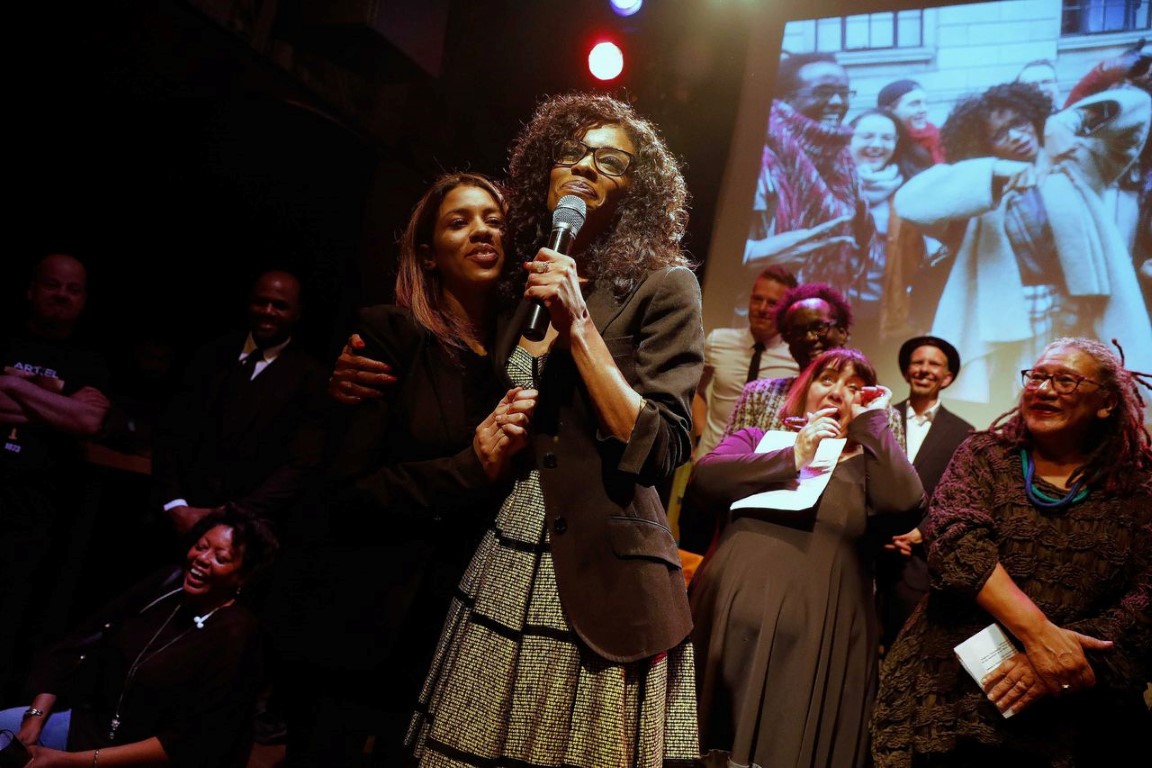
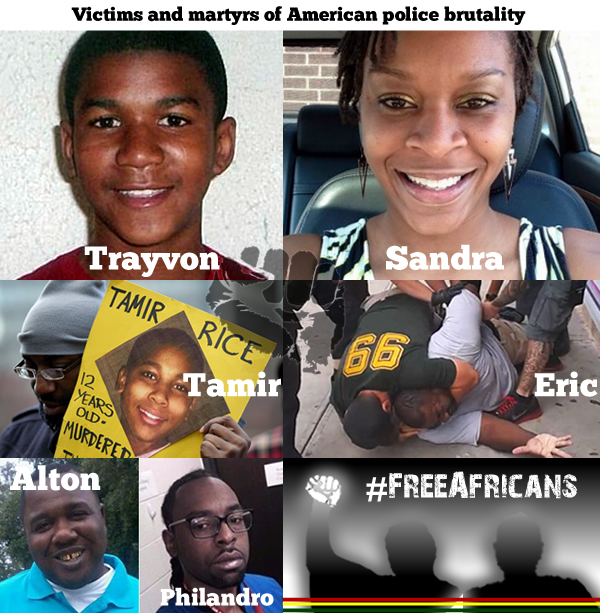
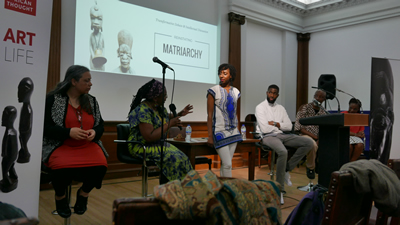
Get involved and help change our world