“This is an insult to the millions of African freedom fighters and those lost during the middle passage.... by not apologising... you shame yourself and your nation” was the accusation levelled at the Queen, Prime Minister, Archbishop of Canterbury and those African people who colluded with the unrepentant descendants of slavers in attending and arranging a ceremony which focused on the British act of so-called abolition whilst apportioning blame upon African people. As part of the commemorative events, the Queen laid a wreath at the foot of a giant statue to William Wilberforce, the Hull MP who advocated the gradual abolition of the British ‘slave trade’ and who also proclaimed that “it makes no sense to whip the slaves until after they have done a hard days work”.
Toyin had been invited to the event as a member of the press but, overwhelmed by the hypocrisy of the proceedings, resolved to make a stand against the marginalisation of the millions of African Ancestors who resisted enslavement and those who suffered under the inhumane regime of the British. In doing so, he vocalised the concerns of many African people nationally and internationally. During the ritual, a reverend instructed the congregation, which included thousands of African people, to kneel before God and beg forgiveness for British slavery whilst the Queen and Prime Minister remained seated. It was at this point that Toyin rose from his chair and calmly walked into the aisle and said “Not in our name”.
As he stood within metres of the heads of the Church, Government and Monarchy, the three British institutions which lead and sanctioned the enslavement of Mama Africa during the Maafa, he condemned the Wilberfest abolition celebration and told the Queen that in the history of the Maafa the British are the Nazis. Turning to Blair he told him of the deep shame he had brought upon himself by refusing to apologise on behalf of the British institution which enslaved, oppressed, colonised and continues to exploit the human and natural resources of Africa.
Addressing the thousands of African people in the abbey Toyin told them that the event and their submissive presence leant an air of moral legitimacy to the proceedings and was a disgrace. He announced that there was ‘no mention of Sam Sharpe, no mention of Nanny, Yaa Asantewaa, Boukman Dutty or African women... all Africans and Christians should get up and walk out with me now’.
Toyin was eventually man-handled by a group of security men and after a struggle, he walked out of the Abbey where he was interviewed by the press. A concerned Henry Bonsu, presenter on the African owned radio station, Colourful Radio, accompanied Toyin out of the church and remained with him whilst he was interviewed by the press and questioned by police. He later said “Toyin is one of the best people I know. He was not, in any sense, a real [physical] threat to the Queen. He is well known in the [African] community as an ardent campaigner…”
The global African outrage at the Wilberfest abolition themed service at Westminster Abbey follows the demonstration of African campaigners outside an earlier commemorative service at Bristol Cathedral on Sunday 25th March, where Operation Truth 2007, led by Jendayi Serwah, made their objection to the service and Wilberfarce 200 clear. The protest hit the headlines as crowds of people carried placards stating “not in our name” in direct reference to the government’s abolition propaganda drive. Jendayi said; “We feel this ceremony is totally inappropriate - 1807 did not bring anything for enslaved Africans”. Operation Truth 2007 has been campaigning tirelessly for months to promote the African position on the government’s plans and make known the community’s objection to the promotion of the British government’s inaccurate revisionist version of history.
In Jamaica, events to mark the bicentenary ignored the Wilberfest agenda and focused on honouring the numerous African freedom fighters that fought and died to be free from an oppressive european regime of exploitation and brutality and ultimately, exercise their human right to self-determine. This starkly contrasts with the British agenda which prefers to declare a pride in a British abolitionist who, whilst being opposed to slavery, was supportive of equally exploitative european colonial regimes.
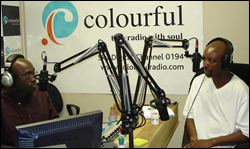
Immediately after the ceremony at the Abbey, Henry Bonsu later covered the incident on his popular Drive time show on Colourful Radio where an overwhelming number of callers supported the articulation of their frustration. Orin Lewis from the African Caribbean Leukaemia Trust said “This [protest] is so historical… This [the commemorative service] is totally wrong. The whole context is wrong.” Bro. Olatunji from the Alkebu-Lan Revivalist Movement and Dr Sandra Richards, a fellow presenter on Colourful Radio, also called in to the station to voice their support. Kofi Klu, executive member of the set all free organisation who organised the ceremony at the Abbey, boldly declared “he did it in my name”. Renowned activist and educator, Dr William Lez Henry from Nu Beyond made the following statement of support for the principles of the protest:
“I witnessed Toyin’s uncompromising stance today on BBC and applaud our brother for having the courage, will and dignity to stand firm and ‘bun dem out’ from the inside. If you saw how his lone action dominated BBC news for the whole afternoon it more than anything shows you that unity is strength and that is what they fear. It is a pity that many who were there did not get up and walk out as this would have demonstrated how we cannot continue to be complicit in our own destruction. They can lay flowers for their people whilst many of us seem to be content to lay down and take whatever they ‘give’ us to commemorate ours.”
National and international emails of support continue to flood in. Both the Ligali and Blacknet online forums have been flooded with messages of support for the concerns voiced during the objection with many reiterating that Toyin’s actions and words helped reassert the need for Pan African unity to deliver human rights and justice across the world. Djehutis Wisdom, a poster on the Ligali online forum stated;
“How can an African stand in a celebration led by the same church who profited and was involved in our enslavement, sat a stones throw away from the queen who still lives quite comfortably on the legacy of our enslavement…? How in the world did anyone think there wasn’t going to be an African who would speak our voice in a celebration of Britain’s non existent philanthropy and morality. The queen should not only feel ashamed, she should feel like the barbarian she is and the figurehead of a barbarian, morally destitute and intellectually circumcised nation that she is.”
However, not everyone was as supportive. Speaking on Colourful Radio, Simon Woolley from the heavily government funded organisation, Operation Black Vote said; “It doesn’t make us look professional and dignified... I know the individual. He stands up at many meetings making gestures. It’s got to be more than gesture politics. It’s very easy to find 15 minutes of fame. Is it about him or is it about the issue?” Woolley is then said to have taken it upon himself to call Toyin’s family when they were concerned about his welfare in police custody, and distress them further by describing his actions as a bid for “fifteen minutes of fame”. His disapproval of Ligali’s protest was shared by Mike Chadwick, one of the handful of people who emailed the organisation to object to the democratic and peaceful declaration at the Abbey. He said “as a Brit living abroad I was horrified by the behaviour of someone claiming to represent your organisation in Westminster Abbey this afternoon”.
Following his release from police custody at approximately 9.30pm on Tuesday 27th March, Toyin participated in a two hour interview with activists and presenters Kwaku and Nii Kodjo on PowerJam radio and appeared on Colourful Radio the following evening.
External Links
BBC – Operation Truth at Bristol CathedralBBC – Support for Abbey slavery protestBBC - Discontent voiced over slavery eventsCounterpunch - The QueenGuardian – You, the Queen, should be ashamed!
Blessings to the Brother who had his say at the Abbey
Toyin had been invited to the event as a member of the press but, overwhelmed by the hypocrisy of the proceedings, resolved to make a stand against the marginalisation of the millions of African Ancestors who resisted enslavement and those who suffered under the inhumane regime of the British. In doing so, he vocalised the concerns of many African people nationally and internationally. During the ritual, a reverend instructed the congregation, which included thousands of African people, to kneel before God and beg forgiveness for British slavery whilst the Queen and Prime Minister remained seated. It was at this point that Toyin rose from his chair and calmly walked into the aisle and said “Not in our name”.
As he stood within metres of the heads of the Church, Government and Monarchy, the three British institutions which lead and sanctioned the enslavement of Mama Africa during the Maafa, he condemned the Wilberfest abolition celebration and told the Queen that in the history of the Maafa the British are the Nazis. Turning to Blair he told him of the deep shame he had brought upon himself by refusing to apologise on behalf of the British institution which enslaved, oppressed, colonised and continues to exploit the human and natural resources of Africa.
Addressing the thousands of African people in the abbey Toyin told them that the event and their submissive presence leant an air of moral legitimacy to the proceedings and was a disgrace. He announced that there was ‘no mention of Sam Sharpe, no mention of Nanny, Yaa Asantewaa, Boukman Dutty or African women... all Africans and Christians should get up and walk out with me now’.
Toyin was eventually man-handled by a group of security men and after a struggle, he walked out of the Abbey where he was interviewed by the press. A concerned Henry Bonsu, presenter on the African owned radio station, Colourful Radio, accompanied Toyin out of the church and remained with him whilst he was interviewed by the press and questioned by police. He later said “Toyin is one of the best people I know. He was not, in any sense, a real [physical] threat to the Queen. He is well known in the [African] community as an ardent campaigner…”
The global African outrage at the Wilberfest abolition themed service at Westminster Abbey follows the demonstration of African campaigners outside an earlier commemorative service at Bristol Cathedral on Sunday 25th March, where Operation Truth 2007, led by Jendayi Serwah, made their objection to the service and Wilberfarce 200 clear. The protest hit the headlines as crowds of people carried placards stating “not in our name” in direct reference to the government’s abolition propaganda drive. Jendayi said; “We feel this ceremony is totally inappropriate - 1807 did not bring anything for enslaved Africans”. Operation Truth 2007 has been campaigning tirelessly for months to promote the African position on the government’s plans and make known the community’s objection to the promotion of the British government’s inaccurate revisionist version of history.
In Jamaica, events to mark the bicentenary ignored the Wilberfest agenda and focused on honouring the numerous African freedom fighters that fought and died to be free from an oppressive european regime of exploitation and brutality and ultimately, exercise their human right to self-determine. This starkly contrasts with the British agenda which prefers to declare a pride in a British abolitionist who, whilst being opposed to slavery, was supportive of equally exploitative european colonial regimes.
Presenter and friend, Henry Bonsu interviews Toyin Agbetu on Colourful Radio
Overwhelming support
Immediately after the ceremony at the Abbey, Henry Bonsu later covered the incident on his popular Drive time show on Colourful Radio where an overwhelming number of callers supported the articulation of their frustration. Orin Lewis from the African Caribbean Leukaemia Trust said “This [protest] is so historical… This [the commemorative service] is totally wrong. The whole context is wrong.” Bro. Olatunji from the Alkebu-Lan Revivalist Movement and Dr Sandra Richards, a fellow presenter on Colourful Radio, also called in to the station to voice their support. Kofi Klu, executive member of the set all free organisation who organised the ceremony at the Abbey, boldly declared “he did it in my name”. Renowned activist and educator, Dr William Lez Henry from Nu Beyond made the following statement of support for the principles of the protest:“I witnessed Toyin’s uncompromising stance today on BBC and applaud our brother for having the courage, will and dignity to stand firm and ‘bun dem out’ from the inside. If you saw how his lone action dominated BBC news for the whole afternoon it more than anything shows you that unity is strength and that is what they fear. It is a pity that many who were there did not get up and walk out as this would have demonstrated how we cannot continue to be complicit in our own destruction. They can lay flowers for their people whilst many of us seem to be content to lay down and take whatever they ‘give’ us to commemorate ours.”
National and international emails of support continue to flood in. Both the Ligali and Blacknet online forums have been flooded with messages of support for the concerns voiced during the objection with many reiterating that Toyin’s actions and words helped reassert the need for Pan African unity to deliver human rights and justice across the world. Djehutis Wisdom, a poster on the Ligali online forum stated;
“How can an African stand in a celebration led by the same church who profited and was involved in our enslavement, sat a stones throw away from the queen who still lives quite comfortably on the legacy of our enslavement…? How in the world did anyone think there wasn’t going to be an African who would speak our voice in a celebration of Britain’s non existent philanthropy and morality. The queen should not only feel ashamed, she should feel like the barbarian she is and the figurehead of a barbarian, morally destitute and intellectually circumcised nation that she is.”
However, not everyone was as supportive. Speaking on Colourful Radio, Simon Woolley from the heavily government funded organisation, Operation Black Vote said; “It doesn’t make us look professional and dignified... I know the individual. He stands up at many meetings making gestures. It’s got to be more than gesture politics. It’s very easy to find 15 minutes of fame. Is it about him or is it about the issue?” Woolley is then said to have taken it upon himself to call Toyin’s family when they were concerned about his welfare in police custody, and distress them further by describing his actions as a bid for “fifteen minutes of fame”. His disapproval of Ligali’s protest was shared by Mike Chadwick, one of the handful of people who emailed the organisation to object to the democratic and peaceful declaration at the Abbey. He said “as a Brit living abroad I was horrified by the behaviour of someone claiming to represent your organisation in Westminster Abbey this afternoon”.
Following his release from police custody at approximately 9.30pm on Tuesday 27th March, Toyin participated in a two hour interview with activists and presenters Kwaku and Nii Kodjo on PowerJam radio and appeared on Colourful Radio the following evening.
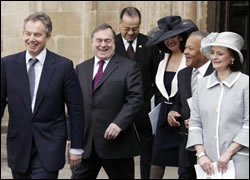
(Left) Shamed and smiling: Tony Blair, John Prescott and Barbadian Prime Minister, Owen Arthur emerge from the commemorative service laughing; (right) The Queen lays a floral tribute to William Wilberforce
External Links
BBC – Operation Truth at Bristol CathedralBBC – Support for Abbey slavery protestBBC - Discontent voiced over slavery eventsCounterpunch - The QueenGuardian – You, the Queen, should be ashamed!
Ligali is not responsible for the content of third party sites
Blessings to the Brother who had his say at the Abbey
Speak Out!
Was Toyin Agbetu wrong for refusing to kneel down before the British Church, Government and Monarchy and beg God’s forgiveness for British slavery?Click here to speak out or read (1) comments about this article
I witnessed Toyin’s uncompromising stance today on BBC and applaud our brother for having the courage, will and dignity to stand firm and ‘bun dem out’ from the inside
Dr Lez Henry
See Related:
Get involved and help change our world