Many people talk about Brother Malcolm after he made his pilgrimage to Mecca as if he did a 180 degrees turn from his ideas, opinions, and goals after doing such. This is very much inaccurate and it is not just inaccurate; it is pure trickery.
While it is definitely so that Brother Omowale El-Hajj Malik El-Shabazz, more popularly known as Malcolm X, made some drastic changes during this time, many would have us believe that the changes he made were in the direction of recounting, renouncing, and abandoning many of his beliefs and objectives in reference to liberation to primarily embrace the nonviolent struggle for civil rights in America as well as for the advocacy of world peace.
This was not at all the case. In fact, in an WBAI-FM interview with Harry Ring in 1965, Malcolm was questioned as to why he, to the disturbance of many white supporters of the Freedom-Now Movement, rejected the concept of nonviolence to which he replied: "Well, we think that when nonviolence is taught to the Ku Klux Klan or the White Citizens Council or these other elements that are inflicting extreme brutality against Blacks in this country, then we would accept it. If we're dealing with a nonviolent enemy, then we would be nonviolent, too. But as long as our people in this country have to face the continued acts of brutality on the part of the racist element in the North as well as in the South, then I don't think that we should be called upon to be nonviolent. When they'll get nonviolent, we'll get nonviolent."
Brother Malcolm, no doubt, involved himself fully in the struggle for human rights which he felt would, once attained, automatically guarantee his people civil rights as well. I am fully convinced that he, like many of us, would have loved a peaceful world, but the way that many people in books, on televisions, in day-to-day conversations, have said that Brother Malcolm had completely changed is beyond inaccurate; it is criminally untrue. While many have circulated this myth intentionally in the hopes that it would neutralize the carrying on of works of liberation, many have regurgitated this myth mostly based on simply not knowing anything about Malcolm's words, involvements, and objectives after he left Mecca (and quite possibly not knowing a lot about his words, involvements, and objectives before he went).
What is almost never mentioned about Brother Malcolm is perhaps the most important aspect of his post-Mecca life, because as he made his travels and links in Mama Africa, his already pan Africanist mind expanded tremendously and so did his ability to articulate and to set out clear pan Africanist objectives. When Brother Malcolm returned to America, he did so with a much more refined understanding of the global struggle for liberation; his mind had become much more internationalized.
He explained, “In 1964, oppressed people all over the world, in Africa, in Asia and Latin America, in the Caribbean, made some progress. Northern Rhodesia threw off the yoke of colonialism and became Zambia and was accepted into the United Nations, the society of independent governments. Nyasaland became Malawi and was also accepted into the UN, into the family of independent governments. Zanzibar had a revolution, threw out the colonialists and their lackeys, and then united with Tanganyika into what is not known as the Republic of Tanzania-which is progress indeed… Also in 1964 the oppressed people of South Vietnam, and in that entire Southeast Asia area, were successful in fighting off the legions of imperialism…And with all the highly mechanized weapons of warfare-jets, napalm, battleships, everything else- and they can’t put those rice farmers back where they want them.. ”2
Malcolm stood in solidarity with others around the globe who were fighting against imperialism and emphasized the importance of the exploited and oppressed masses to unite: “…When these people in these different areas begin to see that the problem is the same problem and when the 22 million Black Americans see that our problem is the same as the problem of the people who are being oppressed in South Vietnam and the Congo and Latin America, then the oppressed people of this earth make up a majority, not a minority. Then we approach our problem then as a majority that can demand, not as a minority that has to beg.”3
Brother Malcolm understood that there was a global battle, a resistance by the oppressed against their oppressors. He saw that the situation faced by his people in America was but a microcosm for the situation faced by his people in Africa and of the situation faced by the oppressed in Asia and Latin America. “...Our problem has to be internationalized. Now the African nations are speaking out and linking the problem of racism in Mississippi (The United States) with the problem of racism in the Congo and also the problem of racism in South Vietnam. It’s all part of the vicious racist system that the Western powers have used to continue to degrade and exploit and oppress the people in Africa and Asia and Latin America during recent centuries.”4
I tend to believe that most of what many of us know about Brother Malcolm is limited to what Spike Lee's movie showed and/or what other works or words in the media have portrayed. In America, many of our people do not speak about Malcolm. He is so demonized here in the United States, the same country where pirates like Christopher Columbus are praised, where slave holders like George Washington are revered. He is demonized in the same way that Marcus Garvey and countless others who have had the audacity to assert the right to self-determination and human dignity have been demonized.
All of this brings up perhaps a more important and more general point. All around the globe, we have been allowing others to pick our heroes and our villains for us for far too long. Only when we really grasp the realities of the problems that we face will we be in a position to even devise their solutions. It is imperative that we strive to break down the information that we encounter just as the body breaks down food before digesting it. We must read, search, and think for ourselves. It is imperative that we teach the children to do this; they are the carriers of the torch and our teaching is the number one factor in their deciding what they will do with that torch. If they throw the burning torch down, it might not only burn them but also many future generations to come.
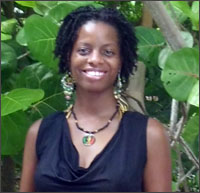
Tricey Martin is a community educator and researcher of Africana studies
External Links
Malcolm X
While it is definitely so that Brother Omowale El-Hajj Malik El-Shabazz, more popularly known as Malcolm X, made some drastic changes during this time, many would have us believe that the changes he made were in the direction of recounting, renouncing, and abandoning many of his beliefs and objectives in reference to liberation to primarily embrace the nonviolent struggle for civil rights in America as well as for the advocacy of world peace.
This was not at all the case. In fact, in an WBAI-FM interview with Harry Ring in 1965, Malcolm was questioned as to why he, to the disturbance of many white supporters of the Freedom-Now Movement, rejected the concept of nonviolence to which he replied: "Well, we think that when nonviolence is taught to the Ku Klux Klan or the White Citizens Council or these other elements that are inflicting extreme brutality against Blacks in this country, then we would accept it. If we're dealing with a nonviolent enemy, then we would be nonviolent, too. But as long as our people in this country have to face the continued acts of brutality on the part of the racist element in the North as well as in the South, then I don't think that we should be called upon to be nonviolent. When they'll get nonviolent, we'll get nonviolent."
Brother Malcolm, no doubt, involved himself fully in the struggle for human rights which he felt would, once attained, automatically guarantee his people civil rights as well. I am fully convinced that he, like many of us, would have loved a peaceful world, but the way that many people in books, on televisions, in day-to-day conversations, have said that Brother Malcolm had completely changed is beyond inaccurate; it is criminally untrue. While many have circulated this myth intentionally in the hopes that it would neutralize the carrying on of works of liberation, many have regurgitated this myth mostly based on simply not knowing anything about Malcolm's words, involvements, and objectives after he left Mecca (and quite possibly not knowing a lot about his words, involvements, and objectives before he went).
What is almost never mentioned about Brother Malcolm is perhaps the most important aspect of his post-Mecca life, because as he made his travels and links in Mama Africa, his already pan Africanist mind expanded tremendously and so did his ability to articulate and to set out clear pan Africanist objectives. When Brother Malcolm returned to America, he did so with a much more refined understanding of the global struggle for liberation; his mind had become much more internationalized.
He explained, “In 1964, oppressed people all over the world, in Africa, in Asia and Latin America, in the Caribbean, made some progress. Northern Rhodesia threw off the yoke of colonialism and became Zambia and was accepted into the United Nations, the society of independent governments. Nyasaland became Malawi and was also accepted into the UN, into the family of independent governments. Zanzibar had a revolution, threw out the colonialists and their lackeys, and then united with Tanganyika into what is not known as the Republic of Tanzania-which is progress indeed… Also in 1964 the oppressed people of South Vietnam, and in that entire Southeast Asia area, were successful in fighting off the legions of imperialism…And with all the highly mechanized weapons of warfare-jets, napalm, battleships, everything else- and they can’t put those rice farmers back where they want them.. ”2
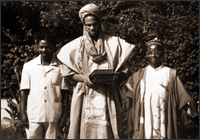
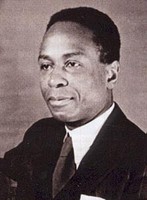
Malcolm was given the name Omowale “the son who has come home” - Nigeria, 1964
Our problem has to be internationalized
Malcolm stood in solidarity with others around the globe who were fighting against imperialism and emphasized the importance of the exploited and oppressed masses to unite: “…When these people in these different areas begin to see that the problem is the same problem and when the 22 million Black Americans see that our problem is the same as the problem of the people who are being oppressed in South Vietnam and the Congo and Latin America, then the oppressed people of this earth make up a majority, not a minority. Then we approach our problem then as a majority that can demand, not as a minority that has to beg.”3Brother Malcolm understood that there was a global battle, a resistance by the oppressed against their oppressors. He saw that the situation faced by his people in America was but a microcosm for the situation faced by his people in Africa and of the situation faced by the oppressed in Asia and Latin America. “...Our problem has to be internationalized. Now the African nations are speaking out and linking the problem of racism in Mississippi (The United States) with the problem of racism in the Congo and also the problem of racism in South Vietnam. It’s all part of the vicious racist system that the Western powers have used to continue to degrade and exploit and oppress the people in Africa and Asia and Latin America during recent centuries.”4
I tend to believe that most of what many of us know about Brother Malcolm is limited to what Spike Lee's movie showed and/or what other works or words in the media have portrayed. In America, many of our people do not speak about Malcolm. He is so demonized here in the United States, the same country where pirates like Christopher Columbus are praised, where slave holders like George Washington are revered. He is demonized in the same way that Marcus Garvey and countless others who have had the audacity to assert the right to self-determination and human dignity have been demonized.
All of this brings up perhaps a more important and more general point. All around the globe, we have been allowing others to pick our heroes and our villains for us for far too long. Only when we really grasp the realities of the problems that we face will we be in a position to even devise their solutions. It is imperative that we strive to break down the information that we encounter just as the body breaks down food before digesting it. We must read, search, and think for ourselves. It is imperative that we teach the children to do this; they are the carriers of the torch and our teaching is the number one factor in their deciding what they will do with that torch. If they throw the burning torch down, it might not only burn them but also many future generations to come.
Tricey Martin is a community educator and researcher of Africana studies
Tricey Martin
External Links
Malcolm X
Ligali is not responsible for the content of third party sites
Speak Out!
“When I returned… I kept being asked the question by some reporters, “We heard you changed.”.... I smiled and all. But I would say to myself ... How do you expect us to change when the causes that made us as we are have not been removed?” - Malcolm XClick here to speak out or read (3) comments about this article
Whenever our people are ready to take any kind of action necessary to get results, they’ll get results. They’ll never get results as long as they play by the [unjust and criminal] ground rules laid down by the power structure
Brother Malcolm (Interview by Harry Ring on Station WBAI-FM in New York, January 1965)
See Related:

Get involved and help change our world